


Councillor defends controversial £55m Catholic super-school plans
Alec Doyle, Local Democracy Reporter
A councillor has spoken out in defence of controversial plans for a new £55m Catholic super-school.
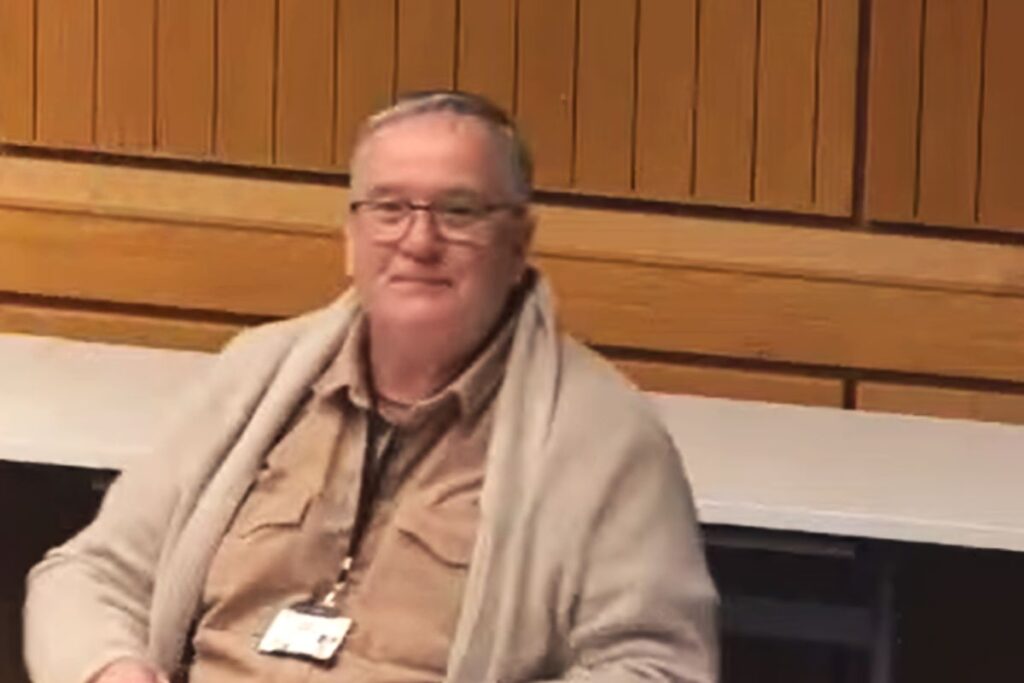
Cllr Bill Crease, who represents Connah’s Quay South, is deputy leader of the Independent Group which is part of Flintshire County Council’s leadership coalition.
Now, with the proposed £55 million 3-18 school in Flint partway through its second consultation exercise, he said it was time for someone to speak about the reality the council faces regarding this proposal.
Under the Catholic schools plan three faith-based primary schools operated by the Diocese of Wrexham – St David’s in Mold, St Anthony’s in Saltney and St Mary’s in Flint – plus St Richard Gwyn Catholic High School in Flint will be closed and replaced with the Flint super-school.
It is a plan that has been fiercely opposed by parents, councillors and politicians due to concerns over school transport, additional learning needs support and cost – Flintshire County Council will fund 15% of the build cost – £8.3 million – through borrowing repaid over 50 years.
First consultation
The first consultation fell down due to a legal challenge and with a second one partway completed Cllr Crease – who is a member of Flintshire’s Education, Youth and Culture Scrutiny Committee – says it is time to face up to the reality of the situation.
“I know this will not be popular, but we have a responsibility to make sure the environments we provide for teaching staff and for pupils, for learners and for parents and for communities, is of a quality that is fit-for-purpose,” he said.
“Visiting some of these primary schools and walking around, the last thing you would say is that their buildings are fit for purpose.
“Much has been made of the borrowing that Flintshire needs to do to make up the funding for this project and the repayment cost. But how do we pay for any major project? We either borrow money or put it on the council taxpayer.
“We borrow to repair infrastructure, purchase fleet vehicles and build social housing. If this school was not a faith school and we were paying this money there would still be borrowing.
“The staff do a fabulous job of delivering education, but let’s give them the right tools and the right environment to deliver an education that’s suitable not just for the 21st Century, but for those who will be working in these schools as we approach the 22nd Century.”
Intense discourse
Cllr Crease said that the discourse around the super-school project had become intense and that both the council and the Diocese could have handled things better.
But that didn’t change the need for a new, modern school in Flint.
“The Diocese of Wrexham has taken a lot of criticism over this and quite rightly so, ” he said. “Flintshire County Council has also taken a lot of criticism, also quite rightly.
“It’s an emotive subject and I often get accused of being a ‘collaborator’ working with the administration – but I see it from both sides.
“I was a teacher 14 years ago, a Protestant teacher in a Catholic school in Liverpool. Back then the problems we are trying to solve now were being predicted – a significant fall in birth rate and a corresponding drop in baptisms.
“Solutions to these problems of surplus places and decaying buildings should have begun then but they didn’t and here we are.
“So we have to try to find a way to give our children the education they deserve, give our teachers the environment and tools to succeed and do it all within the financial constraints we have.
“It’s a very difficult thing to do, politically, to close school. I didn’t stand for election to close schools and I have every sympathy with the teachers, with the parents and most of all with the children who I believe this process is having a negative impact on.
“As a councillor I have to look at the county-wide position and consider the welfare of all children. We can’t continue to have schools built for 180 to 220 pupils with just 56 or 64 kids in them.
We have 3,500 vacant places in our primary school network across Flintshire. That’s 10 primary schools.
“It doesn’t make sense to run smaller schools in decaying buildings because that’s taking away money from education across the county, it’s just not sustainable.”
Funding
According to school budget figures children in two of the three affected Catholic primary schools – St David’s and St Anthony’s – will each attract more than £7,000 of funding due to the school’s being under-populated.
The average per head for Flintshire primary schools is £5,360 – hence the argument that smaller schools are financially inefficient.
Quality of education and support at a larger school has also been raised as a concern, particularly around additional learning needs, with the 3-16 Catholic school Christ the Word in Rhyl cited as an example of why the model doesn’t work due to its time in special measures.
“One of the arguments against the 3-18 school has been to look at what’s happened in Denbighshire – that it’s failing,” he said. “By Estyn’s own admission however, the best state school in Wales is a 3-18 school at Cowbridge School in the Veil of Glamorgan – and it has been consistently over the last three years.
“So, the argument, in my opinion, isn’t valid. I taught secondary education from 11 to 18. If the process and the structure was in place to have a 3-18 school I’d have welcomed it.”
“The most difficult thing for a child in our education system at the moment is the transition from primary to secondary school and 3-18 sorts that out.
“There’s not enough emphasis on the future of education. We have to get it right. And the only way we’re going to get it right is making sure the environments we provide for teaching staff, for pupils, for parents and for communities is of a high quality.”
Flintshire’s Cabinet is due to consider the results of the initial consultation in September or October with a final decision due in March 2027.
Support our Nation today
For the price of a cup of coffee a month you can help us create an independent, not-for-profit, national news service for the people of Wales, by the people of Wales.
Get more trusted Welsh news
Choose Nation.Cymru as a preferred source in Google News to see more of our journalism.




There is no evidence that run through schools have any benefits. As the age groups are segregated there will still be a transition. Also not all pupils in the junior section transfer to the secondary section. The location at the extreme end of the catchment area makes this a bad solution to a difficult problem. Likely some parents will transfer their children to more accessible non faith schools where they live. As a result the proposed school is likely to be underfilled from day one. Likely it will then not be viable as a faith school and transfer to state… Read more »