

Councillors unite behind campaign to defend Welsh place names
Dale Spridgeon, Local Democracy Reporter
A north Wales council has unanimously backed calls to protect Welsh place names on maps.
Cyngor Gwynedd has supported Councillor Einir Wyn Williams’ plea for the Ordnance Survey [OS] to use only Welsh language landscape place names on maps in Wales.
Raising the matter in a notice of motion she got a round of applause from fellow councillors during a full council meeting on Thursday, May 14.
Citing names such as The Mushroom Garden for Coed Cerrig y Frân and Heather Terrace Path for Llwybr Gwregys, she told the meeting that the names had “no basis in tradition” and that their use “undermined the Welsh language, history and national identity”.
Welsh names, she said, were “part of our landscape for centuries” and “part of our cultural DNA”.
She added: “They tell the story of the land, the people, the legends, the work, the life. No one has the right to delete or replace them.”
She told the meeting English names were being used alongside Welsh names, which she said created the impression that the Welsh names are optional.
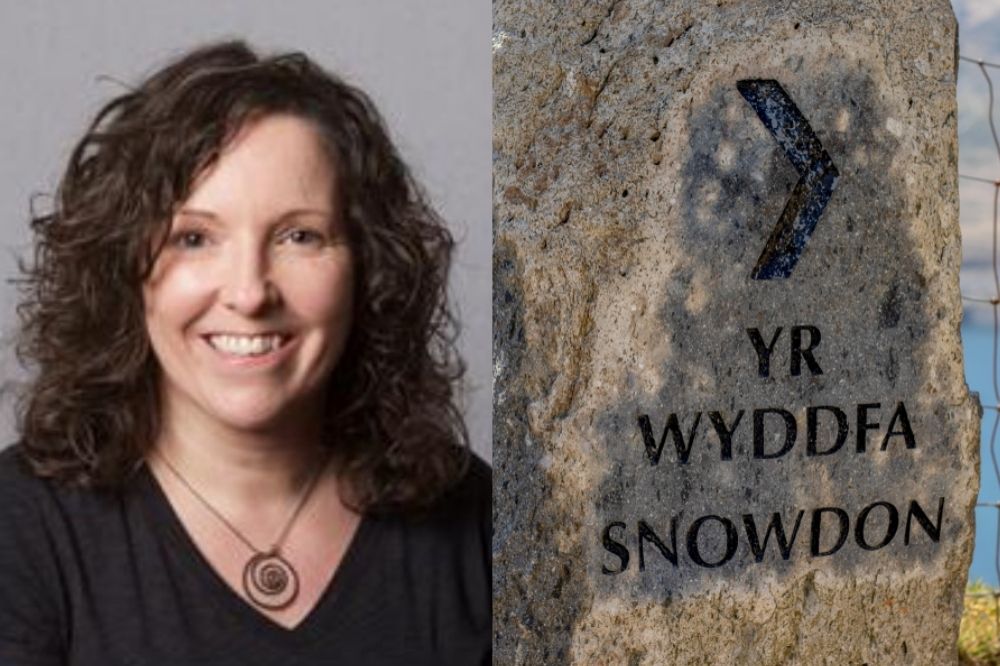
Examples included the use of Bala Lake alongside Llyn Tegid, and Snowdon with Yr Wyddfa. “This is how language is weakened, not in one shot, but in a thousand small steps,” she said.
History and legend
Cllr John Pughe said the matter was “close to his heart” after introducing the argument at the Eryri National Park Authority.
The authority voted to use Yr Wyddfa, rather than Snowdon, and Parc Eryri Cenedlaethol rather than Snowdonia in all official communication in November 2022.
“There are history and legends and history behind names. Once a name has gone on a map or written down it’s there forever, so I’m very pleased to support this,” he said.
Cllr Rhys Tudur added: “These names are part of history. I myself see names changing, and on houses in my own area, things like ‘Happy Days’ even spelled ‘Daze’ – all sorts of things.
“I come across council tax bills and addresses using English names on streets. We should not use names as an authority, correspondence should go out in Welsh.”
Agreed
Cllr Gwilym Evans “agreed and echoed” the concerns, and paid tribute to the late Eilian Williams from Nant Peris.
“He did incredible work throughout his life campaigning hard against companies such as OS, to change Welsh names in areas such as Nant Peris, to use only the Welsh,” he said.
“He talked to local shepherds and collected the old names,” he said, showing a map Mr Williams had established showing the Welsh names.
“He fought to the end to stop the Anglicisation of historic Welsh names.”
Cllr Stephen Churchman agreed, saying: “English names do not relate to the Welsh at all, names like Stanley Avenue.”
He suggested adding an amendment requesting they contact other Welsh local authorities to “join the campaign” and to “show strength,” which Cllr Wyn Williams agreed to add.
Cllr Llio Elenid Owen added: “I use many OS maps when I am walking, mountaineering, horse rising, or doing leadership courses with non-Welsh people.
“They are always enthusiastic to know names of rocks, the mountains, lakes, the Welsh names, everyone wants to know the etymology, the stories, the legends. Welsh names should be visible on maps, and street names.”
Disappointing
Cllr Gareth Tudur Jones said he “loved perusing maps” but noted on the map for West Pen Llŷn, “we have some islands near Abersoch, St Tudwal’s islands, East and West. Disappointing.”
He was also “disappointed” to see Hell’s Mouth printed instead of Porth Neigwl, which he said was an example of “English words being printed creating the impression that the Welsh words are secondary”.
He added: “Whistling Sands is in black bold print and the word Porthor or Porth Oer in very, very faint blue print. You can hardly make it out, the native indigenous name is secondary by OS which is insulting.
“On the front, you have the name Llyn Peninsula, but I live in Pen Llŷn not the Llyn. You go to a bar and ask for a pint of Cwrw Llyn not Llyn Ale.”
Earlier this week, Ordnance Survey told the Local Democracy Reporting service that it “could not change names alone” and had actually seen a rise in the number of Welsh names used, citing support for work to adopt Welsh place names for lakes in Eryri.
It said it was “committed to working in collaboration with the Welsh Government, Welsh Language Commissioner and National Parks to identify what more we can do to support the Welsh language in our mapping.”
Support our Nation today
For the price of a cup of coffee a month you can help us create an independent, not-for-profit, national news service for the people of Wales, by the people of Wales.
Get more trusted Welsh news
Choose Nation.Cymru as a preferred source in Google News to see more of our journalism.




If Ordnance Survey create the maps and print the maps can someone please explain why can’t they simply remove all those recently added English names from their file/system? Am I missing something?
You’re not missing anything but it’s how the OS decide to place a name which is the problem. It’s by “common usage” so they need to come up with a new way of deciding, or we’ll keep getting silliness like this.
Da iawn to Cyngor Gwynedd for drawing attention to this linguistic cleansing which has been quietly going on in the background. Let’s hope it can be stopped and eventually reversed