
Councillors urged to oppose controversial space radar plans amid public backlash
Bruce Sinclair, Local Democracy Reporter
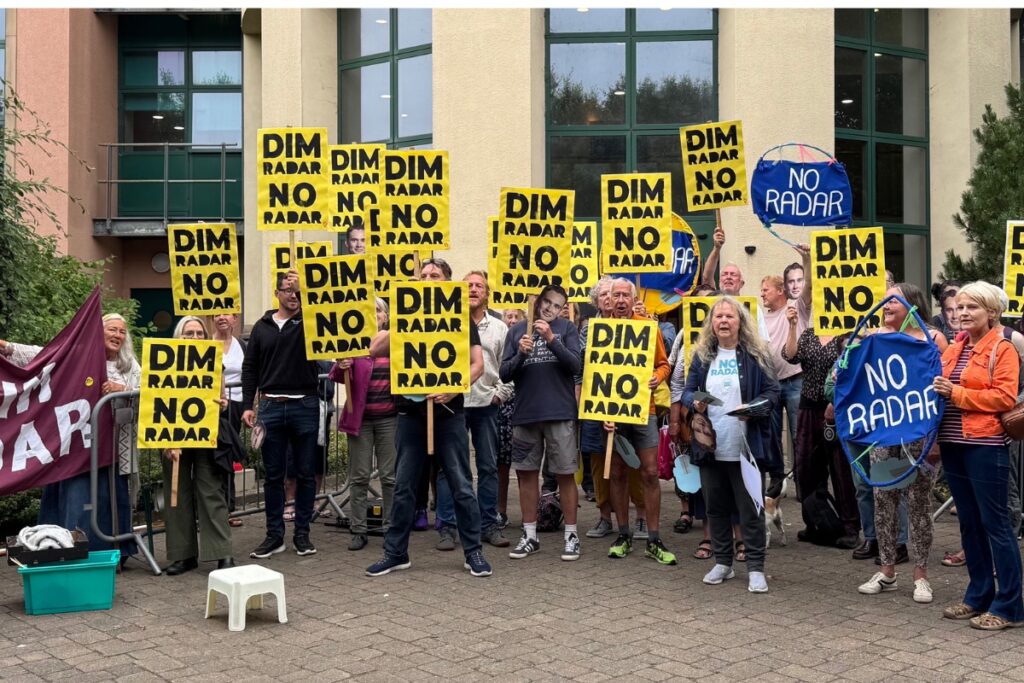
Campaigners are urging a council’s planning committee to formally oppose a proposed DARC space radar.
In an application submitted earlier this year to Pembrokeshire County Council following a public consultation, the Ministry of Defence wants to install 27 radar antenna and a long list of associated works at Cawdor Barracks, Brawdy for a worldwide network of sensors called the Deep Space Advanced Radar Concept (DARC).
This would be used to track active satellites and other objects which would utilise three sites worldwide, part of the AUKUS trilateral security partnership, in the USA, the UK and Australia “enabling 360-degree coverage of the sky at all times of day and under any weather conditions”.
It was later ‘called in’ for Welsh Government determination.
While the scheme has been ‘called in,’ members of the county council’s planning committee, at their November meeting, were due to discuss the scheme.
Critical to protection
A supporting statement says of the DARC scheme: “This capability is critical to protect and defend the services provided by satellites, ensuring continuity and resilience against collisions or debris-related incidents.
“Without DARC, the UK faces a significant risk of losing access to these vital services, which would have severe consequences for national security, economic stability, and public safety.”
The last consultation saw 1,121 objections and just one supporting comment.
Campaign group PARC Against DARC has argued that the radar scheme could “endanger satellites through complex debris chain reactions in space” and is linked to broader concerns about militarisation and global security escalation.
A spokesperson for PARC Against DARC said: “Our campaign against this proposed US military monstrosity has gone from strength-to-strength over the last two years.
“There is now a demonstrably huge level of public opposition to these plans, with a 20,000-strong petition, several demonstrations, thousands of emails sent in opposition and statements of opposition in Cardiff and Westminster.”
The group has raised concerns about the project’s environmental, visual, and national security implications and protests were held during planning meetings in July and November.
Needs publicity
At the November planning committee meeting, members were initially recommended to approve the scheme had it not been ‘called in,’ but heard Planning and Environment Decisions Wales (PEDW) had raised an issue of a need for the scheme to be publicised as a departure from the development plan.
They said it needed more publicity before the committee could “lawfully proceed to consider the merits” of the scheme itself. Any debate was “strictly limited” to a procedural course of action at the November meeting.
Members could either defer the application until the publicity period ended or visit the site, with the application returning to a future meeting in either case; a site visit being agreed ahead of the scheme returning to a future meeting.
PARC Against DARC has now appealed to councillors to recommend against the scheme, the new consultation round having a deadline of December 10.
It is also encouraging residents to submit objections through its website at parcagainstdarc.com/takeaction.
“We urge our supporters and anyone who wants to stop these plans to please take actions once again.”
Support our Nation today
For the price of a cup of coffee a month you can help us create an independent, not-for-profit, national news service for the people of Wales, by the people of Wales.
Get more trusted Welsh news
Choose Nation.Cymru as a preferred source in Google News to see more of our journalism.