


Council’s bed and breakfast bill tops £7m
Richard Youle Local Democracy Reporter
A Welsh council’s bed and breakfast bill for people in urgent need of housing has nearly tripled since the Covid pandemic and now exceeds £7 million.
It has helped many hundreds of people in the process, gets some costs back – and rough sleeping in the city hasn’t increased, according to a homelessness charity.
Furthermore Swansea Council, along with housing association Codi Group, has converted the former Swansea Central police station on Orchard Street into temporary supported accommodation. The building – Llys Glas – opened in January, has around 70 rooms for single people or couples, plus kitchens, and is expected to reduce reliance on bed and breakfast accommodation.
A council spokesman said: “Like all towns and cities across the UK, we are facing a shortage of housing and an increase in demand. Many of the people in Swansea requiring temporary or emergency accommodation are experiencing challenging circumstances such as the break-up of a family or domestic abuse.”
The authority placed 1,499 people into bed and breakfasts in 2025-26 at a cost of £7.2 million. The most expensive placement was a 498-night stay which started before 2025-26 and ended up costing £34,860, equating to £70 per night. The figures were given in response to a freedom of information requestion by the Local Democracy Reporting Service.
The response said the council retrieved around £3.4 million of the £7.2 million through a mixture of Welsh Government funding, housing benefit, and Home Office funding for released prisoners.
The council’s temporary accommodation bill was considerably less – £2.5 million – in 2022-23, rising to £4.3 million and £6.2 million in the following two years. Swansea is not alone in facing acute housing pressures.
Homelessness and rough sleeping charity The Wallich said Wales had a lot of old homes and not enough homes to go around.
A spokeswoman for the charity said: “Councils are having great difficulty finding social housing to meet the number of people who need it. We also can’t rely on private rents to tackle the housing crisis because rents are far beyond what’s affordable.”
She said the average cost of a one-bed flat in Swansea was now £750, while the local housing allowance rate (which determines housing benefit) was £525.
“The amount being spent on temporary housing may be large, but the alternative, while we await acceleration of building social homes, is to not support people at all,” said the spokeswoman.
“Our rough sleeper teams in Swansea haven’t seen an increase in people on the streets since Covid. Considering demand for housing, that is progress.
“Use of bed and breakfasts will come down and, in fairness to the council, we know they’re working hard to open better-quality accommodation to reduce bed and breakfast spend. To reduce costs further, homelessness prevention and early intervention is key.”
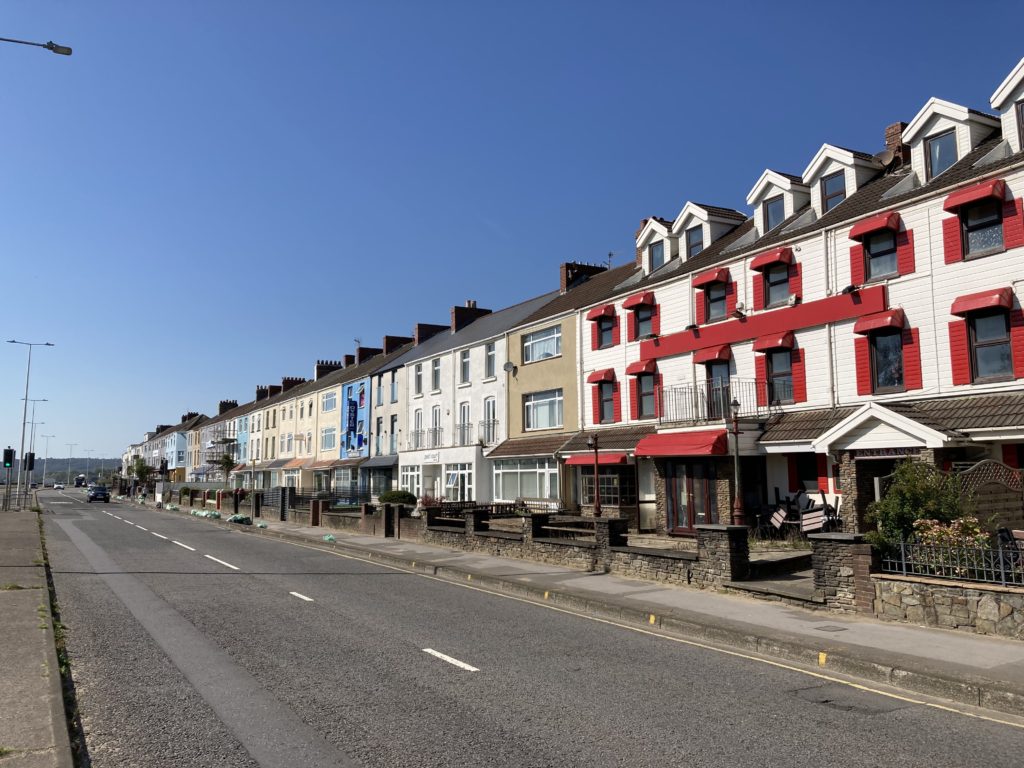
Bed and breakfasts on Oystermouth Road have been used to provide a roof over people’s heads, but the council tries to minimise stays for families.
As well as the newly-converted Llys Glas building in the city centre, the council and Codi Group have planning permission to convert a former office block-turned student development on St Helen’s Road into temporary supported accommodation.
The council said it couldn’t accurately predict future need for temporary accommodation, but said the opening of Llys Glas has had “a positive impact” on bed and breakfast use.
Asked if it placed people from other areas such as Neath Port Talbot or Bridgend in temporary accommodation if they came to Swansea without a place to live, the council said there were rules on local connection under the relevant legislation in Wales.
“Therefore, if a household does not have a local connection with Swansea then the offer of any temporary accommodation would be limited,” it said. “There are of course exceptions, for example where a person is fleeing domestic violence. Then the council would have a duty to offer temporary accommodation, even if that person does not have a local connection.”
The Welsh Local Government Association (WLGA), which represents the country’s 22 councils, said more than 10,500 people were in emergency temporary accommodation in Wales, including 2,200-plus children, and that preventing homelessness was a key priority.
A WLGA spokesman said councils and housing associations had made good progress in helping the previous Welsh Government hit a six-year target of 20,000 new social rented homes. Last November the Welsh Government said 18,652 of these properties were expected to have been delivered by the end of May this year.
The WLGA spokesman said: “Building more social rented homes is a vital part of the response.”
The new Welsh Government is planning to set out its priorities on homelessness shortly.
Support our Nation today
For the price of a cup of coffee a month you can help us create an independent, not-for-profit, national news service for the people of Wales, by the people of Wales.
Get more trusted Welsh news
Choose Nation.Cymru as a preferred source in Google News to see more of our journalism.



How many of these 1,499 people housed in B&B in Swansea are genuinely covered by the statutory responsibility of the council under the Housing (Wales) Act 2014? That of local or family connection to the authority area as previously resident for the qualifying period or recently excluded from provision as persons subject to immigration control as defined by the amendments of 2026. A rail warrant back to England or collection by Croydon is significantly cheaper than council tax payers having to fork out for hotels.
law changed last year – the person just needs a connection to anywhere in Wales. Obviously the statutory burden increased. Your decision if it’s good or bad, but those are the new rules. The two main people who pushed it through were Jane Bryant and Sian Gwenllian, I believe
That relates to any agreed reciprocity between neighbouring councils. So family in Gwynedd would be considered as local connection just over the border in Conwy. It is not intended to import homeless people from Bristol and London, pitch up at the Wallich for a year or two to qualify, then getting a flat from Swansea council. Also there’s the issue of caravan site dossing in coastal communities to avoid council tax and then after a qualifying period applying to the homeless register. This happens on Gower and similarly along the north coast.