


Covid Bereaved group calls for tough recommendations ahead of report’s publication
Martin Shipton
A group that lost family members during the pandemic has called on the Chair of the UK Covid Inquiry to make non-negotiable recommendations aimed at ensuring that mistakes leading to thousands of avoidable deaths aren’t made again.
The second report from the ongoing public inquiry into the UK’s response to Covid 19 is due to be published on November 20. It will focus on political decision making and governance during the pandemic, including by the devolved administrations in Wales, Scotland and Northern Ireland.
The Inquiry, which is investigating 10 areas, was launched by former Prime Minister Boris Johnson in 2022 to examine the government’s actions during the pandemic. Although the inquiry is government funded, it is independent and publishes reports with recommendations and conclusions that could significantly influence government policy on how to handle pandemics and other crises in future.
The Inquiry’s first report and related recommendations were published in July 2024 and examined the UK’s resilience and overall preparedness for the pandemic. The report concluded that the government at the time was not adequately prepared and recommended a major overhaul of how the UK Government and devolved administrations in Northern Ireland, Scotland and Wales prepare for whole-system civil emergencies.
The second report will focus on how key decisions were made across central government, the devolved administrations in Scotland, Wales and Northern Ireland, and across the civil service. The report is expected to shed light on how the government operated during Covid 19, and, as with the first report, provide recommendations on how future governments could approach pandemics.
Commenting on the upcoming report, forensic accountant Hinesh Shah of the leading law firm Pinsent Masons, said: “This will be of interest for those companies and institutions who regularly engage with the government, and who wish to better understand government decision making in times of crisis.”
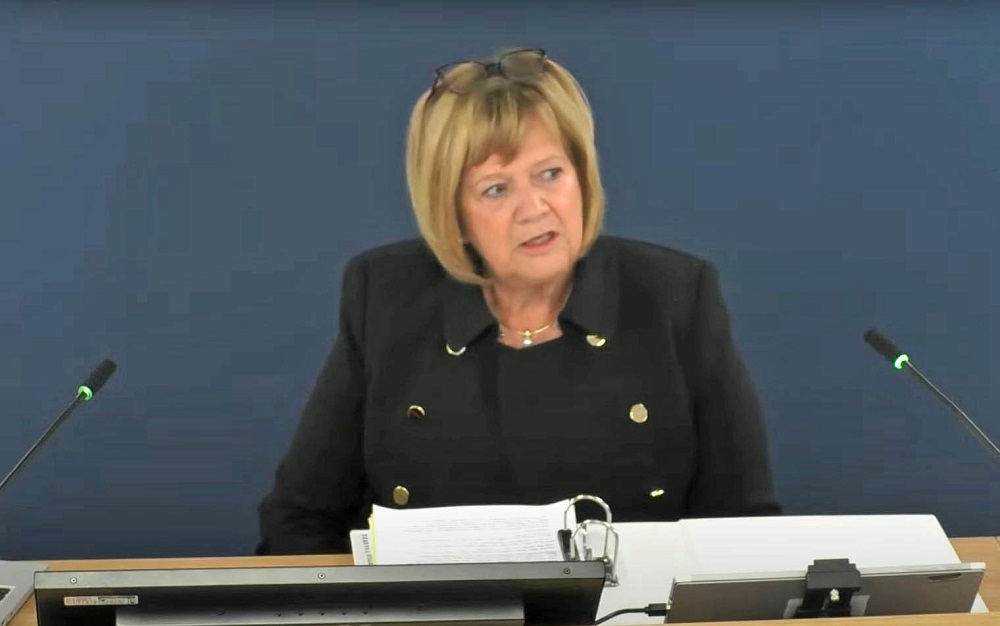
The first public hearings took place in London in June 2023, but subsequent hearings have been held in Edinburgh, Cardiff and Belfast. The inquiry chair, former Court of Appeal judge Baroness Heather Hallett, has powers to call witnesses to give evidence throughout its investigations.
Final public hearings are expected to take place in early March 2026, with the inquiry’s next report focussed on healthcare systems set to be published next spring.
‘Public health catastrophe’
In a statement issued ahead of the publication of the Inquiry’s second report, the group Covid Bereaved Families for Justice said: “This was the worst public health catastrophe Wales has ever faced, and more than 13,000 people died in brutal, preventable circumstances. Their suffering must not be diluted, minimised, or pushed to the sidelines. This Inquiry must put these victims at the absolute centre of its findings and recommendations. Anything less is a betrayal.
“Understanding the Welsh Government’s decision-making machinery is necessary, but it cannot be allowed to become a shield. There must be real, individual accountability for the failures that cost thousands of lives. The Welsh Government cannot deflect blame onto the UK Government, cannot shrug off responsibility, and cannot misuse or weaponise ‘the science’ as a defence for catastrophic decisions. Science was selectively interpreted, ignored when inconvenient, and repeatedly used as political cover. They had a duty to protect the people of Wales, and they failed. That failure must be named, exposed, and owned.
“The Chair must issue firm, explicit, non-negotiable recommendations to ensure that nothing like this is ever allowed to happen again in Wales. We cannot tolerate vague language or half-measures. The systems failed, leadership failed, and people died. The governance of Wales must be rebuilt so this disaster is never repeated.
“The Welsh Government repeatedly followed England – but way too slowly – while people died. They had the powers to act independently and they could have led but were unprepared and disorganised.
“Testing hospital to care home discharges and asymptomatic testing were delayed, public masking lagged by four months and vaccines in care homes were held back by four critical weeks.
“Mark Drakeford sat on his hands as the human cost spiralled. Then he framed these deadly delays as a matter of ‘caution,’ turning what were failures of decision making into an excuse.
“Every postponement left the most vulnerable exposed and caused avoidable harm. A tragic failure of devolved power.
“This is a stark reminder that devolved powers exist to protect lives, not the political optics.”
Government policy
The UK Government is not obliged to accept any of the report’s recommendations, but it is expected to respond to the Inquiry’s latest findings, which could influence future government policy and even legislation.
In a policy paper published in July 2025 in response to the Inquiry’s first report, the government said the introduction of a new ‘Hillsborough Law’ would “place a legal duty of candour on public servants and authorities,” and would likely act as “a catalyst for a changed culture in the public sector by improving transparency and accountability where public services have failed.”
Support our Nation today
For the price of a cup of coffee a month you can help us create an independent, not-for-profit, national news service for the people of Wales, by the people of Wales.



A diatribe that seems more interested in political blood than genuine improvement.
One imagines they are likely to be disappointed here, as victims groups almost always are after these inquiries as they aren’t appropriate forums for providing that kind of satisfaction. After all it’s an inquiry delivering recommendations not a trial delivering a verdict. There won’t be any strong focus on individual accountability and the recommendations, whilst likely to be well considered and important, will be essentially bland in nature. Neither this nor any other group will be at the ‘centre’ of the findings as it were. What will be at the centre is ‘the future’. That is, rightly or wrongly, the… Read more »