


‘Critical failure’ to answer basic questions about sex crimes against women
There is a “critical failure” to answer basic questions about sex crimes against women including how many are raped by strangers each year, a report has found.
The Angiolini Inquiry, set up in the wake of the murder of Sarah Everard, found that too many perpetrators are slipping through the cracks and that prevention schemes are often “just words”.
In the latest report from the inquiry, looking at sex crimes against women in public places, Lady Elish Angiolini found that data on these offences is “difficult to obtain, patchy and incomplete”.
She also found that around a quarter, 26 percent, of police forces in England and Wales have no specialist policy for investigating sexual offences, including non-contact crimes such as indecent exposure.
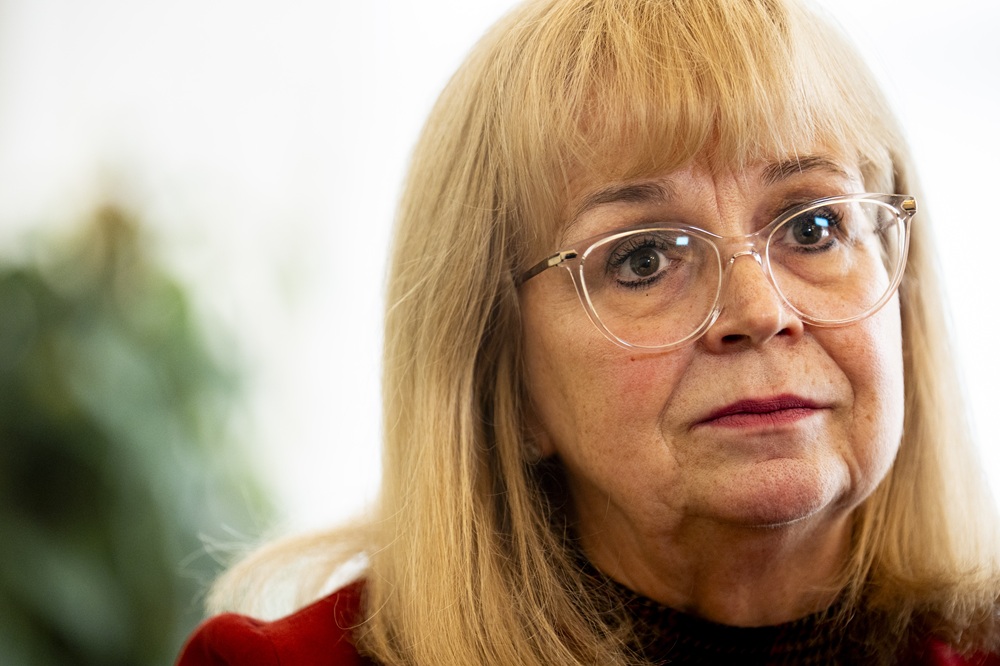
Speaking to journalists as the report was published, she said: “What is of great concern to me, still, is that basic questions cannot be answered.
“No-one was able to confidently tell me how many women nationally report being the victim of sexually motivated crimes in public spaces.
“This gap in knowledge fundamentally impacted my ability to assess how effective current measures are at preventing these crimes.
“For example, we cannot answer basic questions such as ‘how many women were raped by strangers in public spaces, as opposed to someone known to them, in private spaces in England and Wales last year’, and there is limited data on sexual assault and indecent exposure.
“If this data is not being gathered and recorded consistently across forces, how can it be analysed to spot patterns in offending? This is a critical failure.”
Stopping perpetrators
She said that the focus should be on stopping perpetrators rather than changing women’s behaviour, and that data on offenders is “limited and disjointed”.
Lady Elish continued: “Too many perpetrators are slipping through the cracks in an overworked system; police, prison and probation resources are overstretched and underfunded.”
The report also recommended artificial intelligence (AI) should be used to help identify predatory men who can then be “activity managed”.
It said data gathered from police operations should be harnessed together with AI to identify patterns in offending or behaviour and build a profile of offenders.
This work should be consistent, specifically used to gain a better understanding of why men commit sexual crimes, and followed up with targeted interventions to prevent offending, the report added.
National threat
Violence against women and girls has been classed as a national threat, but effective national action on prevention is not being taken.
“Too often prevention in this space remains just words,” she said.
“Until this disparity is addressed, violence against women and girls cannot credibly be called a national priority.”
Funding is difficult to secure because of the lack of data to prove the success of prevention schemes, the report found, and there is an “unacceptable level of inconsistency across England and Wales.”
Ms Everard, 33, was abducted, raped and murdered by the former armed Metropolitan Police officer Wayne Couzens in March 2021.
He had used his status as a police officer to trick Ms Everard into thinking he could arrest her for breaking lockdown rules, as she walked home from a friend’s house in south London.
The Angiolini Inquiry was launched after Ms Everard’s death to investigate how Couzens was able to carry out his crimes, and look at wider issues within policing and women’s safety.
Sarah’s mother Susan spoke powerfully of her grief in a statement to the latest stage of the inquiry.
“Sarah will always be missing and I will always long for her,” she said.
“I go through a turmoil of emotions – sadness, rage, panic, guilt and numbness. They used to come all in one day but as time goes by they are more widely spaced and, to some extent, time blunts the edges.
“I am not yet at the point where happy memories of Sarah come to the fore. When I think of her, I can’t get past the horror of her last hours. I am still tormented by the thought of what she endured.”
Good Samaritan law
The aunt of murdered Zara Aleena welcomed the inquiry’s backing for her calls for a Good Samaritan law, requiring witnesses to act when they see someone in danger.
Farah Naz said: “I hope this recommendation is taken seriously and progresses with the urgency and commitment these cases demand.”
The report also found that there is still no automatic bar to being a police officer or staff member for those who have a conviction for sexual offences.
Lady Elish said: “The police need to draw a clear bright line that shows that those with convictions or cautions for sexual offences have no place in policing.”
Last year the first phase of the Angiolini published its findings into Couzens’ policing career and discovered he should never have been given a job as a police officer.
The inquiry found chances to stop the sexual predator were repeatedly ignored and missed, and Lady Elish warned without a radical overhaul of policing practices and culture, there is “nothing to stop another Couzens operating in plain sight”.
Ms Everard’s family said in response to the inquiry’s first report they believe she died because he was a police officer, adding: “She would never have got into a stranger’s car.”
After the harrowing killing of Ms Everard, it emerged there had been concerns about Couzens’ behaviour while he was a police officer, with reports he was nicknamed “the rapist”.
He joined Kent Police as a special constable in 2002, became an officer with the Civil Nuclear Constabulary in 2011 and then moved to the Met in 2018.
Couzens indecently exposed himself three times before the murder, including twice at a drive-through fast food restaurant in Kent in the days before the murder, but he was not caught.
It was also later revealed Couzens had been part of a WhatsApp group with fellow officers that shared disturbing racist, homophobic and misogynist remarks.
He was sentenced to a whole-life order for Ms Everard’s murder, meaning he will never be released from prison.
‘Utterly unacceptable’
Responding to the latest stage of the inquiry, Home Secretary Shabana Mahmood said it is “utterly unacceptable” that women do not feel safe and that the Government will “carefully consider” the inquiry’s recommendations.
She said a new £13.1 million centre will strengthen the police response, and repeated the Government’s pledge to halve violence against women and girls in a decade.
Deputy Assistant Commissioner Helen Millichap, director of the National Centre for Violence Against Women and Girls and Public Protection (NCVPP), said: “We will now consider the findings and recommendations carefully and in detail, acknowledging urgent action is required.”
She said new national training has been introduced to improve the policing response to non-contact sexual offences and urged victims to report offences to police.
A second report from part two of the inquiry will be published next year, looking at whether there is a risk of issues from the first phase happening again, such as failures in police vetting, police culture and poor police investigation into reports of sexual offences.
A third phase of the inquiry will consider the crimes of David Carrick – who also served in the Met’s Parliamentary and Diplomatic Protection Command and was handed 36 life sentences in 2023 after being unmasked as a serial rapist.
Earlier this month he was handed another life sentence for molesting a 12-year-old girl and raping a former partner.
Support our Nation today
For the price of a cup of coffee a month you can help us create an independent, not-for-profit, national news service for the people of Wales, by the people of Wales.


