


Cutting drink-drive limit not designed to stop ‘a great night out’ – minister
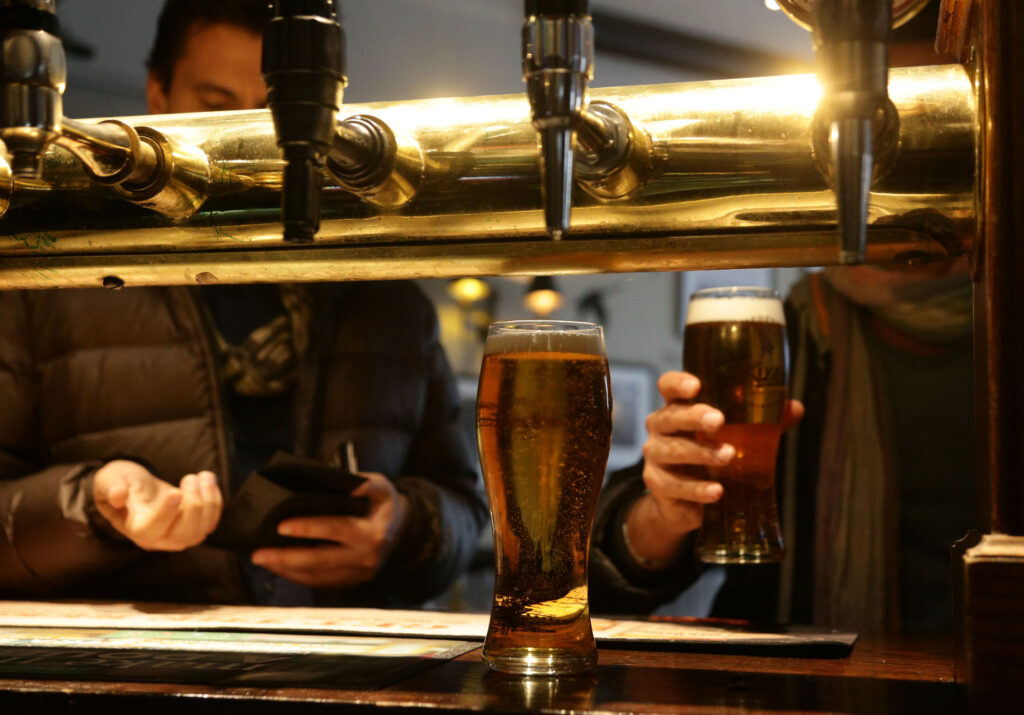
Plans to tighten the drink-drive limit are not aimed at stopping people enjoying a “great night out”, a minister said.
Transport minister Lilian Greenwood urged pubgoers to leave their cars at home or have an alcohol-free beverage as she was questioned about the Government’s new road safety strategy.
The strategy – which is the first of its kind in more than a decade – aims to reduce deaths and serious injuries on Britain’s roads by 65% by 2035.
It includes a proposal to lower the drink-drive limit in England and Wales, which at 35 micrograms of alcohol per 100ml of breath is the highest in Europe alongside Northern Ireland and Malta.
Under the strategy, this may be reduced to 22 micrograms, which is the limit in Scotland.
The power to cut Northern Ireland’s drink-drive limit is devolved to the Northern Ireland Assembly.
Latest figures show an estimated 260 people were killed on Britain’s roads in 2023 in crashes involving a driver who was over the alcohol limit.
Ms Greenwood told Times Radio: “We don’t want to stop people from going to the pub and having a great night out.
“What we’re just saying is don’t take your car.
“So that might mean that, you know, some places you’ll be able to take a bus or a taxi.
“In other places, you’re going out with a group of mates, one of you agrees to be the designated driver.
“I know from working with the pub trade how many great low-alcohol drinks there are out there now, most of our favourite brands produced in a low-alcohol version, so people have lots of opportunities to do something, to choose a different drink when you want to go out and, you know, enjoy yourself in the pub.”
She said there was evidence from Scotland cutting its drink-drive limit in 2014 that it did not have a “significant impact” on the pub trade.
The road safety strategy proposes to introduce a requirement for some drink-drive offenders to have alcolocks installed in their vehicles as a condition of being allowed to drive again.
Alcolocks are devices which prevent a vehicle from being started or driven unless the motorist passes a breath test.
They are already used in several countries such as Australia, Belgium, Canada, the Netherlands and the US.
The strategy, which will be subject to consultation, also features a plan to introduce eyesight tests for drivers aged 70 and above.
Drivers are currently not subjected to mandatory tests once they obtain their licence, no matter how old they become, although they are required to inform the Driver and Vehicle Licensing Agency (DVLA) if they are no longer fit to drive.
Ms Greenwood said an ageing population is making it more important to test older drivers’ eyesight.
She told BBC Breakfast: “We know that our eyesight can deteriorate as we get older.
“I’ve had coroner’s reports where people have been killed by people who’ve got poor eyesight.
“Sometimes they’re driving in a reckless way when they’ve already been advised that they shouldn’t be driving anymore.
“In other cases, people didn’t realise that their eyesight had deteriorated.
“But we’ve got an ageing population.
“We know that this is a growing issue, and that’s why we’re proposing this action today.”
Support our Nation today
For the price of a cup of coffee a month you can help us create an independent, not-for-profit, national news service for the people of Wales, by the people of Wales.


