


Demand for homes ‘far outstripping supply’ as council warns of growing crisis
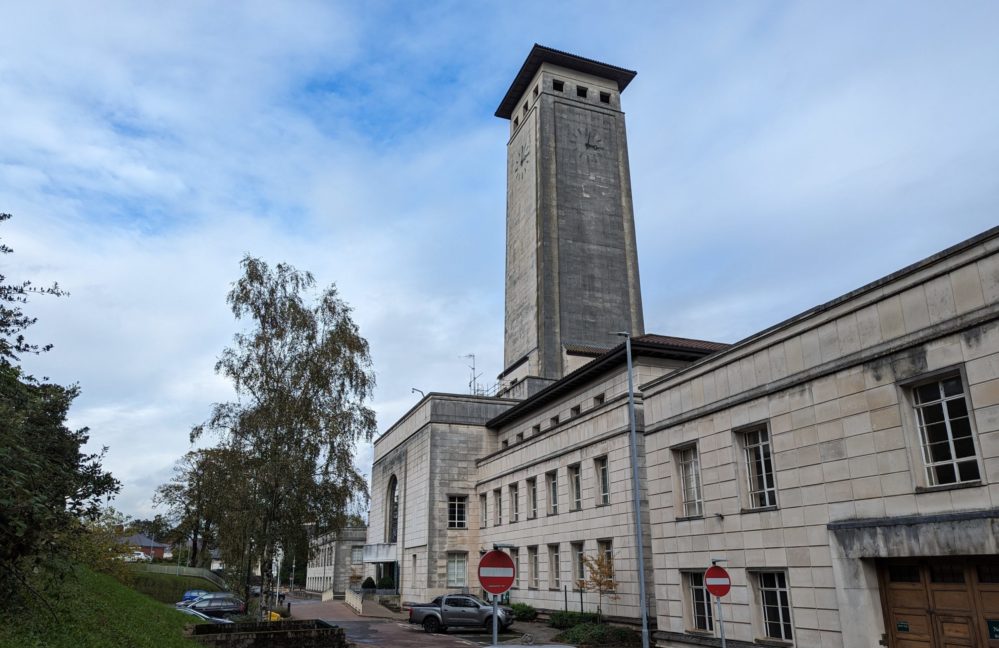
“Unprecedented” housing pressures are placing more people in a Welsh city at risk of homelessness.
Newport City Council said it has made progress in tackling homelessness in the past year – halving the number of people sleeping rough and helping move more families from temporary accommodation to a more stable home.
Meanwhile, initiatives such as Homewards, set up by Prince William, have brought organisations and charities together to take a more holistic approach to the issue and bring “everyone around the table”.
Despite these optimistic signs, senior councillors have warned that demand for properties in Wales’ fastest-growing city far outstrips supply, and more homes must be built.
Compassion
In a call for compassion and better understanding of the issue, they also said enduring stereotypes around homelessness must also be changed.
“There is a perception that homelessness is only about rough-sleeping or experienced by people due to their life choices, and we need to challenge this narrative,” said Cllr Saeed Adan, the cabinet member for housing.
Debt, domestic violence and abuse, relationship breakdowns, and landlords deciding to sell rental properties are all common reasons the council hears from people worried about losing their homes.
Another major factor is “ridiculous” private rental prices, added Cllr Dimitri Batrouni, who leads the local authority.
“Most people who are in the private rental sector are paying more than you would pay for a mortgage on a monthly repayment,” he said. “That’s not just a Newport issue, but Newport’s experiencing a particular problem because of its population growth. Demand is high.”
The most recent census found Newport’s population had increased by 9.5% over a decade to nearly 160,000 in 2021 – the greatest increase in Wales.
Nationally, the Welsh population grew by 1.4% over the same period.
‘Embryonic stages’
The city council is currently preparing a new Local Development Plan – an overarching blueprint for new building – and regional discussions on housing strategy are in the “embryonic stages”, explained Cllr Batrouni.
He said “the real kicker” is more private rental supply homes, for which Newport realistically requires “a huge amount of supply”.
Beyond demand for housing, the financial strain on many residents is a huge burden which leads to homelessness worries and dangers.
“People are working two, three jobs and they’re still struggling,” said Cllr Batrouni. “People are working their arses off. They’re doing the right thing, they’re paying everything and then one job goes wrong and suddenly they can’t afford anything.”
This is the reality for many people who seek the council’s help, and is far from accusations that someone facing homelessness must be “lazy”, the leader added.
“Some people might have personally made terrible decisions that meant they’ve ended up on the streets, but some might not have,” he said.
“You can never guarantee you will not find yourself in that situation. Life is very, very harsh and unduly unfair.”
Among Newport’s improving homelessness figures is a “roughly 50% drop” in couples with children requiring temporary accommodation.
Disrupted childhoods
Cllr Batrouni says families have been prioritised to not just help children now, but also to try and “break the cycle” of young people who have disrupted childhoods later becoming at risk of homelessness when they are older.
“We have people on the streets who predominantly have had trauma in childhood,” he explains. “All the evidence seems to suggest that children who experienced an unstable life continue that – if you really want to break the pattern, you reduce [trauma] as much as you can early on.
“If we get this right, this won’t be a conversation in 15 to 20 years’ time as they become adults. And that surely is the goal.”
While many families have been moved on from temporary accommodation, there remains concern around the number of individual adults still waiting for a home, seemingly stuck in the system due to a lack of available housing.
Currently, the council believes more than 700 new one-bedroom homes are needed to keep up with demand.
Planning policies
Cllr Batrouni admits the council “has got to deal with the here and now”, but must also “get better at the predictive part” of planning policies, so the city is better prepared for the housing demand of the future.
One type of property that generally caters to individual adults is the HMO (house in multiple occupation), but these all too often prove controversial among neighbours who fear they pile pressure on local services and can attract problem behaviour.
Cllr Adan said Newport will soon receive a bespoke “HMO study” which reviews current rules around overconcentrations of those properties – and which councillors frequently hear are too relaxed.
“What we’ll be looking at is a measurable way of controlling HMOs through the development management process, so it doesn’t impact those areas that are significantly affected,” he said. “What we don’t want to cause is any inequality. We’re hoping that on the back of this new study that we receive, that we change the rules.”
Support our Nation today
For the price of a cup of coffee a month you can help us create an independent, not-for-profit, national news service for the people of Wales, by the people of Wales.



and in other news,
the demand for construction workers is ‘far outstripping supply’ as the population demands non jobs or no jobs, indicating that they also have little or no desire to ever pay for houses they are demanding, along with all the other expenses of life.
We had plenty of construction workers before the boomers sent them home yet you still blame young people.
As explained in the article, those who make ‘terrible decisions’ for their future are not from a certain age group but are following a family tradition where previous generations ‘got away with it’ with free money that is no longer there.
But specifically on the point about construction workers, we had plenty and sent them home.
We were struggling for construction staff before the disaster of Brexit.
My point is that we have physically able teenagers now very skilled at choosing to claim benefits online from their bedrooms, instead of heading out for a hard days physical work in midwinter on a muddy construction site.
Only because they were lured to London by higher wages building highly profitable empty penthouses for oligarchs to hide their illegitimate wealth. That’s still a problem by the way and the sooner London bans second homes the better so the limited construction workers we do have are put to use building homes that people will actually live in.
Housing in Newport is a cheaper alternative for Bristol commuters.
How many of these ‘homeless’ people are actually from Newport? Surely a train ticket for begger arrivals to go back to Bristol would be much cheaper.
Hopefully this is considered as some will benefit from being supported in the area they grew up in and have friends and family. Others will have left for good reasons, but perhaps those reasons can be solved with the right support.
Perhaps if Bristol commuters weren’t using Wales as a cheap alternative, we wouldn’t have such an issue.