


Disabled driver ‘forced back to petrol’ over council EV charging rules
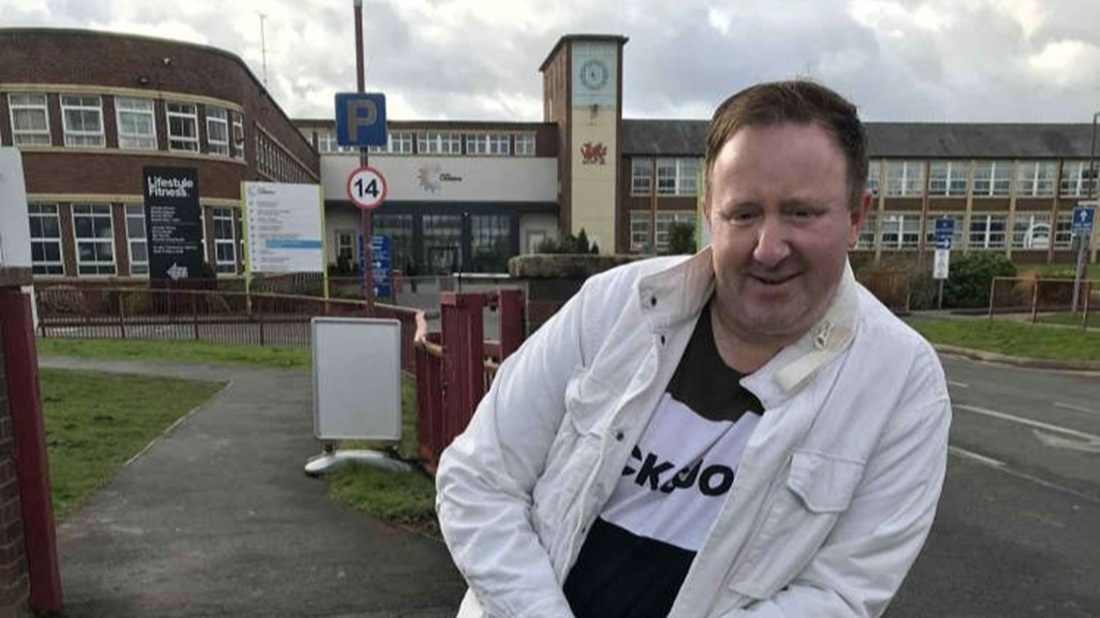
Alec Doyle, Local Democracy Reporter
A disabled driver will appear on the BBC’s Rip Off Britain highlighting a Welsh council’s refusal to allow residents without a driveway to install electric vehicle chargers.
Three years after the authority identified the need for a solution allowing drivers with on-street parking to charge their vehicles at home, Flintshire still does not permit installation unless you have a drive.
Now Connah’s Quay resident Phil Woods has spoken about the council’s position for a TV item on the ‘postcode lottery’ facing electric vehicle drivers due to be broadcast on Thursday, September 10.
“I had a motability car,” he said. “Most motability cars are now electric and need charging and I was happy to make the switch as I wanted to help the environment.
“But I have been forced to surrender it and go back to petrol due to Flintshire Council’s failure to make provision for those who have to park on the street.
“Because I am on a limited income I had to take my vehicle either to a local authority chargepoint, which would take all night to charge my car, or to a Tesla supercharger, which was cheaper and quicker than the Flintshire charger but still required me to go out late at night.
“The council seems to think it is OK to ask a disabled person to take their car to a location, plug it in, arrange transport back to their home while it charges overnight then arrange transport back and to pay a premium for it.
“The most efficient way to charge an electric vehicle is at home but we are not allowed to.”
He has now returned to using petrol but says he cannot understand why – three years after first considering it – Flintshire has not brought in a solution.
“There are a number of companies – one featured on Dragons Den – which specialise in creating cable gullies across pavements to essentially bury cables safely,” said Phil.
“They are routinely used in many places so properties which only have on-street parking can install home chargers.”
Among the places where cable gullies are permitted are Oxford, Salford, Stoke-on-Trent, Bristol, Brighton and Newport.
Safety
According to the council the problem is a matter of highway safety. On 2023 Flintshire’s now-defunct Climate Change Committee debated the issue.
At the time Cllr David Healey told members: “While supporting and promoting the use of EVs we must recognise that currently off-street home charging is not a possibility for everyone. Under the highways act 1980 section 178 residents are not permitted to place any wires over, along or across a highway without the consent of the highway authority.
“We do not currently permit the installation of pavement channels or gullies to accommodate charging cables. We are aware of trials taking place and are monitoring the outcome for future consideration.
“The trailing of cables across designated footways can pose a major tripping hazard for the elderly, disabled or partially sighted and blind pedestrians. Additionally if electrical equipment or cable is unprotected from water ingress, damaged, displaced or vandalised leaving live wiring exposed then there can be an electrocution risk or a connected vehicle could catch fire.”
Cllr Chrissy Gee requested Flintshire Council liaise with other authorities that were trialling gully systems to take learnings and form a new policy. The committee voted in favour and the authority was supposed to have been monitoring trials at the time in order to bring forward a policy.
Today, in 2026, there is still no new policy.
Responsibility
In response to Mr Woods’ claims and the Rip-Off Britain feature Katie Wilby, Chief Officer for Streetscene and Transportation, said: “Flintshire County Council supports the transition to electric vehicles and recognises that access to convenient charging is an important factor for residents considering EV ownership.
“However, the council also has a responsibility to ensure that any equipment installed within or affecting the public highway is safe, accessible and does not create risks for pedestrians, particularly elderly, disabled or visually impaired users.
“Applications are therefore assessed against highway safety, accessibility and maintenance considerations. At present, the council does not permit the installation of EV charging cable gullies or similar apparatus within the public highway.
“This position reflects ongoing concerns regarding public liability, long-term maintenance responsibilities, accessibility and the safe management of equipment located on highway land.
“We appreciate that this can be frustrating for residents without off-street parking and we acknowledge the challenges this presents for some EV users. For this reason, the council continues to explore opportunities to expand publicly available charging infrastructure and has already delivered charging facilities at publicly accessible locations across the county.
“We are monitoring developments and trials taking place elsewhere in the UK and will continue to review emerging technologies, guidance and evidence – however there are currently no approved plans to trial EV charging cable gullies within Flintshire.”
Support our Nation today
For the price of a cup of coffee a month you can help us create an independent, not-for-profit, national news service for the people of Wales, by the people of Wales.
Get more trusted Welsh news
Choose Nation.Cymru as a preferred source in Google News to see more of our journalism.



Get out of the Ark Flintshire!
Put and duct in, flaps on top. It’s been used for decades to safe cable runs.
If you own a house without car parking, does that really give you the right to take ownership of the adjoining public road and pavement? I appreciate it’s inconvenient for him personally, but it’s a shared, public street and not his driveway! Digging channels in the pavement is just going to be a maintenance nightmare – who’s going to fund their upkeep and ensure they don’t become trip hazards? Who is checking that the electrical installation is suitable, given that there are non-trivial issues to consider around EV charging and earthing arrangements? And anyway, isn’t it all redundant is somebody… Read more »
He is driving a mobility vehicle, meaning he is disabled, therefore likely to have disabled parking marked outside his home. So if anyone parks in his spot, he can have action taken but more than likely, ‘his spot’ will remain free for him.
And seeing a number of councils already allow gullies, then there is no reason why Flintshire or any other council should prevent them being used
Dinosaurs.