


‘Don’t let Wales become an energy corridor for south east England’
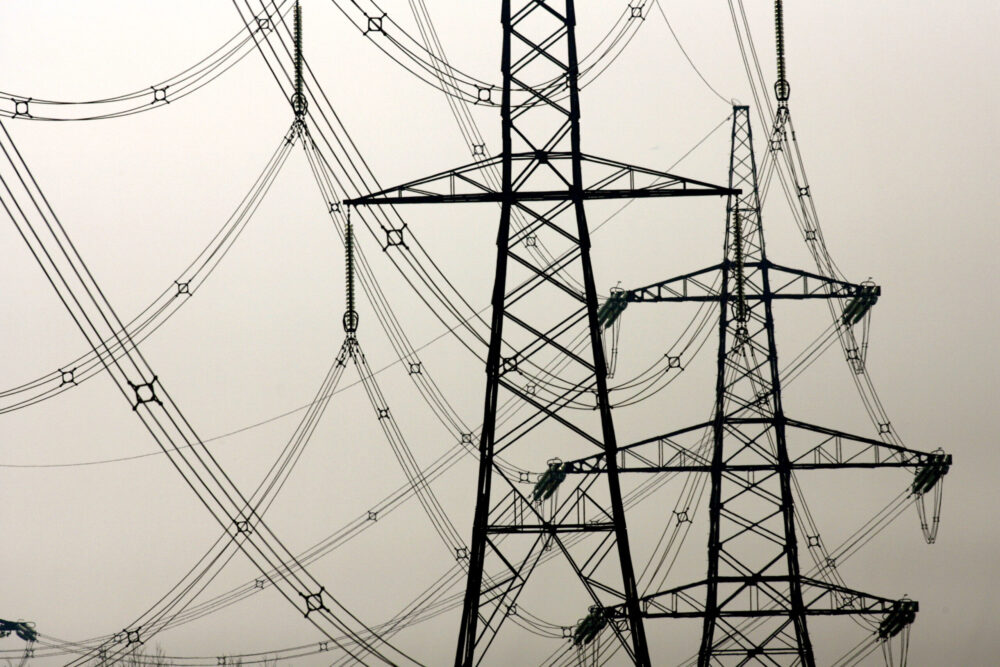
Martin Shipton
A leading environmental charity has warned that new electricity transmission plans risk turning Wales into an energy corridor for the benefit of the south east of England.
CPRW, The Welsh countryside charity, says the network proposals could turn Wales into no more than a conduit for power generated in Scotland and destined for demand centres in southern England.
The plans, published by NESO (National Energy System Operator, the independent system planner and operator for Great Britain’s energy system) as part of its network design work, show major new and upgraded electricity infrastructure across Wales.
This includes subsea cables from Scotland into north Wales, reinforcement around Pentir and Bodelwyddan, and a major north–south route through mid Wales linking into England.
CPRW says the proposals raise serious questions about who the infrastructure is really for, who benefits, and who bears the cost.
The charity argues that Wales is being asked to host nationally significant infrastructure not simply to meet Welsh energy needs, but to move large volumes of electricity through Welsh landscapes and communities towards England.
Dr Jonathan Dean, CPRW’s energy expert, said: “Many of the elements we anticipated are now clearly visible: subsea cables from Scotland coming into Pentir and Bodelwyddan, with the ultimate destination being England below the Midlands. The route then passes through mid Wales, where it appears able to ‘hoover up’ additional onshore wind generation along the way.
“Electrically, anywhere from Wylfa to Ironbridge is part of the north Wales grid, while anywhere from Pembroke to Gloucester is part of the south Wales grid.
“Presenting this as three separate projects may offer flexibility in delivery, but it also has the effect of dividing public opposition.
“However it is packaged, the outcome is clear: Wales is being used as a transmission corridor for Scottish wind power destined for southern England.”
CPRW says the proposals must not be assessed as isolated schemes, route by route or project by project. Instead, the Welsh Government, the UK Government, regulators and network operators must be honest about the full strategic picture.
The charity is calling for a transparent assessment of the cumulative impact on Wales’ landscapes, rural communities, protected areas, farming, tourism and cultural heritage.
Jonty Colchester, Chair of CPRW, said: “This is not just about pylons, substations or individual lines on a map. It is about the future role Wales is being asked to play in the UK’s energy system.
“CPRW supports the transition to clean energy, but that transition must not come at the cost of treating Welsh landscapes as the easiest route to somewhere else. Communities deserve the full picture: where the power is coming from, where it is going, why these routes are being chosen, and what alternatives have been properly considered.”
Undergrounding
CPRW believes Wales needs a stronger national position on energy infrastructure, including proper consideration of offshore routing, undergrounding in sensitive landscapes, cumulative impact, community benefit, and the protection of nationally important landscapes.
The charity is urging communities, elected representatives and local authorities to scrutinise the proposals carefully and demand that Wales is not left carrying the visual, environmental and social burden of an energy system it sees as designed primarily to serve demand elsewhere.
Support our Nation today
For the price of a cup of coffee a month you can help us create an independent, not-for-profit, national news service for the people of Wales, by the people of Wales.
Get more trusted Welsh news
Choose Nation.Cymru as a preferred source in Google News to see more of our journalism.



Nor for any part of England. We already produce double the electricity that we use. England would never survive if they were independent!
That is because of two huge gas power stations, Pembroke and Connahs Quay, which at some point will have to be retired.
Why not put a line of pylons from Scotland down the spine of the UK to the south east of England? Why route the pylons through Cymru?
Trying to get that through England within a timeframe of a couple of decades to allow for the storms of protest and court cases to be dealt with is one possible reason why the pylons aren’t being routed through England.
Wales is usually an easier option because we don’t often get angry enough…
True. The majority of the Cymry don’t mind being walked over and the English know we are a soft touch. We just talk and complain but never do anything about it. No backbone.
The biggest bottleneck is on the Scotland England border where there are two large transmission lines, one on the Carlisle side the other over towards Newcastle. To get around this there will be two undersea High Voltage Direct Current cables on the Western Side (one is already operational between Hunterson in Scotland and Connahs Quay). On the eastern and what this article does not tell you is that the plan is for four HVDC undersea routes between Scotland and England (Humberside and Lincolnshire) The big question mark is the route through the middle of Wales and why the HVDC cables… Read more »
Or maybe.. just maybe the pylons already exist.. just sitting there.. Two nuclear power stations in North Wales closed, but the lines still exist, they benefit us in North West Wales as the bring power to us from the East and transport offshore and onshore wind generated energy, which provides much needed work and jobs in NW Wales.
There was a similar uproar in the north when Wylfa nuclear was built. The transmission lines to England were placed through Eryri National Park between Llanfairfechan and Rowen into the Conwy valley, through a drovers pass at Bwlch y ddaufaen. Here is a photo. A ‘Roman road’ was converted into a modern trackway for construction and maintenance, and the footprint damaged a hill fort, neolithic standing stones, a stone circle. By that time the National Trust were the landowners, supported the route and still get an income from the lines. To the UK government, Wales is not a country. Just a… Read more »
Here we go again England abusing Wales flooding our valleys for water and flooding villages now these great big ugly electricity pylons for the English do people of Wales get a say or do what the English normally do ignore us and walk all over us
Presumably there’s a nice business rates cheque going to the bay every year. What’ll this be spent on?
The article is interesting but does not convey the reasons for the new transmission lines. Links to the NESO article would have been helpful, https://www.neso.energy/document/383376/download The new undersea High Voltage Direct Current (HVDC) lines are required to overcome bottlenecks in the transmission network to get cheap wind generated electricity from Northern Scotland to England, yes, and Wales, so that will can stop paying for generation to be curtailed and wasted, ie to make bills cheaper. What this article does not tell you is about the four undersea HVDC cables planned from Scotland to England through the North Sea to Humberside… Read more »