


Dozens of MPs call on Starmer to prevent Lords from blocking assisted dying Bill
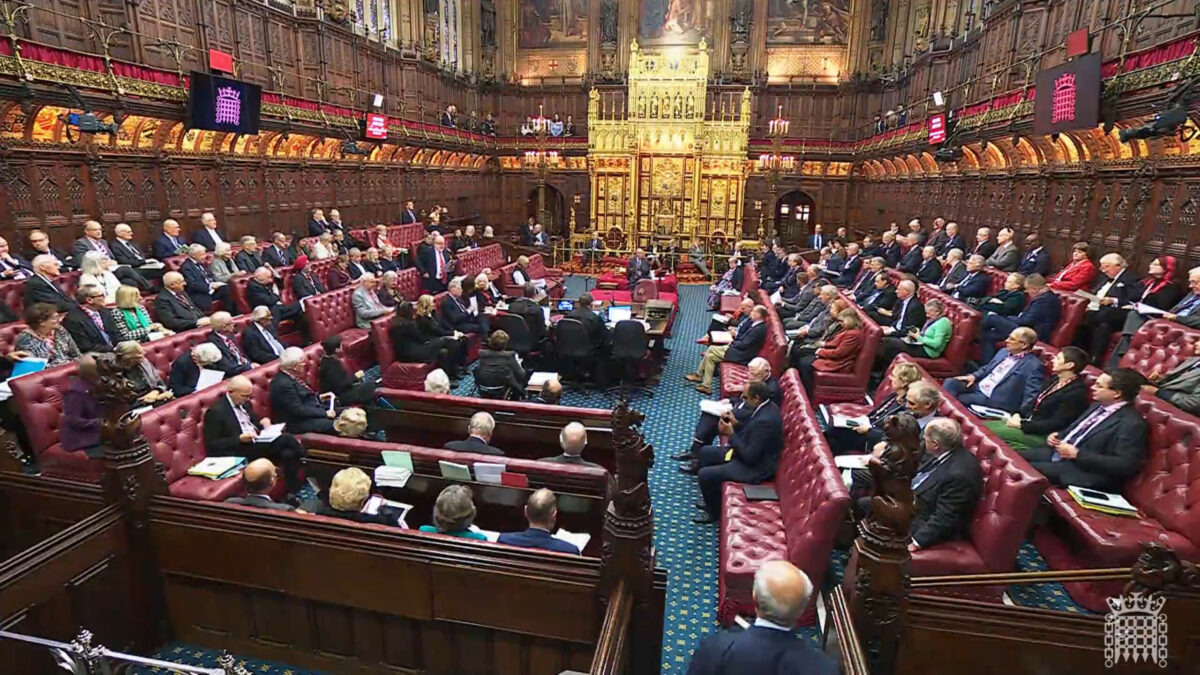
More than 100 Labour MPs have written to the Prime Minister asking him to stop peers from purposefully blocking the passage of the assisted dying Bill.
In total, over 150 MPs have signed the private letter addressed to Sir Keir Starmer, including parliamentarians from the Conservatives, Liberal Democrats, Greens, Plaid Cymru and Reform UK.
They have raised concerns about the slow progress of the Terminally Ill Adults (End of Life) Bill through the House of Lords, with only half of the 1,200 amendments up for consideration having been debated after 11 days of scrutiny.
Opponents of the Bill have been accused of trying to “talk out” the Bill as it makes its way through the Lords.
Now, a joint letter co-ordinated by Peter Prinsley, the Labour MP for Bury St Edmunds and Stowmarket, has urged the Prime Minister to intervene in the situation.
The MP and consultant doctor wrote: “A small number of peers have been using procedural tactics to block the Bill in the House of Lords and it now appears very likely that they will prevent it returning to the Commons before the end of this session.
“While we fully respect the Government’s neutrality on the principle of assisted dying, we are confident that you would agree with us that we cannot be neutral on the fundamental democratic principle that it is for the elected House of Commons to decide on this matter.”
His letter added: “Our constituents, in every part of the country, strongly support a change in the law and it is clear to us that the issue must be resolved sooner rather than later.
“Our ask is simple. That, whether or not the Bill returns through the private members’ bill ballot after the Kings Speech, time will be found for Parliament to come to a decision in the next session.
“It would remain a conscience issue for MPs, the Government’s neutrality would be maintained, and it need not take up time reserved for government business.”
Lord Falconer, a Labour former minister and the Bill’s sponsor through the House of Lords, has said the upper chamber is in danger of being seen as an “irrelevant talking shop” if it does not make progress on the Bill.
He has also insisted the Bill would not be at the “end of the road” should Parliament run out of time to conclude debate on it this session, and has vowed to use a rare parliamentary procedure to override peers.
The House of Lords is also facing pressure to make progress on the Bill from a public petition on Parliament’s website, which has more than 97,000 signatures.
“We believe the decision of MPs must be respected, especially on matters of social change, and that unelected Lords have a responsibility to scrutinise bills, not block them,” the petition says.
The UK Government’s stated position on the assisted dying Bill is that it will remain neutral, as changing the law should be a matter of individual conscience for parliamentarians.
Support our Nation today
For the price of a cup of coffee a month you can help us create an independent, not-for-profit, national news service for the people of Wales, by the people of Wales.



Not just this disgraceful example of the Lords over reach, but as recent scandals expose its toxic culture of privilege shows, its time to abolish the House of Lords. It actively works against democratic decision making. An elected second chamber is long overdue.
For the record Assisted dying wasnt in the Starmer govt’s manifesto – its a private members bill which wasnt voted on during the 2024 uk general election.
Yes, I’m aware that it is a Private Member’s Bill. It is the power to frustrate the Commons generally that is inherent in this delay tactic. The decision either way, should be democratic.
The Lords is essentially all appointed now and that is only because Blair couldn’t manage to make it 100% elected which is what both houses voted for. It is in the interest of the Commons to perpetuate this. The Commons is no more democratic than the Lords because the whipping system means that the members can’t really vote to represent their constituents. The Lords needs to be reduced in size and elected on a different basis to the Commons probably similar to the Senedd. It does the spadework on most bills because the Commons are superficial.
Assisted dying wasnt in the Starmer govt’s manifesto – its a private members bill which wasnt voted on during the 2024 uk general election. Many disabled campaigning groups and individuals, among them Welsh disability rights activist Tanni Grey-Thompson, have expressed serious concerns about the bill.
This is what referenda are for, not approval to trash the hopes and dreams of young people.
Could you explain what you mean? Referenda using first past the post are a disaster like Brexit. In that case about 30% didn’t vote. About 34% voted against and 36% for. That was described by the BBC and others ever since as an overwhelming majority. I beg to differ. In most other countries a constitutional change requires a vote of 60% of the total eligible voters. In the case of Brexit a minority voted for and it was put into effect.
Asking people what should happen when they or their loved ones reach their final days is very different to asking them to assess a trading relationship.
This bill should be carried over or reintroduced by the government. It is not a suitable subject for a private members bill. A new bill could be drafted based on all the work already done. A review of abortion legislation is also needed and that too could be done in the next Parliament. This will be difficult because on the one hand it is not good to prosecute women who have procured a drug induced abortion outside the legal framework and on the other hand it is necessary to stop viable babies being killed in utero by late abortion techniques… Read more »