


Dream flats turn into a nightmare due to building defects and rising costs
Kieran Molloy, Local democracy reporter
People were sold their dream flats at a housing development in Cardiff but due to building defects, cladding works and the rising costs of both for the residents, it has quickly turned into a nightmare.
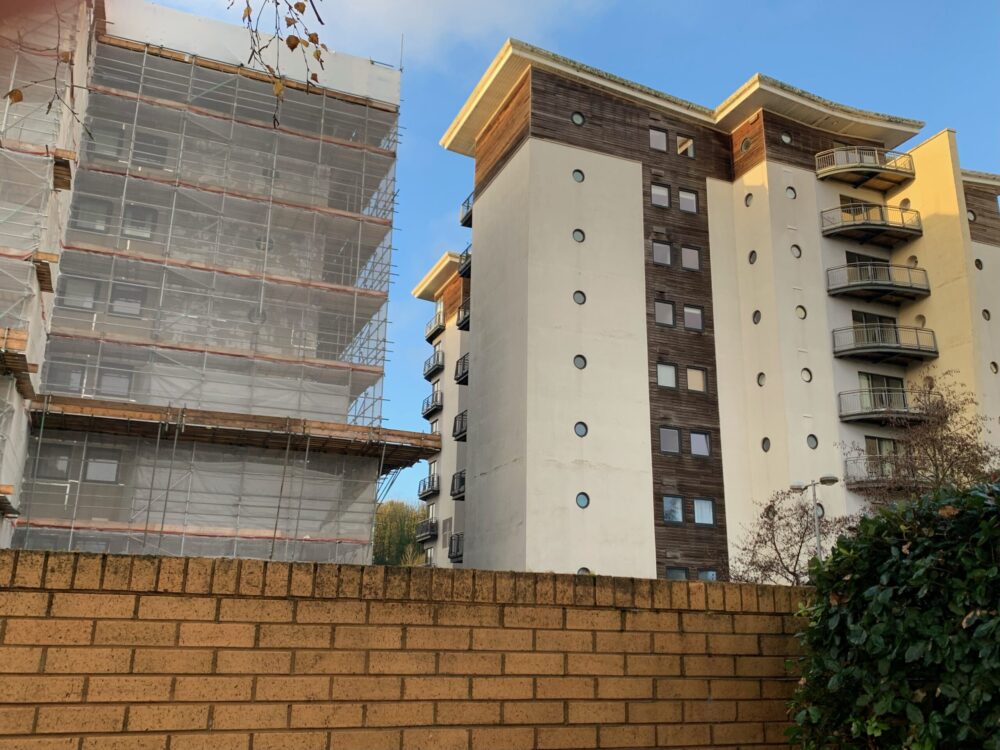
Victoria Wharf is located on River Ely heading into Cardiff Bay, it is home to 450 flats spread over multiple blocks.
People own their flats as part of a leasehold agreement, with some choosing to reside there and others seeing it as an investment.
Due to a series of problems throughout the buildings, which residents attribute to design defects and the developer, Taylor Wimpey, attributes to maintenance issues, leaseholders are having to pay thousands of pounds through growing insurance premiums and service charges.
One resident, Peter Larwood, 75, who is leading the charge at Victoria Wharf, told the Local Democracy Reporting Service (LDRS): “There’s an incredible amount of stress and angst, financial burdens, people that were strong have been broken.”
Leaseholders for the flats told the LDRS about metal on the many balconies corroding, water pooling and leaking on the roof of a block due to the design, thermal paint chipping off metal in the car park and other defects and maintenance problems in the building.
The issues cause the leaseholders to be hit with additional costs on top of their standard service charge, often involving thousands of pounds extra and reaching borderline unmanageable levels.
A leaseholder in the building, Marc Harries, 55, said “We’ve been sold a dream with guarantees and warranties and the backing of some of the biggest house builders in the country, only to watch all of that dream disappear and those promises evaporate.”
He continued that these extra costs weren’t “part of the dream”.
One of the most significant problems on the site is a soil stack that was not correctly installed.
A soil stack is an integral part of a building’s plumbing system which transports sewage and wastewater to an underground drainage system.
Usually, these are secured against the walls with clips to stop it moving.
Mr Harries told the LDRS: “There’s no clips, so it’s a pretty fundamental problem”
He continued: “When [the pipes] flex, they break. So it’s leaked all the way through the building, it has leaked into the concrete, into the floors, one building will have to be evacuated.
“Everybody will have to come out and go and live somewhere else.
“Everybody’s gonna go, so people who have children in schools, they may walk to work – where are they gonna go?
“There isn’t enough supply for all those people to move down the road or around the corner. Some people could be displaced significant distances.
“That’s their lives turned upside down.”
A spokesperson for the property management company who looks after the building, FirstPort said: “A remediation programme is currently underway at Victoria Wharf, led by the developer to address historic, inherent building safety matters.
“During projects of this scale, it is common for further works to be identified once more detailed investigations of the building take place.
“FirstPort continues to work with the developer and relevant specialists to support the remediation programme and ensure the appropriate works are carried out in the interests of residents.”
In 2019, it was found that the buildings had defective cladding and a lack of internal barriers which presented a major fire risk for the development.
After a long wait, in 2024 the original developer Taylor Wimpey agreed to bring the buildings up to code.
The remedial cladding work carried out by the developer is essentially for fire safety and involves replacing the building’s insulated render facade with a new non-combustible insulated render system.
However, while some residents may have breathed a sign of relief, this remedial work has presented a host of other problems.
Alison Steele, 52, a resident at the development who is selling her flat, told the LDRS: “They stripped the external walls of the rendering… we were right done to the bare bones of the plaster board and it was absolutely freezing cold, it was like an ice box in my apartment.”
She also talked about being boxed in her apartment by the remedial work, including plastic wrap that blocked her from opening her windows.
She said: “I’m like a mummy inside my building, they’ve mummified me.
“I’ve got no air, I have no air flow in my apartment whatsoever.”
Ms Steele is currently selling her flat to another resident of the building due to the extensive costs she is incurring due to insurance premiums and additional maintenance bills as well as the costs of starting a new business.
She said: “I’m very very sad to have to go but I can’t sustain these costs anymore.
“It’s just not doable anymore.”
A spokesperson for Taylor Wimpey said: “While we understand this is frustrating for residents, it is the view of Taylor Wimpey that the balcony and roof issues are maintenance problems and as such falls outside of the Group’s responsibilities under the Developer Remediation Contract and the cladding remediation works.
“Taylor Wimpey is not the Freeholder or Responsible Entity for Victoria Wharf.”
However, legislative change has arrived.
The Welsh Government recently passed the Building Safety Bill (Wales) which establishes legal responsibilities for building managers and gives residents clear routes of redress.
This brings Wales in line with England’s Building Safety Act, passed in 2022, and goes further to cover all buildings regardless of type, height or tenure.
Cabinet Secretary for Housing and Local Government, Jayne Bryant said: “None of this would have been possible without the support and expertise of so many partners.
“I want to pay particular tribute to the three Welsh Fire and Rescue Services and the many residents and leaseholders who shared their lived experience with us — their voices have shaped this legislation and will continue to matter as we implement it.
“By passing this Bill, we have taken a huge step forward in ensuring that the people of Wales are safe in their homes.”
However, the Welsh Cladiators, a group formed to push for legislative change regarding cladding, say that these changes have come too late.
In England, it took the UK government three months to enact the bill into law. In Wales, it will take nine months – three times as much.
Originally, it was going to take a full year until amendments were made to the bill by Rhys Ab Owen MS.
Peter Larwood, who is involved in the group, said: “That’s ridiculous.”
He continued: “You can’t use any of the benefit (of the bill) until nine months.”
Welsh Government bills are subject to further consultation after being passed compared to UK bills.
The group also criticised the Welsh Government for taking so long to pass the bill, while English counterparts have been under legal protection for four years.
Previously, the Welsh Government took an alternative approach from the rest of the UK through the Welsh Building Safety Fund and work done with developers through the Deed of Bilateral Contract.
While the change the Welsh Cladiators fought for has come, it has taken a considerable cost.
Mr Larwood, who has retired, told the LDRS: “I spend literally every day of my week doing something with Victoria Wharf, trying to fight the ante that we’re facing everyday.”
He continued: “It’s a massive task and sometimes I’m still on the phone at ten o’clock at night.”
Support our Nation today
For the price of a cup of coffee a month you can help us create an independent, not-for-profit, national news service for the people of Wales, by the people of Wales.


