


Drought risk rises as climate change drives ‘weather whiplash’, officials warn
Rebecca Speare-Cole – PA Sustainability Reporter
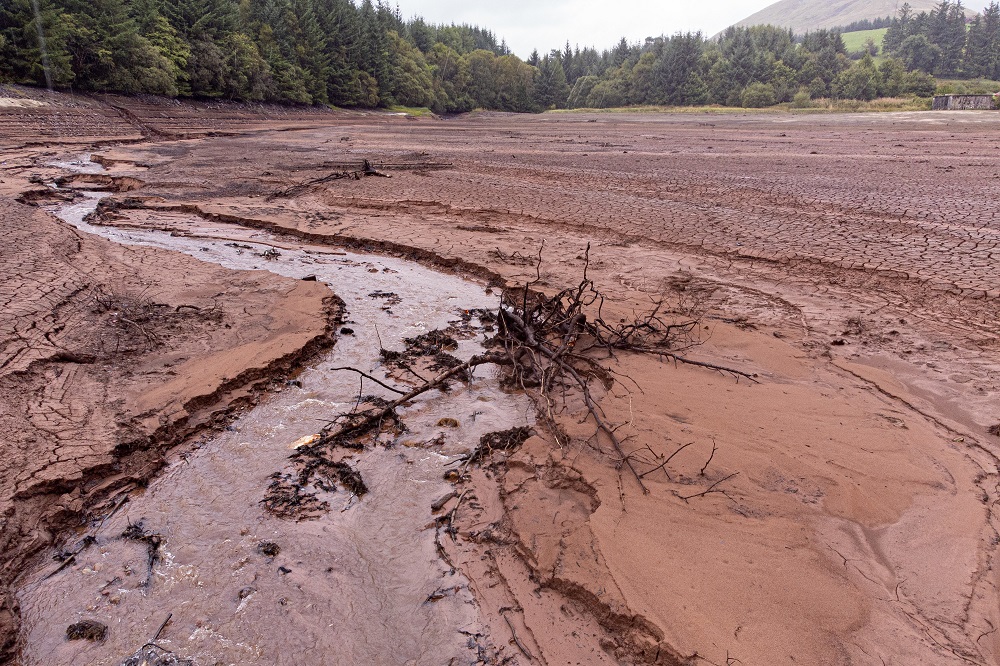
The risk of drought this year has risen for some UK areas as climate change continues to drive a “weather whiplash”, officials have warned.
The national drought group, which brings together the Met Office, regulators, government, water companies, farmers, scientists and conservation organisations several times a year, said water resources remain in a relatively healthy position because of the exceptionally wet winter.
However, the group warned that dry conditions in spring have increased the risk of drought this summer, with some areas already seeing the impacts.
England and Wales saw their warmest spring on record this year, thanks partly to the “exceptionally early” heatwave that hit the UK at the end of May.
The season also brought a north-south divide, with northern England receiving 90% of its average rainfall in recent months compared to just 50% in southern England.
East Anglia is set to return to the status of “prolonged dry weather” next week, while Devon and Cornwall are on a watchlist to enter prolonged dry weather later in the summer, according to the group.
Farmers are also facing growing pressure, with many reporting issues with the growth of spring crops.
They said the conditions forced them to start irrigation earlier than usual, which involves taking water from rivers and lakes to sustain crops in dry soil.
Officials said the Environment Agency is working with water companies on their drought plans and is actively monitoring water levels and rainfall patterns.
Dry
Helen Wakeham, national drought group chairwoman and director of water at the Environment Agency, said: “We enter summer in a generally favourable position, but we can never be complacent ahead of those crucial drier months.
“Heatwaves will continue to be a concern as they can drive spikes in water demand, so we need to continue to work collaboratively to use our finite water wisely.
It comes after the group met on Thursday to share intelligence on water resources, ongoing research and drought preparation planning as they continue to collaborate on how to protect the country’s finite water supplies.
At the meeting, they noted that the recent conditions has placed particular pressure on farmers, who have licences to abstract water from natural sources when the soil is dry.
Removing too much water from rivers and lakes can devastate ecosystems already under strain from drier conditions by leading to even lower levels of oxygen, warmer water temperatures, more concentrated pollution and habitat loss.
Crops
Paul Tompkins, National Farmers’ Union deputy president, said: “Irrigation is vital for the growth of many crops.
“With current projections for summer water availability ranging from moderate to poor in parts of the country, it is essential that farmers and growers retain the flexibility within their licences to access water when it is available to sustain crop production.
“To safeguard our domestic food supply, we must build resilience to climate volatility.
“To secure farmers and growers’ access to water during shortages, they need enabling planning rules and regulatory reforms that support on-farm water storage, investment in water efficiency and innovation in more water-efficient crops and systems.”
The officials said the public also has a vital role to play by making small changes at home that can add up to meaningful savings that help keep rivers healthy and taps running.
This could include fixing a leaking toilet, which alone can waste up to 400 litres a day, fitting a water butt, using the eco-setting on dishwashers and washing machines, and installing a low-flow shower.
“While many of us enjoy the hot weather, we ask everyone to be mindful of their water use,” Ms Wakeham said.
“Every drop saved leaves more available for farmers, our local rivers and wildlife.”
Temperatures
The risk of drought is increasing in the UK as climate change drives increasingly volatile weather, with the last decade alone seeing droughts in 2018/19, 2022 and 2025.
Sarah Davies, Met Office head of environment and energy, said: “The weather in recent months highlights the variability we can experience, with a notably dry spring followed by a much wetter start to June, and more settled, drier conditions returning more recently.
“Looking ahead to the rest of June and into July, the Met Office long range forecast suggests conditions are likely to remain widely dry and settled, with above-average temperatures for many areas.
“However, there remains the potential for more changeable and unsettled periods at times.”
Support our Nation today
For the price of a cup of coffee a month you can help us create an independent, not-for-profit, national news service for the people of Wales, by the people of Wales.
Get more trusted Welsh news
Choose Nation.Cymru as a preferred source in Google News to see more of our journalism.


