


Dry weather reveals hidden wartime history at Welsh estate
Nation.Cymru Staff
Unusually dry weather has revealed the remains of a forgotten wartime settlement hidden beneath the landscape of a historic Welsh estate.
National Trust Cymru shared that this summer’s hot weather, resulting in dry grounds, has helped uncovered a hidden chapter of Llandeilo’s wartime past at Dinefwr in Carmarthenshire.
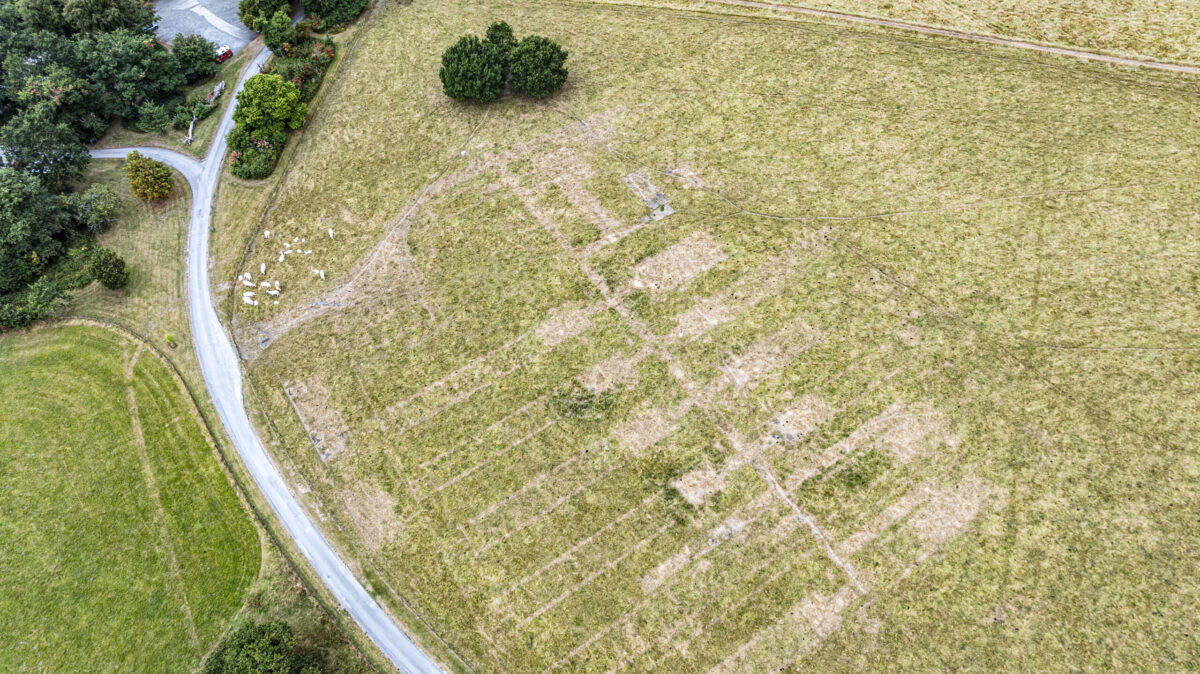
Marks revealed in the landscape by drought conditions have exposed the outlines of former Nissen huts that once stood within the historic park.
Dinefwr has a history stretching back centuries and was home to the Rhys family, descendants of the Lord Rhys, for more than 300 years, with Newton House built on the estate in 1660.
During the Second World War, when the Nissen huts were erected, the park took on a very different role to assist with the war effort.
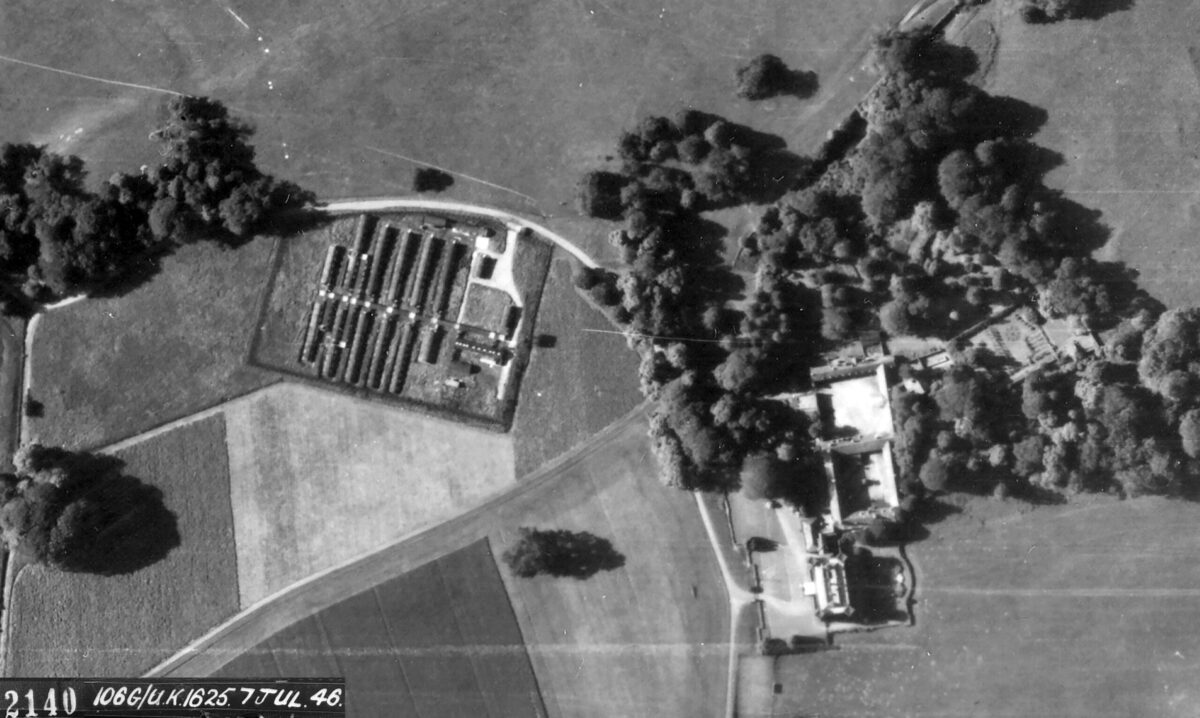
The temporary structures played an important role during and after the war, serving first as a hospital and later as a prisoner of war camp.
The recently captured aerial image highlights features that are normally invisible at ground level. Variations in grass growth caused by the drought have revealed the footprint of the huts, providing a glimpse into a largely forgotten element of Dinefwr’s history.
In the years following the war, the Nissen huts took on a new purpose. At a time when housing was in short supply across Britain, the former military buildings were converted into homes for local families.
The settlement became known locally as ‘Tin Town’, helping to ease post-war housing pressures and supporting the community during a period of significant change.
David Thomas, Archaeologist for National Trust Cymru, said “Many people are familiar with Dinefwr’s nationally important parkland and medieval history, but these marks highlight a much more recent chapter in the site’s story.
“The huts served a range of important functions, from a wartime hospital and prisoner of war camp to much-needed housing for local families in the years after the war.
“Discoveries like this help us better understand how people adapted to the challenges of wartime and post-war life in rural Wales.”
In Wales, National Trust Cymru care for more than 46,000 hectares of countryside, 160 miles of coastline as well as castles and gardens across the country.
For more information on Dinefwr’s history, visit the National Trust site here.
Support our Nation today
For the price of a cup of coffee a month you can help us create an independent, not-for-profit, national news service for the people of Wales, by the people of Wales.
Get more trusted Welsh news
Choose Nation.Cymru as a preferred source in Google News to see more of our journalism.



Tin Town, there was one of those up here, Bronaber and another casualty to fire Rhiw Goch Trawsfynydd. For many years a Royal Artillery officer’s mess with a camp and firing range and after a refurbishment conducted by me, a Hotel. Well known in the early 70’s as a music venue. Keith O’Brian’s history is well worth a read on the Rhiw Goch website for a serious bit of ‘Hanes Cymru’. This might be a good time to fly over it, I spent many Sunday afternoons as a child there searching for unexploded munitions with my father a volunteer park… Read more »