


Dŵr Cymru Welsh Water announces 500 job cuts
Martin Shipton
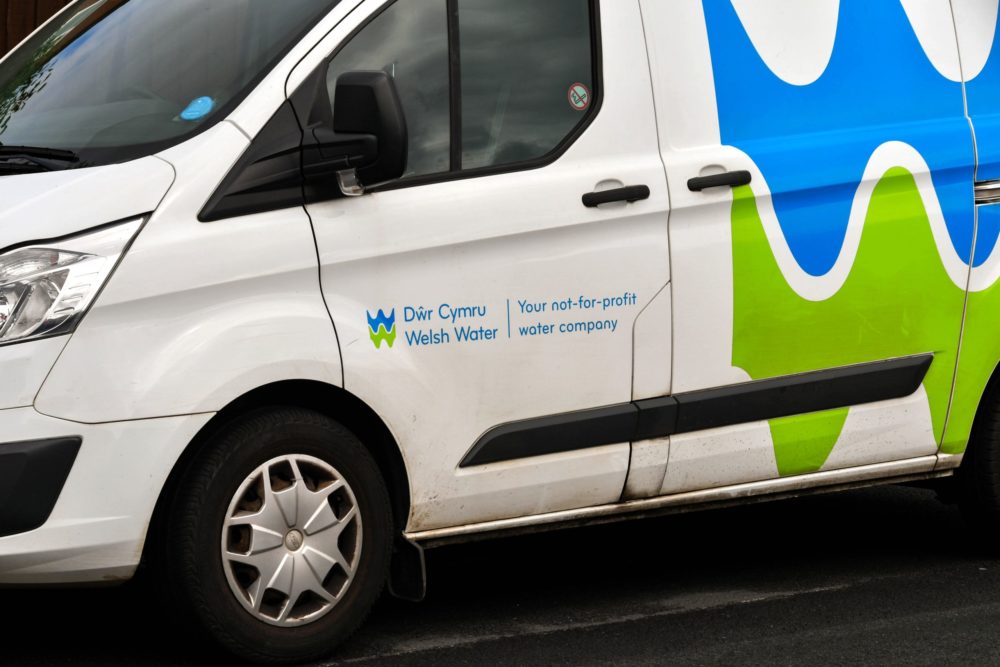
Dŵr Cymru Welsh Water has announced what it calls “a significant transformation programme” that will entail 500 job losses over the next two years.
In a statement, the company said the programme was designed “to safeguard essential services, strengthen service resilience, reduce ‘back office’ costs and deliver better value for money by ensuring that as much customers’ money as possible is directed into improving frontline water and wastewater services”.
It continued: “As part of this programme, the company is reviewing its entire cost base, including the goods and services it procures, and expects to reduce its workforce by c12% (up to 500 roles) over the next 18-24 months from its current workforce of about 4,000. The intention is to protect and enhance frontline services and to increase efficiency in ‘back office’ and managerial positions.
“The transformation will focus on reshaping the organisation, enabling greater use of technology and data and redesigning processes and ways of working. The transformation programme aims to maximise efficiency so that every possible pound can be invested in customer service, environmental improvements, and vital network investment. The programme will also ensure that the business remains on a long term financially stable and sustainable footing.
“These changes take place against a backdrop of significant pressures on the water sector. In the past year, the industry has been downgraded by credit ratings agencies, at a time when investment needs have increased to fund improvements in infrastructure and the environment following the recent price review with Ofwat. This restructuring will help maintain the company’s financial resilience, while continuing to improve services for customers.”
‘Improving services’
Pete Perry, the outgoing chief executive of Welsh Water, said: “Customers rightly expect us to invest in improving our services and to keep our own costs to a minimum – and that’s exactly what this programme will achieve. Our customers’ expectations have changed significantly in recent years, as have our regulatory requirements, and as a company we need to adapt.
“With customers’ bills increasing, we have challenged ourselves hard to reduce our own costs to ensure every pound we spend brings benefit to customers and maintains our financial resilience during a challenging period for the sector.
“I fully recognise that this will be an unsettling time for colleagues affected. We have not undertaken changes on this scale for more than a decade, and we will handle the process with care, compassion, and fairness. Wherever possible, we will prioritise voluntary exits, retraining, and redeployment, and we will work closely with our trade unions and provide full support to every colleague impacted.
“We are acting now so we can protect services for customers, investing more in our networks and the environment, and ensure that as much of our customers’ money as possible goes into the things that matter most: reliable water and wastewater services and support when people need us.”
Dŵr Cymru Welsh Water is a not-for-profit company with no shareholders; every penny is reinvested for the benefit of customers, communities and the environment. It serves over three million people across Wales and adjoining areas.
In 2015, Welsh Water announced plans to reduce around 360 posts over five years, delivered largely via voluntary severance as part of a wider efficiency programme.
Financial guidance
Employees affected by the announcement will have access to financial guidance, wellbeing services, career transition support, and reskilling pathways. The company will seek suitable redeployment wherever feasible.
Formal consultation with employee representatives and recognised trade unions starts today. The company’s aim is to achieve as many reductions as possible through voluntary redundancy, alongside natural turnover and the closure of vacancies.
According to the company, this transformation programme does not have any impact on the company’s investment programme of more than £4bn in its services over the next five years.
The job cuts have been announced in advance of the arrival of new chief executive Roch Cheroux, who was sacked from his last job as head of Sydney Water in Australia and has been accused by a trade union of being responsible for a “toxic” workplace culture.
Mr Cheroux’s arrival at Dŵr Cymru follows an embarrassing period when the not-for-profit company faced a number of prosecutions for pollution and monitoring transgressions, as well as criticism over the high level of executive pay.
Sewage discharges
In May 2025 Dŵr Cymru Welsh Water was fined £1.35m and ordered to pay £70,237.70 costs after pleading guilty to over 800 breaches of its environmental permits to discharge sewage.
The charges related to Dŵr Cymru’’s self-monitoring data submitted to Natural Resources Wales (NRW) as part of its 2020 and 2021 annual reports. Due to the volume of non-compliances, the charges were summarised into 18 offences for the court’s benefit.
In October 2024 at Llandudno Magistrates Court, Dŵr Cymru pleaded guilty to 15 out of the 18 charges. In December 2024 the company accepted the remainder of the Taken into Consideration (TIC) charges.
Missing samples and data from the 2020 reporting year means that NRW was unable to fully assess or respond to any environmental impacts. While it’s possible that individually, these non-compliances may have been minor, NRW considers the cumulative impact of all the breaches significant in terms of environmental impact.
Siân Williams, head of operations at Natural Resources Wales (NRW), said: “This case highlights inadequacies in the processes at Dŵr Cymru which led to widespread permit breaches across Wales and over the border during a period of two years.
“While we appreciate the disruption all businesses faced during 2020 with the Covid-19 pandemic, we believe the failings shown by Dŵr Cymru were avoidable should better contingency planning have been in place.
“Dŵr Cymru’s performance has continued to decline for a number of years now, and this is a stark warning to the company that we will not hesitate to use our enforcement powers to secure the improvements we expect to see.
NRW downgraded Dŵr Cymru from a four-star (industry leading) company in 2020 to two-star (requires improvement) company in 2022 and 2023 as part of its annual Environmental Performance Assessment.
Support our Nation today
For the price of a cup of coffee a month you can help us create an independent, not-for-profit, national news service for the people of Wales, by the people of Wales.



No doubt most of those cuts will be frontline customer facing roles despite the usual claptrap about meeting customer expectations. Very likely there will be another round of self congratulatory pay awards to the top cats when this plan is executed regardless of whether it improves anything that’s measurable
It is no consolation, but the situation in England is catastrophic https://www.bbc.co.uk/news/articles/czxw2edxen9o.amp
A lot of this goes back to Thatcher giving away vital industries and massive share bonuses. Railtrack replaced British Rail in 1997 and collapsed within five years.
The picture in England is mixed. Thames is only one company in England, albeit the single biggest. Even in London some people have a local supply company and Thames looks after the sewerage only. It will probably need some intervention, most of the others are financially ok but whether they should have been privatised is another matter, I personally don’t think they should have been.
The part of the Wye valley in England is served by Dwr Cymru.
Thatcher sold of Water those of a certain age can remember when water was on council rates all in one then she sold off water and brought in poll tax and now council and all things hace rocketed in price electric gas etc
Well that’s nice isn’t it. I was a bit alarmed when my bill went from £34 per month to £57 per month, and it was slightly more alarming when my mother’s bill went from around £60 per month to well over £150 after having a water meter fitted. I mean, it’s not as if Dŵr Cymru have serious shortcomings to address even on a hyper-local level, like telling us that they’d fixed a burst water main in our area when they actually hadn’t, or not realising that the water meter they’d fitted at my mother’s property is measuring usage for… Read more »
CEO is also a Complete Useless Nonperforming Twpsin.