


Earth’s growing thirst is making droughts worse, even where it rains
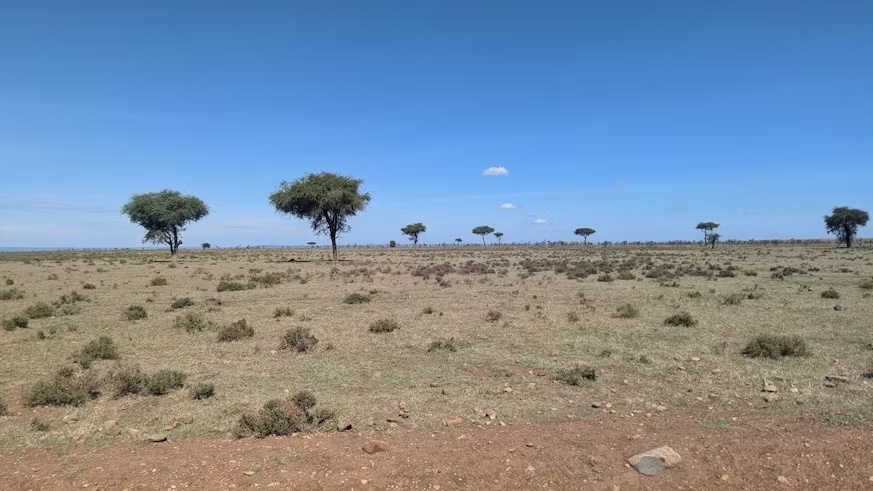
The atmosphere’s growing “thirst” for water has made droughts across the globe 40% more severe, new research from Cardiff University shows.
While lack of rainfall is often thought to be responsible for droughts, scientists have discovered the atmosphere itself is demanding more water out of soil, rivers, and plants.
This phenomenon, known as Atmospheric Evaporative Demand (AED), acts like an invisible sponge, soaking up moisture faster than it can be replaced, increasing water stress, particularly for plants.
Climate change
As the world gets hotter under the effects of climate change, AED is rising, causing more severe drought events even in wet regions, according to the international team.
Their study, published in Nature, is the first to measure the global impact of AED using real-world observations to better predict and prepare for droughts.
The team, which included expertise from Cardiff University, used a set of high-resolution data covering more than a century for their analysis. They tracked how AED has increased and how much worse it has made droughts over this period.
Their results show:
- AED has increased global drought severity by about 40% over the past 40 years
- Wet regions are affected by more severe droughts because the atmosphere is demanding more water from the land, not just because of less rainfall
- The extent of land under more severe drought conditions jumped by 74% in the last five years, largely driven by the atmosphere’s growing thirst.
Impact
One of the study’s co-authors Professor Michael Singer of Cardiff University’s School of Earth and Environmental Sciences, said: “Although everyone understands that the climate is changing through a warming atmosphere, it is unclear how this impacts climatic extremes like droughts and floods.
“Our study provides clear evidence that AED has increased, leading to more severe drought conditions, which could impact various sectors, lives, and livelihoods across the globe.”
Lead author Dr Solomon Gebrechorkos of Oxford Univeristy’s School of Geography and the Environment, added: “This work shows that including AED in drought monitoring—rather than relying on precipitation alone—is essential for better managing risks to agriculture, water resources, energy, and public health.
“Given projected climate changes, especially rising temperatures, the impact of AED is expected to intensify. Many affected areas are already struggling to cope with severe drought.
“We need to act now by developing targeted socio-economic and environmental adaptation strategies and improved early warning and risk management systems.”
Scientists will need to study how farmers, cities, and ecosystems can adapt to a world where the atmosphere constantly demands more moisture, according to the team.
More studies focused on climate driven fluctuations in AED will also improve drought prediction, they conclude.
The paper, ‘Warming accelerates global drought severity’ is published in Nature.
Support our Nation today
For the price of a cup of coffee a month you can help us create an independent, not-for-profit, national news service for the people of Wales, by the people of Wales.



Latest reports have the changes far further than expected.
Some speculate tipping points passed.
Studies needed but so is action.
I remember very clearly getting depressed reading about all this in 2000 in the Ecologist magazine. I am getting depressed again. Nothing changed since then and looking at the bunch of fossils fuel loving leaders around the world and in waiting here in the UK, we are heading for a future in which our world is one big desert.
This process is not new. Happened 2500BCE when the Sahara desert was created. At the time the pyramids were built the area was a verdant savannah. Even early biblical text describe Iraq as the ‘Hanging Gardens of Babylon’. The question arises as whether we adapt or try do a King Canute so mankind take it upon itself to try to change nature.