


Economy ‘not working well enough’, says Reeves as she sets November 26 Budget
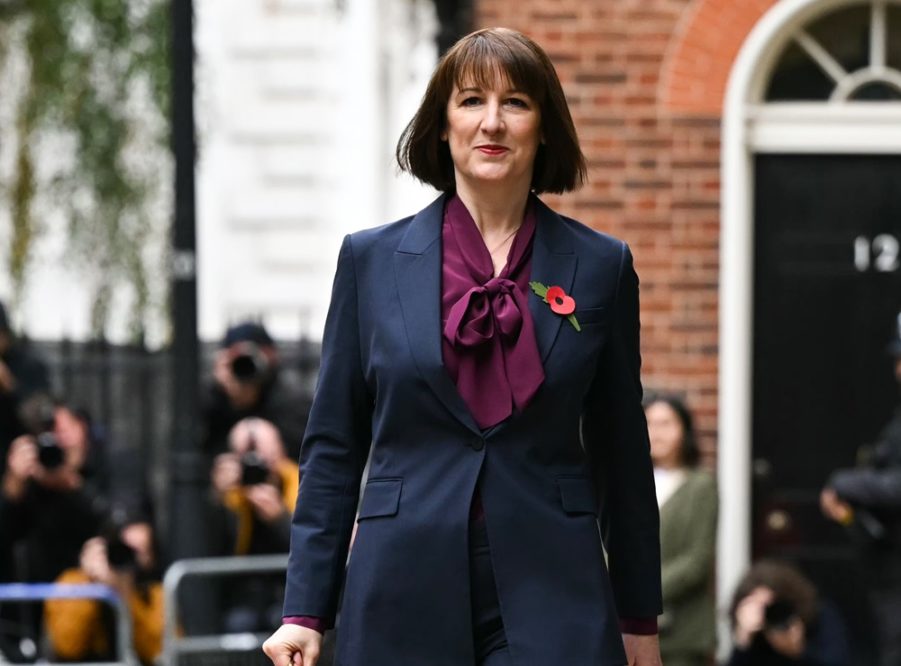
Rachel Reeves has acknowledged the economy is “not working well enough” and promised a “tight grip” on spending in her autumn Budget, which she will deliver on November 26.
The Chancellor set the date for her highly-anticipated Budget amid rampant speculation about tax rises and market jitters over the UK’s public finances.
Ms Reeves on Wednesday said she had asked the fiscal watchdog the Office for Budget Responsibility (OBR) to prepare an independent forecast on the late November date to accompany the Budget.
The Chancellor said she will prioritise curbing inflation and borrowing costs, keeping public spending under control by meeting her fiscal rules, and kick-starting economic growth.
She is widely expected to have to hike taxes to balance the books, with the relatively late Budget date giving her time to lay the groundwork for potential changes.
Concerns
Concerns over the public finances helped push UK long-term borrowing costs to 27-year highs ahead of the Budget date announcement.
Ms Reeves is expected to have to plug a black hole in the nation’s finances estimated by some to be as much as £51 billion.
But the yield on 30-year UK Government bonds – also known as gilts – eased back after the Treasury revealed the date of the major fiscal event.
This government will build an economy that works for working people, and rewards working people. pic.twitter.com/lAPR7RvX5Y
— Rachel Reeves (@RachelReevesMP) September 3, 2025
In a video on X, the Chancellor said: “Britain’s economy isn’t broken. But I know it’s not working well enough for working people.
“Bills are high. Getting ahead feels tougher. You put more in, get less out. That has to change.”
She said “fixing the foundations” has been her mission for the past year, and touted Government action including trade deals with the US, India and the EU and making a start on tearing up planning rules to reach the target to build 1.5 million homes.
“But I’m not satisfied,” she said. “There’s more to do. Cost-of-living pressures are still real.
“We must bring inflation and borrowing costs down by keeping a tight grip on day-to-day spending through our non-negotiable fiscal rules. It’s only by doing this can we afford to do the things we want to do.
“If renewal is our mission and growth is our challenge, investment and reform are our tools. The tools to building an economy that works for you – and rewards you. More pounds in your pocket. An NHS there when you need it. Opportunity for all.
“Those are my priorities. The priorities of the British people. And it is what I am determined to deliver.”
Announcements
Ms Reeves is expected to make a series of public announcements on productivity before the Budget.
The scale of the challenge facing the Chancellor was illustrated by the NIESR economic think tank saying last month that Ms Reeves is set for a £41 billion shortfall on her self-imposed rule of balancing day-to-day spending with tax receipts in 2029-30.
Although recent pressure on gilts came amid a bond sell-off globally, some analysts believe the weakness in the UK bond market was compounded by concerns over the Prime Minister’s reshuffle of his Downing Street team on Monday.
Sir Keir Starmer moved the Chancellor’s deputy, Darren Jones, into a new role as chief secretary to the Prime Minister, a change some interpreted as a blow to Ms Reeves’s authority.
But No 10 on Tuesday insisted the Chancellor’s role had not been diminished, saying Sir Keir and Ms Reeves spoke “at length over the summer about how these changes would bolster their joint approach to the growth agenda”.
Support our Nation today
For the price of a cup of coffee a month you can help us create an independent, not-for-profit, national news service for the people of Wales, by the people of Wales.



We need far greater focus on how money is spent. The Welsh public sector keeps awarding nil value frameworks, South-West Wales has awarded a £800m nil value framework https://www.find-tender.service.gov.uk/Notice/037775-2024?origin=SearchResults&p=1 Suppliers spend time / cost with no guarantee of work, plus that key framework has suppliers based in London – so high transport / accommodation costs are incurred travelling to Wales. Wales does not have to follow England and is allowed to award long-term fully funded programmes of work if they are planned effectively – Network Rail has five year frameworks with nominated suppliers based in the same offices and Sellafield… Read more »
Bond markets and hedge funds make bets against the UK economy. Reeves has very little space to ensure an economic turnaround without borrowing to invest. International finance has a stranglehold grip on whatever she chooses to do.
How about taxing the high earners and income tax?
A 2% wealth tax would help balance the books but they won’t do it.
Taxing high earners wouldn’t bring in nearly enough revenue. Taxing land wealth and share dividends would be my choice, as well as share transactions overall, along with fossil fuel companies and banks. Taxing those on a high salary confuses where the real wealth is. What happened to the off-shore accounts crack down?
Adding 1p to income tax on the higher rate and 1p on the additional rate will liberate an additional £2.4bn according to the treasury’s own calculations. More taxes on fossil fuel companies will just put up peoples energy bills and banks already pay corporation tax on profits.
Really wealthy people don’t pay income tax. Remember at the last election when we learned that Sunak’s effective tax rate was 10% lower than Starmer despite earning millions more?
There comes a point where it becomes a sin tax on work and, like cigarettes and alcohol, they will choose to work less. A better gap to target on the fairly wealthy employees is the discount on employees National Insurance enjoyed by those earning over £50k.
Sell and lease back the entire Whitehall estate and use the proceeds to pay off the Covid debt.
Not the only source of government debt which can have a 30 year window to pay off.
What is crucial is the rate of interest we pay on the debt.
Reducing both the headline debt level and monthly interest payments are important. It doesn’t matter specifically which debts are paid off of course.
The good news is this plan should have cross party support because the Cons were comfortable with the Germans owning our trains, the French owning our energy and the Chinese owning our steel so they won’t blink if Saudi owns Big Ben and charges a very reasonable fee per bong.
What farmer is going to invest in diverse economic activity with the new inheritance tax looming? What hospitality business is going to invest when employer NI contribution in raised and threshold lowered? Economic stagnation is not an accident. It’s a direct result of Rachel Reeves and the Labour government in Westminster. Priority London and bankers bonuses. Wales needs to get off that ship.
Certain areas Wales is outperforming England. Wales is recognised by England as having a better managed public sector – supported by Cardiff Universitys Public Sector department. Wales has never pushed for High Speed Rail; England outsources everything in transport – Wales does not. Transport for Wales has Jurnyon so can influence consumer demand / advertise events (event organisers do not then have to pay to advertise on google), most new trains are built in Wales, plus there is Lab by TfW. Devolution allows Wales to influence some if its’ economic agenda; but is it being done effectively? Cardiff City Region… Read more »
Real growth happens in the private sector. Rail is public sector in Wales.
Growth is an increase in GDP. Almost half of GDP is government spending. The rest is net exports, business investment and consumer spending.
Almost everything the Cons do shrinks GDP. They shrink government spending. They trash manufacturing and industry so there’s nothing to export. They rip up stable regulatory environments, creating uncertainty and instability which chokes business investment. And they tax the little people who actually do the consumer spending just to take less from those who are already spending what they want.
This is why Liz called her party the anti-growth coalition.