


Ensure offshore wind boom boosts nature and coastal communities, report urges
Emily Beament, Press Association Environment Correspondent
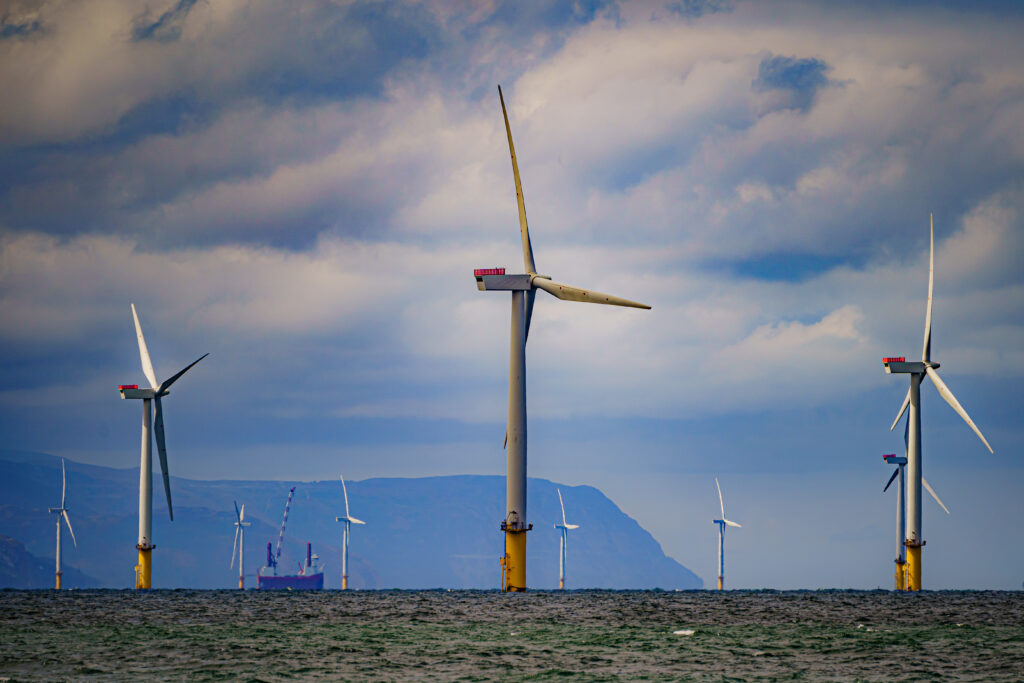
Offshore wind farms risk “industrialising” the UK’s seas – but could deliver for nature and local communities if done right, a report has said.
The rapidly-scaling offshore wind power sector must be part of the solution to restoring the damaged marine environment, rather than simply repeating the mistakes of the past made by some onshore renewable projects, the report from Rewilding Britain urged.
The report comes as the UK’s burgeoning offshore wind sector continues to grow, with more than 16 gigawatts already operational, a further 10 gigawatts under construction and 15.5 gigawatts consented in the last six months alone.
Rewilding Britain’s report warned offshore wind farms create disruption during construction, with pile driving, dredging and vessels causing noise and disturbing the seabed, driving away wildlife, while birds face the risk of colliding or being displaced by operational turbines.
But turbines can create artificial reefs for mussels, barnacles and anemones, and create “accidental habitats” where fishing is excluded and nature flourishes.
While the fishing industry can be hit by losing fishing grounds to wind farms, these nature-rich exclusion zones can also potentially create a spill-over effect, boosting fish stocks in the areas outside, the report says.
There are also downsides and positives for local communities, with the potential for jobs and economic benefits, but also limited financial returns from supply chains sited abroad, as well as impacts on seascapes.
“Rewilding” must be built into the planning for offshore wind farms, with a key focus on ensuring projects deliver for coastal communities and marine wildlife, the charity urges.
Otherwise, the UK will repeat the mistakes of previous waves of industrialisation, such as onshore renewable development where poorly planned projects, weak community benefits and a lack of consideration from industry have undermined trust and limited positive outcomes, it said.
Rewilding Britain pointed to the controversy around the recently-approved Berwick Bank offshore wind farm, where more than 4,000 seabirds could be killed in the first year of operation alone and concerns have been raised by communities and fishers.
Kevin Cumming, rewilding director at the environmental charity, said: “Britain is set to reshape vast areas of our seas.
“The question is whether offshore wind becomes another industrial revolution that extracts wealth from communities and nature, or instead actively supports and restores both.
“We have a once-in-a-generation opportunity to show that clean energy, thriving coastal communities and healthy seas can go hand-in-hand.
“If we get this wrong, we risk industrialising our seas in ways that aggravate the problems that have already pushed marine wildlife and many coastal communities into serious decline.”
The charity, which wants to see 30% of British seas, damaged by years of human activity, restored for nature by 2030, through seascape-scale action, says marine rewilding and offshore wind do not have to be in competition.
The sector could support a “new kind of wild”, where infrastructure supports the recovery of nature, as well as boosting coastal communities, its report says.
Rewilding Britain is calling for projects to be sited on “homogenous” seabed, where the presence of turbines can create artificial reefs that support an array of wildlife, and for innovation to mitigate impacts during construction and operation, particularly on birds.
And “marine net gain” policies – in which developers pay to improve biodiversity – should be used to channel money towards seagrass, oyster reef and saltmarsh restoration to help rewild the seas.
It also called for “true” community benefits, and significant investment in infrastructure to develop a domestic supply chain to keep economic value in the UK.
Mr Cumming urged: “Government, industry, fisheries, coastal communities and marine restoration practitioners must work together to co-design a new approach to offshore wind development – one that delivers tangible benefits for people and nature alike.”
He added: “We must make offshore wind part of the solution, not simply repeat the mistakes of the past.”
Support our Nation today
For the price of a cup of coffee a month you can help us create an independent, not-for-profit, national news service for the people of Wales, by the people of Wales.
Get more trusted Welsh news
Choose Nation.Cymru as a preferred source in Google News to see more of our journalism.


