


EU faces backlash for copying Westminster funding grab from devolved governments
Luke James, Brussels
The European Commission is facing growing resistance to its plan to follow in the footsteps of the UK Government by stripping devolved governments of powers over regional aid spending.
More than 650 local and regional political representatives from across the European Union have backed a call on the Commission to abandon its plan to centralise EU funding with member state governments.
The European Free Alliance (EFA) political party, which represents pro-independence and autonomist parties, organised the letter which warns the plan would have “devastating implications for EU nations and regions, especially those more affected by their state’s bias.”
Politicians in Catalonia, the Basque Country, Britanny and Corsica are among those most concerned.
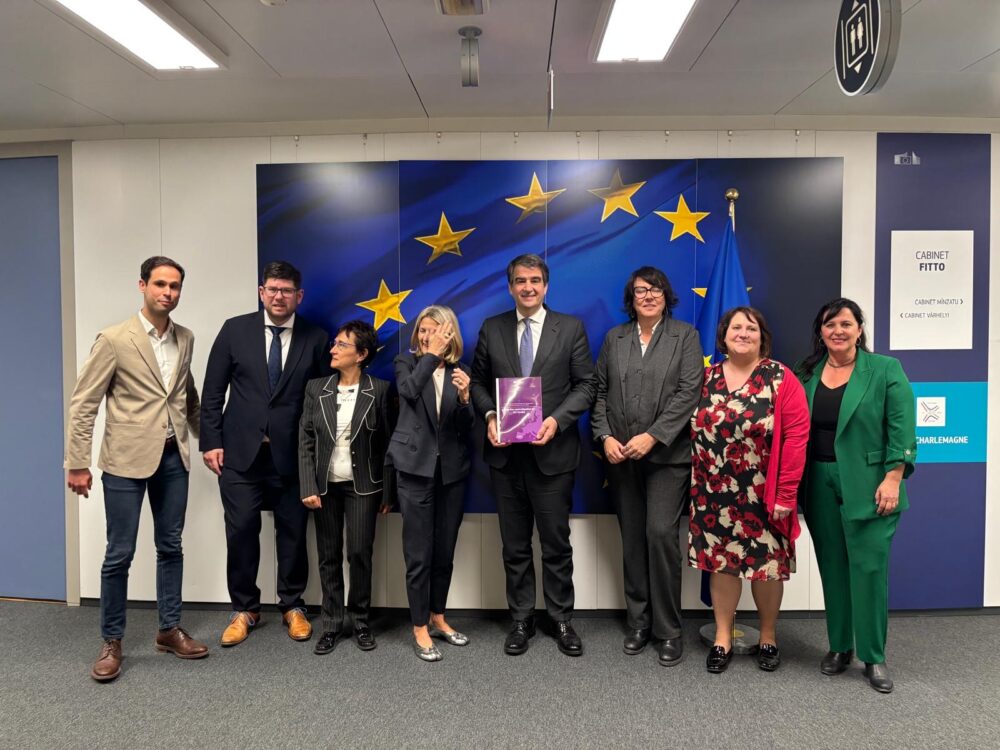
The letter was handed over to Commission vice-president Rafael Fitto, adding to pressure from the European Parliament which voted this week to make the issue a red line in the forthcoming negotiations over the 2 Trillion Euro budget.
Currently a wide range of EU funds, notably cohesion funding designed to reduce economic and social disparities, are paid directly to devolved national, regional and local governments.
But, under its plan for the 2028-2034 budget, the Commission wants to merge funding streams into one pot that will be managed by central governments.
The Commission says that will ensure that money is spent in a more strategic way but insists regional and local authorities will still be consulted.
However, EFA President, Lorena López de Lacalle, has pointed to Wales’ experience since Brexit as proof that devolved governments will be shortchanged under the Commission’s plan.
Centralisation
She told Nation.Cymru: “EFA has been vocal in opposing centralisation of European funding. European funds contribute to a better redistribution of wealth with a bottom up approach.
“Wales and Scotland are particularly suffering from being deprived of those funds because London does not provide the support promised to them before Brexit.”
Before Brexit, the Welsh government received around £400 million a year in EU funds, mainly through regional aid and rural development programmes.
If Wales had remained in the EU, the Welsh Government says it would have received £1.4 billion in regional development and social funds between 2021 and 2025.
But under the post-Brexit regional aid system, the UK Shared Prosperity Fund, Wales received over a billion pounds less in funding over that period and the Welsh Government was cut out of funding decisions.
The proposal for a similar centralisation of funding has caused a backlash which has already forced the Commission into concessions.
In November, President Ursula von der Leyen told the European Parliament: “We have heard your concerns. In particular about the role of the regions. The governance of cohesion remains the same – with the full involvement of regions. There cannot be any doubt about this. Therefore, we propose a regional check that will ensure that local realities are at the core of the plans.”
However, the Committee of the Regions has warned that risks being a “tick box” exercise, and is seeking “detailed clarification and legal guarantees” from the Commission on the role of devolved governments.
Regional funding
The European Parliament stressed this week it would stand-up for regional funding in its forthcoming negotiations with the Commission on the budget.
“We call for reinforced, dedicated funding for farmers and regions, firmly rejecting any attempt to merge or dilute these core priorities,” said centre-right MEP Siegfried Mureşan, one of the Parliament’s chief negotiators on the budget.
The battle over the budget will continue today at the EU leaders’ summit in Cyprus, and the result could reshape the debate on Wales’ future relationship with the EU.
Plaid Cymru leader Rhun ap Iorwerth said the development was a “concern” and put it down to the “growth of the populist right”. Commissioner Fitto, who is responsible for cohesion funding, is a member of Giorgia Meloni’s far-right Brothers of Italy party.
“Currently there is a centre of gravity that’s shifted within the European Parliament, as in politics globally,” ap Iorwerth told Nation.Cymru on a recent visit to Brussels.
“We have to bring that centre back. And I believe in collectivity, I believe in acting internationally and building links with people who can hopefully lead to changes on a European level in the same way as I want changes on a UK level.”
The Wales for Europe group published a Senedd election manifesto this week urging candidates to support an independent assessment of the economic, cultural and social impact of Brexit in Wales.
It also said the next government should rebuild links with the EU by strengthening the role of the Welsh government’s envoy to Brussels and appointing a Cabinet minister for international affairs.
Support our Nation today
For the price of a cup of coffee a month you can help us create an independent, not-for-profit, national news service for the people of Wales, by the people of Wales.
Get more trusted Welsh news
Choose Nation.Cymru as a preferred source in Google News to see more of our journalism.



It’s ironic that the left are struggling in Europe without the UK to support them, yet it was the left under Corbyn that enabled it. Solidarity on the left is very selective.