


Evidence to Senedd reveals serious rehoming failures at greyhound track
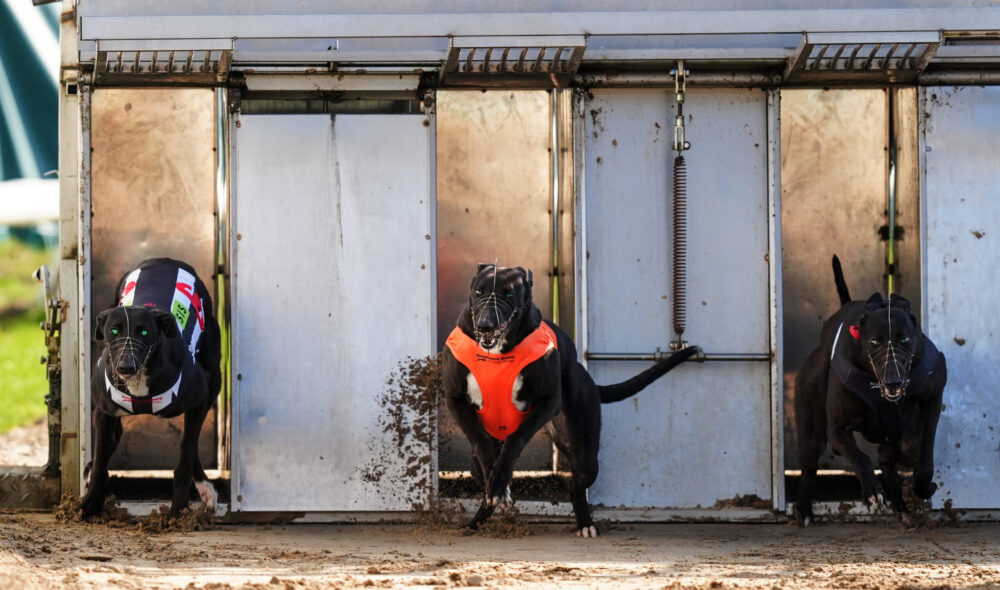
Evidence given to the Senedd Committee scrutinising the Bill to ban greyhound racing in Wales has highlighted inappropriate rehoming practices at a south Wales track and prompted changes to rehoming guidance.
Greyhound Rescue Wales (GRW) initially made a complaint to the Greyhound Board of Great Britain (GBGB), which was then shared with the Senedd Committee.
This followed an investigation into the Valley track, whose rehoming practices the GRW alleged were devoid of basic welfare safeguards.
The greyhounds involved were reportedly underweight, carrying ticks and open wounds, unneutered, and given to adopters who had not been through identity/suitability checks.
Despite the seriousness of their concerns, GRW said, GBGB failed to acknowledge or respond to the complaint.
GRW then presented its evidence, including four case studies of greyhounds from the Valley track, to the Senedd Committee.
One of these dogs was later found as a stray in west Wales with serious untreated injuries. Two others were photographed in a neglected state while still at the Valley kennels, one of which was also later found as a stray. The fate of the fourth remains unknown.
Subsequently, GBGB said in an industry publication on December 5 that “An unacceptable number of retired greyhounds (have) …. been picked up as strays” after being rehomed directly from tracks.
GBGB have now changed their rehoming policy and will require proof of identity and residence, and a signed adoption form, before homing a dog in the future.
However, there is no mention of mandatory property checks for the dogs’ new homes or checks as to how prospective new owners propose to look after dogs.
Due to this, while GRW welcomed the shift in policy, they noted that the new measures represent the most basic standards already followed and exceeded by responsible rehoming charities across the UK.
‘Basic elements’
A GRW spokesperson said: “It is difficult to believe the GBGB is only now adopting the most basic elements of what is standard practice for all reputable rehoming organisations, and then only after being publicly challenged about cases of abandonment, injury and neglect.”
The spokesperson added that GRW will be watching closely to see whether the GBGB genuinely enforces these new rules and whether any meaningful sanctions follow for non-compliance.
GRW’s evidence to the Senedd regarding welfare crisis associated with the Valley track included that:
- 601 dogs ran in the first year of racing; 322 were trained locally
- 267 adverse events—falls, lameness and injuries—were documented in that first year
- The annual incidence of such events was 44.4%, rising to 73.9% for Valley-attached dogs
- The track requires around 300 dogs per year to sustain its racing activity
- Around 120 young dogs—one every three days—are discarded annually
- The average racing “career” lasts 15 months, with most dogs finishing at 3 years and 4 months old
Consequences
As well as illustrating the scale of the current problem, GRW says that the need for rehoming and other consequences of racing at the track will continue if the ban is delayed until 2030.
In this case GRW estimates that approximately 480 more dogs, many injured or no longer able to race, will require rescue and rehoming in addition to the 200–250 dogs who will need support immediately after the ban.
GRW wrote: “The recent policy adjustment by the GBGB demonstrates the power of evidence and scrutiny. But it also underscores the deep problems inherent in an industry that relies on a constant turnover of young dogs and allows unacceptable gaps in welfare protection.
“Greyhound Rescue Wales will continue to advocate for the dogs who cannot speak for themselves, and to call for a ban that ends the suffering at the Valley track once and for all.”
Greyhound Retirement Scheme
A spokesperson for GBGB said: “We are pleased that Greyhound Rescue Wales has welcomed our recent regulatory announcement about further strengthening our policies and procedures around homing.
“Our Greyhound Retirement Scheme (GRS), which involves partnership with around 100 approved homing centres across England, Wales and Scotland, has seen over £6million paid by our sport towards homing efforts since it was established in 2020.
“The success of the GRS means it is how the majority of owners choose to home their greyhounds, but our new enhanced Responsible Homing Policy provides additional measures to ensure the suitability of any private homes used outside the scheme.
“This is just another example of the importance of effective regulation – allowing us to continue to raise the bar and secure the highest standards of greyhound welfare.”
Support our Nation today
For the price of a cup of coffee a month you can help us create an independent, not-for-profit, national news service for the people of Wales, by the people of Wales.



I have had three rescue greyhounds over the years and I’m well aware of the context from which they came. In short: if you support greyhound racing you support cruelty to animals. Greyhounds are loyal, trusting and affectionate dogs