


Ex-Labour education minister backs Plaid government’s new emphasis on raising standards
Martin Shipton
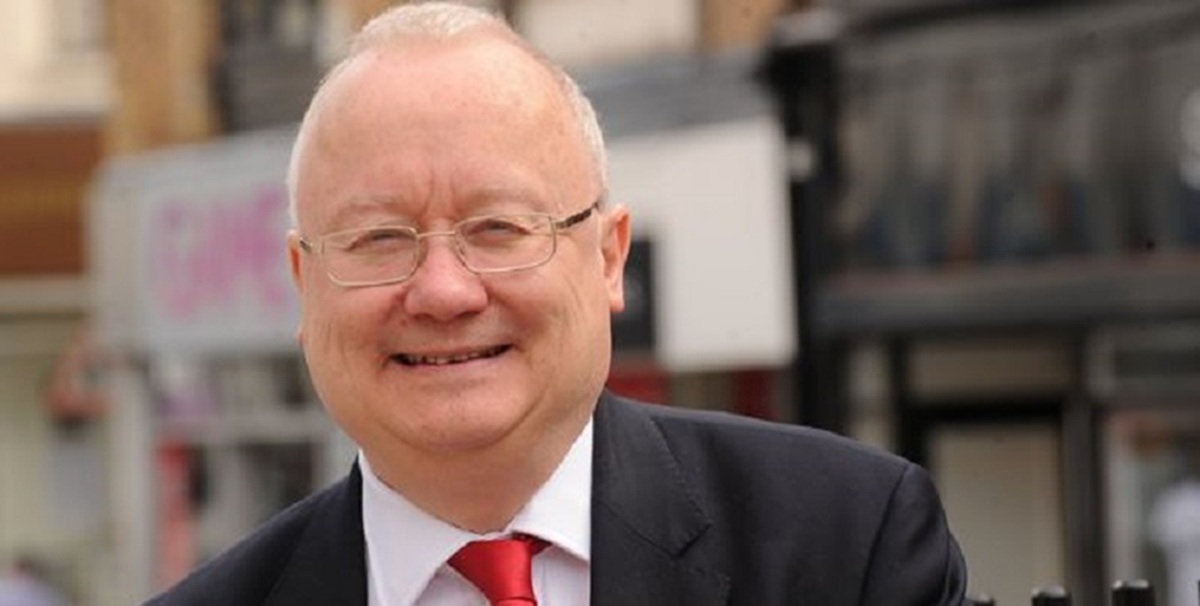
Former Welsh Labour Education Minister Leighton Andrews has praised his Plaid Cymru successor, Anna Brychan, for her emphasis on raising standards.
In a post on his Substack newsletter Welcome to Ukania, Mr Andrews argues that the previous Welsh Government lost its way by directing its energies towards the creation of a new school curriculum.
He writes: “It’s both too easy and too difficult to write about standards in Welsh schools. There are basically three narratives: Wales got it wrong by setting out on a different path from England; everything in Welsh education would be fine if more money were spent and teachers allowed to get on with things in their own way; and then there is a more realistic narrative that recognises the challenges and problems and the failed journeys that have been taken in the past.
“Sometimes Wales’s relative poverty is used as an alibi. All of this is overlaid by selective readings of history, sometimes for ideological reasons, sometimes because it complicates the media’s desire to tell a story simply – Wales went one way, England another, and Wales has failed in education because of its divergence from England. As a result, an entire period of educational reform in Wales is overlooked.”
Mr Andrews points to the work of Welsh academic Dr Gareth Evans, who identified three phases of educational reform in Wales and has described Mr Andrews’ period as education minister as bringing a renewed focus on standards and international comparisons.
Mr Andrews said his priorities on taking the job had been literacy, numeracy and reducing the attainment gap between pupils receiving free school meals and those who did not.
He writes: “One of the first things I did on appointment as Education Minister in December 2009 was to ask Sir Michael Barber, formerly the literacy and numeracy tsar at the UK Department for Education, then subsequently Head of the Prime Minister’s Delivery Unit, to come to Wales and discuss our approach with my senior officials and help us learn from England’s work on literacy and numeracy. In January 2013 I brought in the statutory Literacy and Numeracy Framework.
“Gareth recently suggested that that had contributed to Wales improving its performance in the 2018 PISA results.
“Has Wales made mistakes under devolution? Yes. Abolishing SATs without replacing them with alternatives in the early 2000s was a mistake. Abolishing league tables without putting in place alternative forms of accountability about the same time was also a mistake. That’s why I brought in literacy and numeracy tests, the Literacy and Numeracy Framework, and introduced the banding of schools in 2011, which looked at expected performance and progression.
“We introduced approaches to improving school standards which at the time were ahead of England – we brought in the Progress Eight measure for performance appraisal in advance of England. David Cameron complained about schools in middle-class areas of England that were simply ‘coasting’. Our school banding system addressed that. Areas – and schools – which ought to have been performing better than they had were found out.”
Curriculum
Mr Andrews said he had been wary of wholesale curriculum reform while in government, preferring incremental changes and a knowledge-based approach.
He writes: “As Education Minister, I was very wary of curriculum reform. I preferred to look at incremental reforms where needed – for example, Welsh as a second language, the Cwricwlwm Cymreig, and digital skills. I also believed strongly in a knowledge-based curriculum.
“As I said in my 2014 book, Ministering to Education: ‘Sometimes it seems as though parts of the British left simply want to drown Michael Gove’s demands for a knowledge-based curriculum in a shower of warm spit about skills’.
“As I said then, thinking about education in Wales failed to acknowledge the thinking of Raymond Williams on the importance of a common culture ‘at a level of general knowledge and culture’ that is ‘required by a participatory democracy’.”
Mr Andrews said that in his 2014 book he had argued that any major revision of the curriculum would require widespread agreement and a teaching workforce equipped to deliver it.
Less than six months after the book was published, Professor Graham Donaldson presented his curriculum proposals to the Welsh Government Cabinet.
Mr Andrews writes: “Having read the proposals and heard the presentation, I said at Cabinet that the new proposed Curriculum would place a huge responsibility on teachers.
“That is reflected in the Cabinet minutes which note: ‘Teacher training would need to be remodelled to ensure that the profession had the necessary skills to deliver the recommendations’ and the proposals ‘would need to be taken forward in parallel with the proposals for the initial training and professional development of teachers’.”
He said he had continued to have “significant concerns” about the new curriculum and described the decision to downgrade the statutory Literacy and Numeracy Framework to non-statutory status during its implementation as a “big mistake”.
Standards
Mr Andrews said he believed the new curriculum had ultimately distracted from improving standards and weakened the emphasis on literacy and numeracy.
He writes: “Sadly, overall I believe that the new Curriculum has proved a distraction from the standards agenda, undermined the focus on literacy and numeracy, as successive Estyn reports found, and produced a looser framework which has to rely too heavily on teacher discretion. As I feared, the focus on standards was lost.”
He welcomed Ms Brychan’s attempt to restore that focus.
Mr Andrews writes: “Wales’s new education minister, Anna Brychan, rightly says there has not been a continuous focus on literacy and numeracy over recent years.
“Her new Foundational Literacy and Numeracy Plan restores literacy and numeracy to the core of the curriculum, and introduces a deeper focus on systematic synthetic phonics (SSP) with the expectation that ‘all schools should use SSP as part of their approach’.
“I very much welcome this. I hope that this is the beginning of a cross-party consensus which means that literacy and numeracy will be core not just for one Senedd term, but for the long term.”
Dr Evans is now a special adviser to Education Minister Anna Brychan.
Support our Nation today
For the price of a cup of coffee a month you can help us create an independent, not-for-profit, national news service for the people of Wales, by the people of Wales.
Get more trusted Welsh news
Choose Nation.Cymru as a preferred source in Google News to see more of our journalism.



Leighton Andrews always speaks a lot of sense about education, but he overlooks one major factor, and that is the fact that PISA tests the skills and capabilities that are NOT taught by the continuous barrage of testing that our Welsh system of tests and examinations. PISA expects students to read, analyse, synthesise, evaluate and draw conclusions in real-world situations. The Welsh examination system expects them to read, remember and reproduce what they have been taught