


Existing dwellings and buildings are key to unlocking thousands of new social homes, says Bevan Foundation
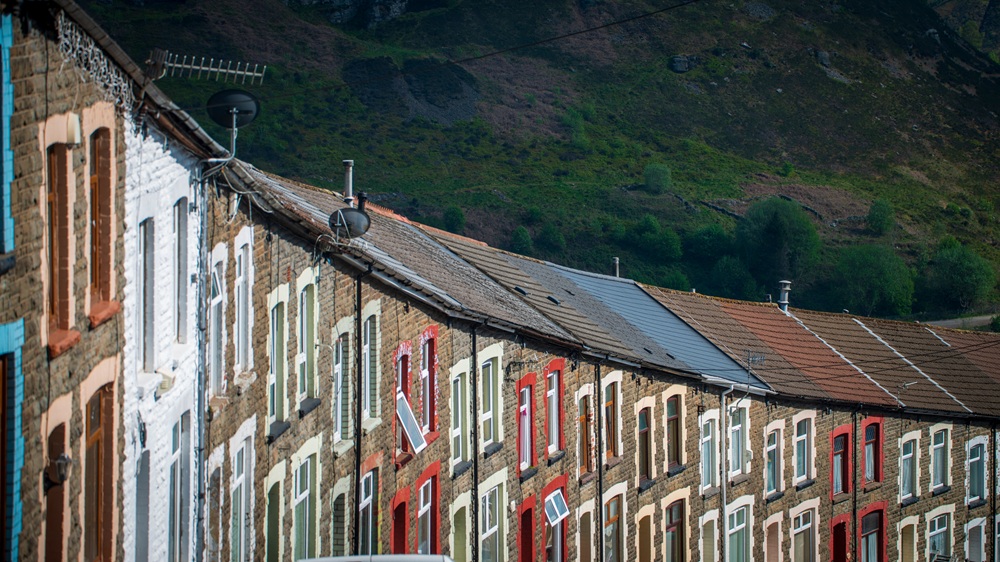
A new report by the Bevan Foundation suggests that the shortage of social housing in Wales could be solved by using existing homes and buildings.
With one in every fourteen households in Wales currently on waiting lists for a social home, a new report published by Welsh thinktank, working in partnership with Shelter Cymru, has highlighted the potential for existing dwellings and buildings to help unlock thousands of social homes across the country.
In its report, ‘Tenure change: turning existing dwellings and buildings into social homes‘, the Bevan Foundation sets out the scale of the challenge, noting that 6,285 people in Wales are currently living in temporary accommodation (such as B&Bs) while they wait to be housed, including 2,500 children.
To help tackle this the Welsh government has worked towards the delivery of 20,000 new social homes during this Senedd term. A target that the government says will be delivered by the end of the 2026 calendar year.
However, with levels of housebuilding at a historic low the thinktank notes that solving the housing emergency means exploring all options for the delivery of new homes.
Through analysis of existing properties, the Bevan Foundation has found that there were 22,528 homes in Wales for 2025/26 which have been empty for 6 months or more, with an estimated 3,600 to 4,500 suitable for purchase as social homes.
150,000 social homes were sold under the former right to buy policy. 41% or 60,000 of these are likely to be rented privately and could be purchased by social landlords to return to the social housing stock.
Greater regulation of privately rented dwellings, second homes and holiday lets has reportedly led to some owners considering their investment options, which may provide further opportunities for purchase.
The report also outlines numerous benefits to repurposing existing properties as social homes, rather than building new.
These include the fact that using existing buildings can deliver homes more quickly, and cheaply as well as the environmental benefits of improving the energy efficiency of private sector homes and reusing the embodied carbon already spent in existing properties.
The use of existing properties also provides an opportunity to provide homes in the heart of existing communities that will benefit from existing infrastructure.
Realising the opportunity that these properties present does not come without challenge, for example the high standards in place for social homes in Wales, which stipulate strict requirements around criteria such as room sizes, prevent some properties being considered.
There are also issues around current funding arrangements and taxation, such as the new construction of dwellings being zero-rated for VAT purposes, while it is charged at the full 20% rate for general refurbishment works.
At a time when the need for social homes is as urgent as it ever has been taking a pragmatic approach to these challenges and working to find solutions has to be a priority.
The report makes a series of practical recommendations for overcoming barriers and providing new social homes at the scale Wales needs.
These include reviewing the current standards for social homes to ensure that they contain more flexibility; supporting workforce skills development and calling on the UK Government to amend the tax regime.
Wendy Dearden, Senior Policy and Research Officer at the Bevan Foundation, said: “It cannot be right that, tonight, thousands of families across Wales will go to bed in cramped, unsuitable rooms in B&Bs while perfectly good houses sit empty across the country.
“As homelessness and waiting lists for housing continue to grow, it’s clear that Wales’ housing crisis can’t be fixed by building alone.
“We need to look at how we can use the stock we already have – whether that’s by refurbishing empty homes and buildings or purchasing ex-council houses and privately-rented homes – to provide social homes at the scale that’s needed.
“In our research, we found great examples of local practice, and a real enthusiasm to bring existing properties into use. Unfortunately, current regulations, practices and funding arrangements do not support converting properties at the scale that’s needed.
“Our report provides practical recommendations on how we could change this and massively increase the supply of social homes.
“We want to see the next Welsh Government put these recommendations into practice and make sure that everybody in Wales has somewhere they can call home.”
Robin White, Head of Campaigns at Shelter Cymru, said “Through our work as a provider of housing advice and advocacy we see every day the impact that a shortage of social homes is having for people in Wales.
“We see it in struggles faced be the thousands of people trapped in temporary accommodation, the families reliant on a broken private rented sector and those who have been stuck on social home waiting lists for years.
“Changing this and ensuring everyone in Wales has access to a safe, secure, suitable and genuinely affordable home has to be a priority for the next Welsh Government. With the conversion of existing homes into social homes something that has a clear role to play in that.
“We urge all political parties in Wales to consider the findings of this report and to take on board the practical recommendations being made.”
The report forms part of a series of research reports the Bevan Foundation and Shelter Cymru are producing in partnership to examine the use of temporary accommodation in Wales and move people into permanent homes by providing more social housing.
You can find the full report on the Bevan Foundation website.
Support our Nation today
For the price of a cup of coffee a month you can help us create an independent, not-for-profit, national news service for the people of Wales, by the people of Wales.



The reason why existing housing stock is not acquired ‘done-up’ to standard for social housing is because VAT at a rate of 20% is added to the cost of renovation of existing houses. This while new-build housing of all types is excluded from VAT. Unfortunately the VAT rules are not controlled by the Welsh Government, that is reserved by Westminster.
An unenvironmental incentive to demolish, losing the embodied carbon.