

Failure of assisted dying Bill ‘bitter disappointment and lets down terminally ill’
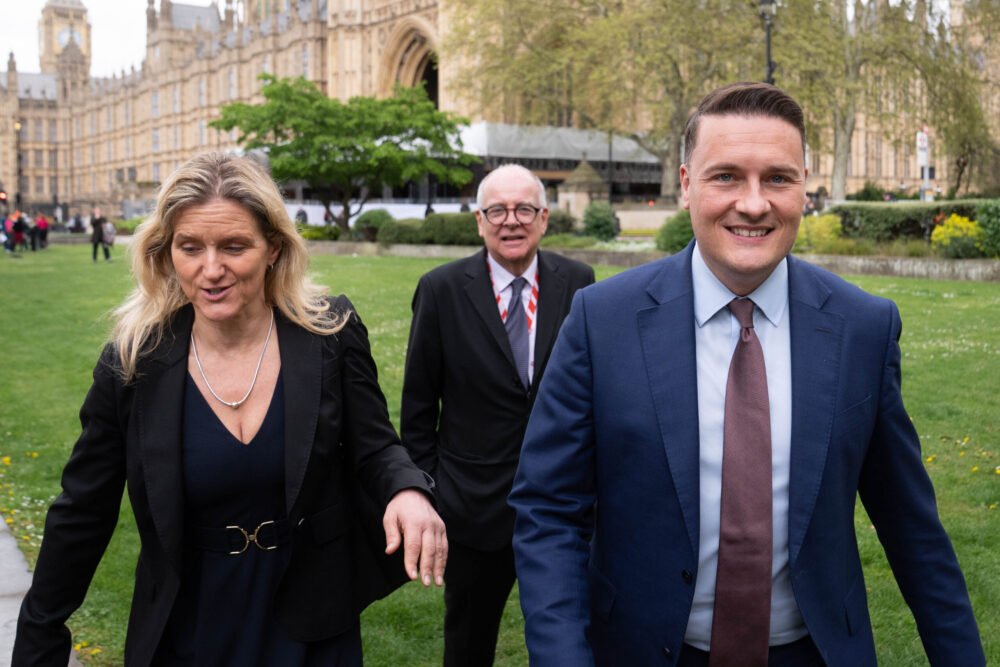
The inevitable fall of the assisted dying Bill this week is “upsetting” and lets down terminally ill people, campaigners said while insisting the fight for a change in the law is not over.
But opponents have warned against what they described as an “absurd” attempt to bring the Bill back later this year, branding it “bad law”.
The proposed legislation, which has been making its way through Parliament for the past year-and-a-half, is likely to “just peter out” without a vote at the end of a debate in the House of Lords on Friday, Labour peer Lord Charlie Falconer said.
The Terminally Ill Adults (End of Life) Bill – which proposed allowing adults in England and Wales, with fewer than six months to live, to apply for an assisted death subject to the approval of two doctors and an expert panel – has been blocked in the upper chamber “by the most appalling procedural tactics”, he said.
Labour MP Kim Leadbeater, who introduced the Bill to Parliament in late 2024 and had celebrated it passing two votes in the Commons, said the legislation’s demise has “put the House of Lords in a difficult position”.
She said both terminally ill people “and the many, many families I’ve met have been let down by what’s happened” and that the Bill passing “could have been one of the most important social changes that this Government saw through, whilst remaining neutral on the issue, of course”.
More than 1,000 suggested changes – believed to be a record high number for a piece of backbench legislation – were tabled in the Lords to the Bill when it reached committee stage and it has now run out of time.
Criticism from Bill supporters that peers opposed to change were trying to “talk out” the draft law, has been repeatedly rejected by those in the Lords who insisted they were doing their job of scrutinising legislation which they argue is not safe.
But Lord Falconer told the Press Association: “I’m bitterly disappointed about the way that the Lords, or a small minority of the Lords, have blocked it this time by the most appalling procedural tactics.”
Asked if she believed what has happened strengthens the case for calls from some to abolish the unelected chamber, Ms Leadbeater told PA: “I think it’s put the House of Lords in a difficult position, and I believe that we do need a second chamber.”
She said while the Lords has “some brilliant expertise and experience and knowledge”, peers sitting on the red benches “are not elected, and I don’t think that sits well with the public”.
But Labour MP Dame Meg Hillier, who is a strong opponent of the Bill, said the process had exposed “bad law” and therefore was protecting the most vulnerable, arguing “lots of the detail” was being left to be decided until after a law was in place.
She said: “Choice for one can be coercion for another.”
Meanwhile, Ms Leadbeater also suggested some people opposed to a change in the law due to religious beliefs had “pretended to make it about the Bill”, which she again insisted is a “solid, robust piece of legislation”.
She said: “I think it’s not fair because someone holds a specific set of religious beliefs, that they try and impose those beliefs and what they think on other people. And I do think we’ve seen that.”
She added that while she is “extremely respectful” of people of different faiths holding different views, “we’ve seen certain elements of leadership within faith communities purporting to speak for everybody”.
Baroness Luciana Berger, who has spoken out against the Bill, rejected this argument as “lazy and offensive”, pointing to concerns raised by Britain’s equalities watchdog, as well as royal medical colleges, on how the proposed legislation could impact society’s most vulnerable.
She told PA: “These are not partisan groups, these are professionals who pointed to where this Bill is dangerous as it stands.”
Archbishop of Canterbury Dame Sarah Mullally, who is the Church of England’s top bishop and also sits in the Lords, has been among critics of the legislation, arguing there are “no amendments to this Bill that can safeguard us completely from its negative effects”.
Ms Leadbeater said: “We have a democratically elected chamber who did support a change in the law, and the fact that that is being undermined by a relatively small, unelected number of peers, some of whom do hold deeply-held religious beliefs, then that just feels democratically very wrong.”
Both the MP and Lord Falconer said they feel confident assisted dying will be legalised in future.
Ms Leadbeater said: “The Bill will come back, and I do believe it’s only a matter of time before the law changes.”
Lord Falconer said the process to get to this stage – which is the furthest any any such legislation on assisted dying has progressed through Parliament at Westminster – has been “completely worth it”.
He said: “It has established that the Commons, by a clear majority, want to change the law.
“And secondly, it means if the Bill comes back a second time in the next session – and one way or another, I believe that it will – then it will not be open to the Lords to block it, because if a Bill comes from the Commons, having been passed by the Commons second time around, then the Parliament Act can be used.”
That Act, a rarely-used piece of legislation, allows for Bills that have been backed by the Commons in two successive sessions but rejected by peers to pass into law without Lords approval.
The peer added: “The consequence will be, it will get through. It doesn’t mean the Lords can’t amend it if they want, but they can’t block it second time around. They’ve got to consider it, and if they want to make changes, send it back (to the Commons).”
Ms Leadbeater said while she had been on the receiving end of “a lot of abuse, and it’s been quite unpleasant at times” throughout the past few years, she did not regret being the person to take the Bill on through the backbench process.
She has confirmed she will be one of the MPs to add her name to the ballot in Parliament’s next session, in a renewed attempt to change the law.
Baroness Berger said it was “an absurd proposition” for campaigners to try to bring the same Bill back, saying this would set a “very dangerous precedent”.
Echoing this, Dame Meg said it would be “quite shocking”, adding that she believed assisted dying was not a priority issue for most of the public.
“No-one has raised this on the doorstep with me,” she said.
Support our Nation today
For the price of a cup of coffee a month you can help us create an independent, not-for-profit, national news service for the people of Wales, by the people of Wales.
Get more trusted Welsh news
Choose Nation.Cymru as a preferred source in Google News to see more of our journalism.



A bill as important as this should not be a private members bill it should be government sponsored. Note how most unusually the Manx bill has had Royal Assent deferred until it is amended. And the Tynwald lacks a House of Lords to help improve the legislation.
Not happening in our adversarial system where “Labour death bill” or “Tory death bill” would be used against them forever.
Agreed. I’m not religious, quite the opposite, I’m an atheist. I’m not opposed in principle to a euthanasia law but this was a bad bill that raised more questions than it answered. It also had no democratic mandate. This bill was in no one’s manifesto.
What was interesting about this was how close a private members bill came to becoming law when there was cross party support. Perhaps many more could be submitted with reasonable proposals to improve constitutional fairness that would embarrass the government if they didn’t proceed.