


Failure to provide excellent public services is undermining confidence in the public sector
Martin Shipton
The failure to provide excellent service delivery is undermining confidence in the ability of the public sector to change things for the better, according to the man who has overseen the auditing of public bodies in Wales for the last eight years.
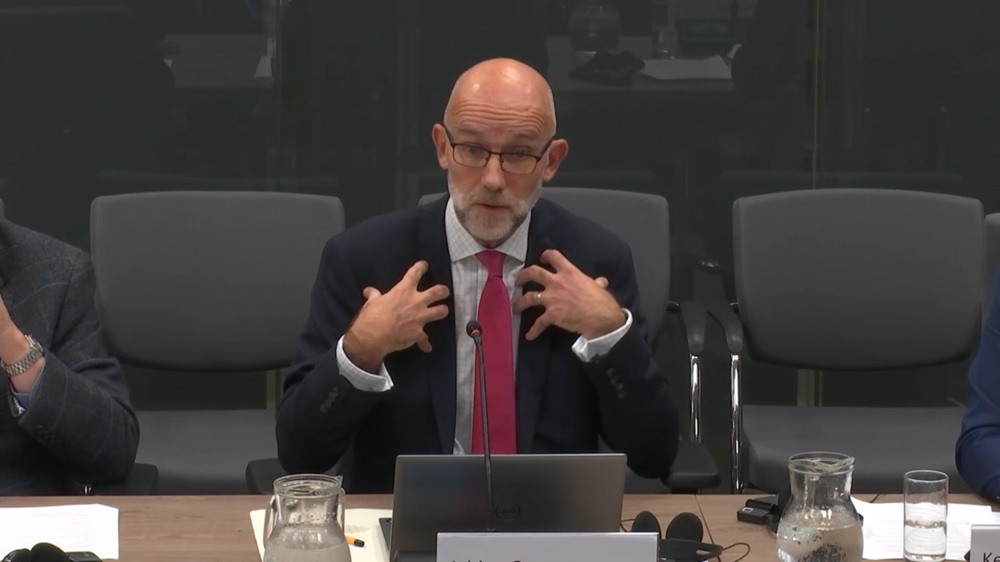
As he prepares to step down, Auditor General Adrian Crompton has delivered a frank assessment of the challenges facing the incoming Welsh Government following the Senedd election in May.
In a letter to Peredur Owen Griffiths, Chair of the Finance Committee and Mark Isherwood, Chair of the Public Accounts and Public Administration Committee, Mr Crompton states: “Generally, we see councils having a sound grip on their immediate financial pressures but with many relying on reserves to balance budgets. This approach is unsustainable in the long run. Individual councils, and the sector as a whole must strengthen their long-term planning, forecasting and oversight if they are to remain financially viable.
“In the NHS, the Senedd passed legislation in 2014 requiring individual health bodies to break even over a three-year period and to have medium-term financial plans that are approved by the Welsh Government. Yet despite these statutory expectations, most health boards have been unable to meet that break-even duty for several years.
“Despite record levels of investment and ever-increasing levels of savings, health boards are struggling to control costs driven by rising demand for services, overall growth in pay costs, and other inflationary pressures. With most health boards still unable to produce financially balanced three-year plans, the overall NHS deficit position is unlikely to change for the foreseeable future.
“Those financial pressures stimulate an understandable focus on short-term financial management. But this reactive approach hinders the longer-term planning and transformational changes that are needed to create more financially sustainable services.
“This is all before we add into the mix wider pressures, for example around the investment needed to support policy priorities around decarbonisation, deal with the impacts of climate change, and help society adapt. I have reported previously that the scale of spending that might be needed in these areas, and where that funding will come from, remains unclear. Against this backdrop, making the most of every pound of public spending is essential.
“To win and maintain public trust and confidence, we must consistently demonstrate public service delivery that is timely and of good quality. When outcomes are poor and are not seen to improve – or seen to worsen – it is unsurprising that the public loses confidence in the public sector’s capability. Not so much in the efforts of individuals and frontline services, but organisationally and system-wide.
“We know from our own work and wider evidence that poverty and inequality remain deeply entrenched in many communities despite the best efforts of local government and others. Similarly, my work in the NHS has shown that the failure to meet targets in key areas such as elective waiting times and ambulance handovers has sadly become the norm. This is demoralising for staff and will colour patients’ views.”
‘Tarnished’
Mr Crompton goes on to suggest that the public sector’s reputation is tarnished by “too many examples of poor organisational governance at every tier of the public sector – from the Welsh Government itself to the NHS, local government, some central government organisations, and the smallest tier of government in our town and community councils.”
He states: “I fear even a small number of such cases colour the public’s perspective of public sector governance in the round. These failures invariably feature some weaknesses in process such as poor record-keeping, application of policy, or a lack of transparency. But more significantly, in my view, many governance failures in public organisations are rooted not in process but in human behaviour.
“If those in the public sector, especially in positions of leadership, lose sight of the required values and behaviours, the effects are damaging. They manifest in the form of poor decision making, relationship breakdown, wasted public money – on settlement payments, legal or consultancy fees – and distracted organisational leadership and service provision. And every time the public sees such examples, it further undermines their confidence and trust: trust that is essential if the public is to support the kind of transformation required to make our public services sustainable for the long term.
“Effective public service delivery begins with getting the basics right. Years of financial pressure has left some important areas under-invested and this needs addressing if we are to improve services and increase public sector productivity.”
Digital strategies
The success of digital strategies has been uneven, says Mr Crompton: “The technology already exists to transform service delivery, reduce costs and improve the user experience. I recognise that the public sector is already working to improve its approach to realising benefits from digital solutions and identifying services requiring transformation.
“This work must replace antiquated IT systems, improve the quality and shareability of data, recruit and retain scarce skills in high demand across the economy, and reshape service delivery with citizens and users at the heart. The challenge is considerable. The potential efficiency gains in those services are enormous, with more modern and responsive public services delivering improved service to customers. However, I have also emphasised the importance of balancing spending on infrastructure with work to tackle the root causes of digital exclusion. And while artificial intelligence presents great opportunity, it is not without risk.”
There is a need for a greater emphasis on value for money, says Mr Crompton: “Productivity and value for money In the face of rising demand pressure and ever-more stretched budgets, improving productivity and delivering better value for money is essential. Our work points to some of the productivity challenges for the public sector, especially in the NHS where outputs in terms of activity have not increased in proportion to additional inputs in terms of money and capacity in areas such planned care.
“I am sure that leaders across the public sector share an ambition to make a step change in productivity. There’s enough evidence from the positive examples we have found in our work to be confident that significant amounts of public money can be freed up. But it will take a disciplined, focused, cross-government approach over several years to fully realise the potential and make the exceptional the norm. Hence, my reports consistently highlight that VFM is not just about spending less, it is about making the money we do have work better.
“A good example is the number of people who are in hospital awaiting discharge. While there has been some recent improvement, the picture across Wales remains challenged, absorbing huge costs and adversely affecting patient flow and the optimal rehabilitation of patients. Many discharge delays are a result of waiting for social care support, often linked to funding and resource pressures in local authorities. Better funding to increase social care capacity would therefore free up significant NHS resource and represent a cost-effective way of improving patient experience and outcomes.
“In a context of constrained budgets and rising demand, public bodies must focus on outcomes, not just outputs, and ensure that every pound spent contributes meaningfully to public well-being. At a very basic level, our work shows that too often public bodies lack reliable data with which to assess value for money and are unclear as to the outcomes they are looking to achieve. My work on Active Travel, for instance, demonstrated how the Welsh Government itself is unclear about how assessment of its policy is to be achieved. As a result, significant sums had been invested without a robust means to assess its effectiveness and value for money. And I have reported previously on how the Welsh Government had not done enough to ensure its investment in affordable housing contributes to wider policy objectives and to be able to tell a clear story on that front.
“Many public organisations struggle to report on outcomes effectively. Performance tends to focus on outputs—such as the number of services delivered—without evaluating the difference those services make.
“Public Health Wales has estimated that for every £1 invested in public health interventions, there is a return of £14. This includes reduced demand on hospitals, social care, housing, and emergency services. But too often, public services operate in crisis mode, responding to immediate pressures rather than planning for the future. This short-termism is reinforced by annual budget cycles, reactive funding decisions, and political incentives that prioritise quick wins over sustainable outcomes. The Well-being of Future Generations Act provides a legislative framework to do something different – to act for the long-term and to act preventatively by addressing the root causes of issues, rather than dealing with the symptoms.
“However, I have highlighted recently some prime examples where public bodies have been struggling to make a meaningful shift towards prevention, as evidenced for example in my work on cancer services and on how councils are managing temporary accommodation demand. This is despite there being clear evidence that investment in prevention makes sense from a value for money perspective.”
Support our Nation today
For the price of a cup of coffee a month you can help us create an independent, not-for-profit, national news service for the people of Wales, by the people of Wales.



What a genius. There is a phrase involving Sherlock Holmes that springs to mind. Oh, and it would be lovely to know what this man has achieved for us in his career. Go on, name one thing…just one…no rush.
Auditing public money is probably the most important job in the public sector. England abolished their auditors to save money and half their councils bought private jets and went bankrupt. Now that’s “genius”.
No flies on this one!!
Everyone else lost faith in the public sector in the eighties when Magi and crew destroyed everything that was worthwhile in the UK.
Toxic legacy of Thatcher is a lack of self-belief that better public services are possible or even necessary.
But TfW’s latest 91% customer satisfaction score shows it can be done.