

Farmer becomes first person in Wales to receive high-tech cancer treatment
An advanced form of radiotherapy is being used to treat pancreatic cancer at a south Wales hospital – the first in the country to introduce it.
Singleton hospital is home to the South West Wales Cancer Centre, which has already pioneered a series of cutting-edge approaches to treatments.
In 2022 it began using SABR, stereotactic ablative radiotherapy, initially to treat lung cancer but with other types of cancer following.
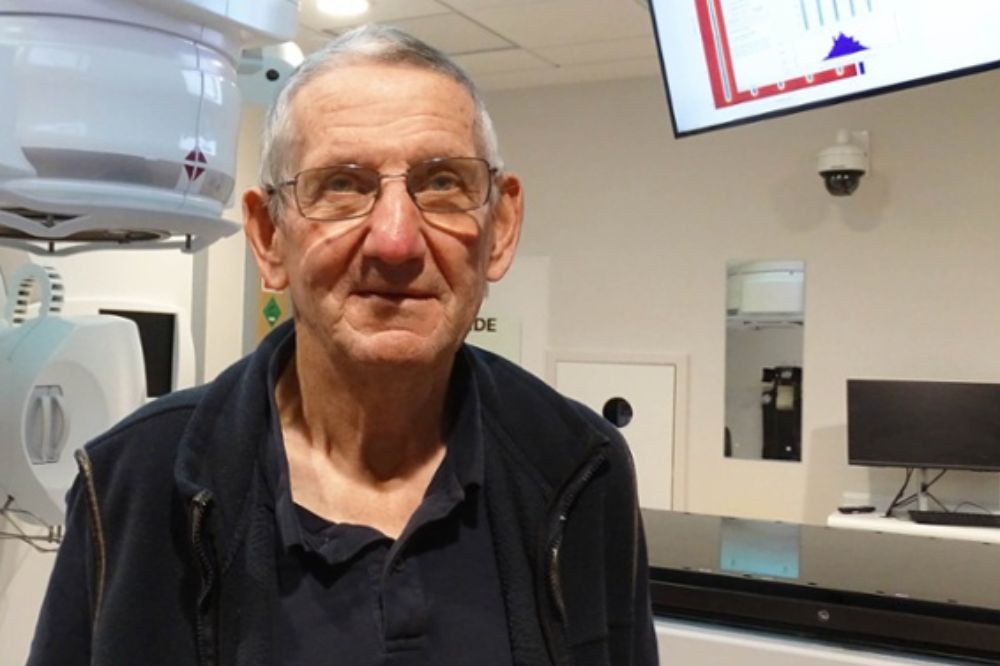
Semi-retired farmer David Evans, who lives near Aberystwyth, became the first person in Wales to benefit from SABR.
Radiation
Mr Evans underwent one of his five SABR sessions, supported by consultant clinical oncologist Owen Nicholas, advanced radiotherapy physics technologist Lucy Faulkner, and interim head of service – radiotherapy Anna Iles.
SABR delivers a much higher but more targeted dose of radiation to the tumour, while reducing the risk of damage to surrounding healthy tissue.
For cancer of the pancreas, it also means patients only require five sessions compared to upwards of 15. This not only frees up capacity but is of particular benefit for those travelling long distances to the regional cancer centre at Singleton.
Experts there have been supported by Manchester-based The Christie, Europe’s largest single-site cancer centre, which already offers SABR for pancreatic cancer, one of the hardest cancers to treat.
“I was diagnosed last October,” said 75-year-old Mr Evans. “I had gallstones and a blockage. That’s how they found out I had cancer. If they hadn’t, I probably wouldn’t be here today.
“I started a course of 12 sessions of chemotherapy in Aberystwyth and now I’ve had my radiotherapy in Singleton.
“Making five journeys was fine. The ambulance car picked me up and took me home, but it was still a three-hour drive each way. If I’d had to make 15 journeys I would most probably have been very tired.
“I would have struggled, but as it is I’m feeling fine. The treatment went well – there were no side-effects at all.”
Targeted
Owen Nicholas, consultant clinical oncologist at the South West Wales Cancer Centre, said: “SABR is a shortened, more targeted form of radiotherapy given over five sessions as opposed to the usual 15 to 28.
“Those sessions would be every day, whereas with SABR it’s shortened to five sessions given every other day.
“It’s much more targeted so it’s generally well tolerated, and it enables us to give a higher dose than usual to the pancreas, which helps to control it even more.
“There is evidence to suggest that patients receiving this treatment may have improved outcomes, that they do better than with standard radiotherapy.”
As the SWWCC covers both Hywel Dda and Swansea Bay, this reduced number of sessions means much less time travelling or stays either in Singleton’s hostel, Bay View, or other accommodation.
“We’ve been working on it for a number of years, and we are now comfortable we can deliver this treatment safety and effectively,” said Dr Nicholas. “This is really complex radiotherapy, so it has been a huge team effort to get to this point.”
Advanced radiotherapy physics technologist Lucy Faulkner said that as part of its preparations, the SWWCC had been mentored by The Christie, which provided advice and feedback.
She added: “We also attended conferences to understand how other centres are doing things.
“When treating with SABR, it is important that we are accurate and precise in targeting the tumour.
“We have to make sure the patient is in the same position each time, and that the treatment is optimised for this. We went to conferences to see how they managed that.
“It has taken a lot of work to get to where we are.”
Support our Nation today
For the price of a cup of coffee a month you can help us create an independent, not-for-profit, national news service for the people of Wales, by the people of Wales.


