


Farmers’ leaders warn of threats to Welsh food security
Farmers in Wales are facing mounting pressure from rising costs and global instability, with industry leaders warning that food security must be treated as a national priority.
The Farmers’ Union of Wales (FUW) raised concerns during talks in Westminster with Angela Eagle, the UK Government minister responsible for food security policy, highlighting the impact of international conflicts on farming and the wider food supply chain.
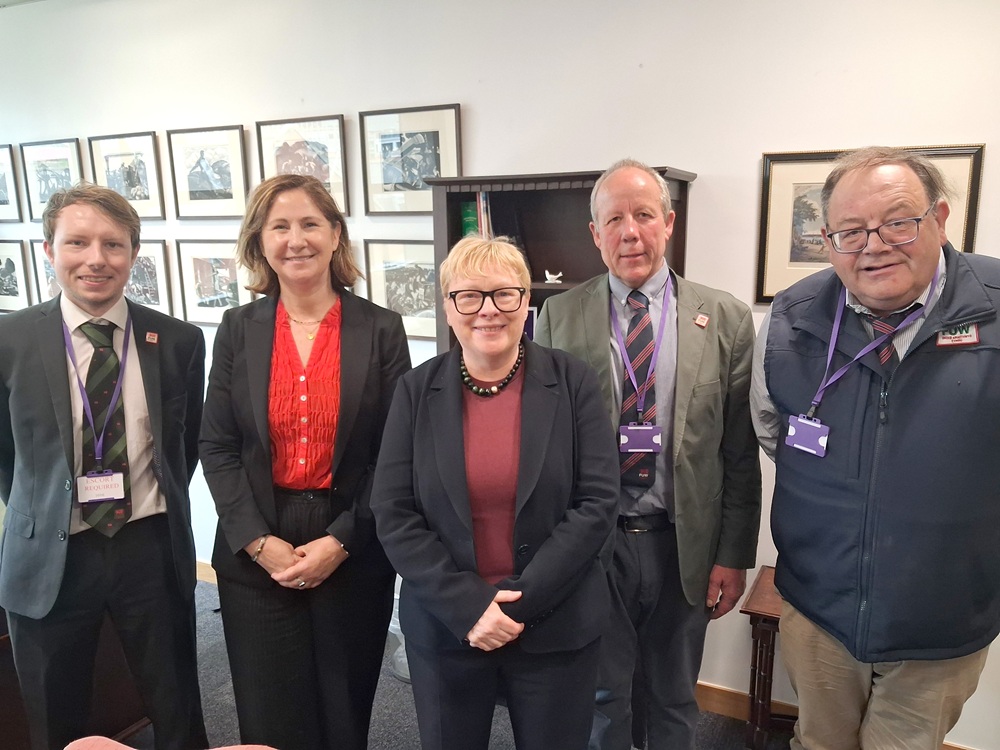
FUW president Ian Rickman and deputy president Dai Miles met the minister alongside Anna McMorrin, the Labour MP for Cardiff North, to press the case for a more coordinated UK-wide approach to food resilience.
The union warned that ongoing instability, particularly in the Middle East and Gulf region, has driven sharp increases in key agricultural inputs.
Fertiliser prices, including urea and ammonium nitrate, have risen by between 20% and 30%, while fuel costs have surged, with red diesel in some cases doubling in price.
These increases are placing significant strain on farm businesses already operating on tight margins, the FUW said.
The union argued that the knock-on effects are being felt across the entire food chain, from production and transport to processing and manufacturing, and are likely to contribute to further rises in food prices.
During the meeting, the FUW called for greater transparency around fertiliser supplies and distribution, as well as stronger engagement between government and the farming sector.
It also renewed its push for a UK-wide legislative food security metric, which it said should be taken forward by the next Welsh Government in partnership with Westminster.
The union stressed that food security is not confined to one nation, but depends on closely integrated supply chains across England, Wales, Scotland and Northern Ireland.
A coordinated, long-term strategy is essential, it said, echoing previous recommendations for a Great Britain-wide agricultural partnership.
The FUW pointed to recent government evidence, including the UK Government’s Food Security Report and national security assessments, which highlight long-term risks to food production. These include climate change, biodiversity loss, disease pressures affecting plants and livestock, and exposure to volatile global markets.
‘Cost pressures’
Speaking after the meeting, Mr Rickman said: “Food security is national security, and recent global instability has made that clearer than ever.
“Farmers are facing surging cost pressures, particularly from fertilisers and sharply rising fuel costs such as red diesel, which in some cases have doubled.
“These are forces far beyond their control, yet they directly threaten the resilience of our food system.”
He added: “We urgently need a coordinated UK-wide approach that recognises the strategic importance of domestic food production and reduces our exposure to volatile international markets.
“With that must come regular and meaningful engagement between Defra and agricultural stakeholders across the UK, including the FUW, particularly on policy areas that remain reserved to the UK Government.”
Support our Nation today
For the price of a cup of coffee a month you can help us create an independent, not-for-profit, national news service for the people of Wales, by the people of Wales.
Get more trusted Welsh news
Choose Nation.Cymru as a preferred source in Google News to see more of our journalism.


