


Farmers reminded to prepare for winter closed periods on slurry spreading
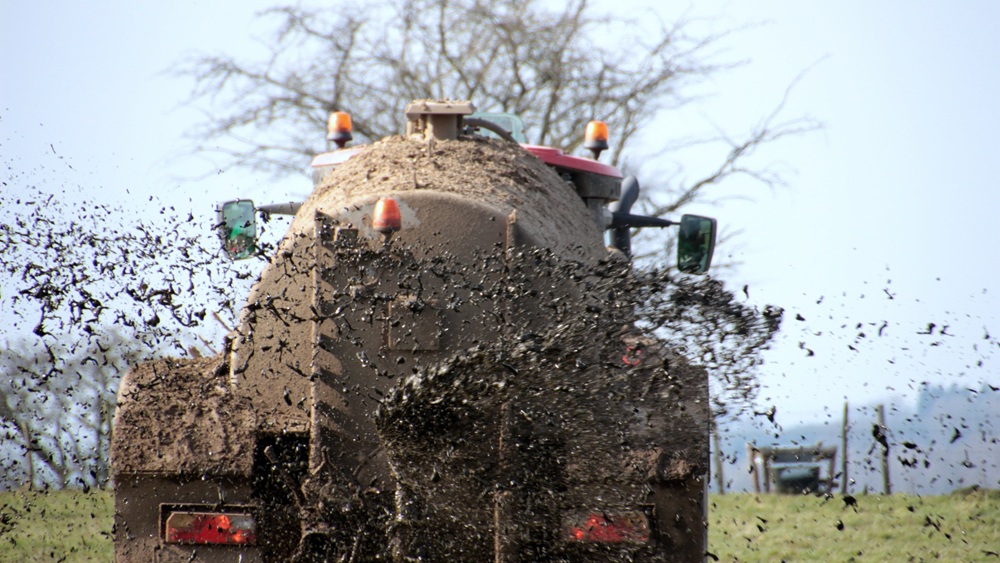
Natural Resources Wales has reminded farmers to spread slurry and manure on fields to adhere to regulations and take necessary precautions to minimise the risk of agricultural pollution.
The reminder comes ahead for the upcoming closed periods on spreading organic manures with high readily available nitrogen (RAN), including slurry.
The restrictions, part of the Water Resources (Control of Agricultural Pollution) (Wales) Regulations 2021, are designed to reduce the risk of water pollution during the colder months when crop growth is minimal and nutrient losses are most likely to occur.
The rules apply to all holdings in Wales and cover the spreading of materials such as cattle slurry, pig slurry, poultry manure, and any organic manure containing 30 per cent or more of its nitrogen available at the time of application.
| Soil type | Grassland | Tillage land |
|---|---|---|
| Sandy or shallow soil | 1 Sept 2025 – 31 Dec 2025 | 1 Aug 2025 – 31 Dec 2025 |
| All other soils | 15 Oct 2025 – 15 Jan 2026 | 1 Oct 2025 – 31 Jan 2026 |
Farmers can continue to spread organic manures with a lower nitrogen content, such as solid cattle manure, where there is a clear crop need.
Safeguard
Simon Griffiths, Team Leader of NRW’s North CoAPR Inspections Team, said: “These closed periods are a vital safeguard for our environment, especially during the winter months when the risk of runoff is highest.
“We urge farmers to assess their slurry storage capacity now and ensure they’re fully compliant with the regulations.
“Planning ahead and recording all applications in a Nitrogen Management Plan is essential.”
NRW is encouraging farmers to take proactive steps in the weeks ahead, including:
- Checking storage capacity – ensuring there is at least five months of storage for cattle slurry and six months for pig and poultry manure.
- Spreading responsibly before deadlines – only where nutrients match crop needs and avoiding waterlogged, frozen, or sloping land near watercourses.
- Monitoring weather conditions – avoiding last-minute spreading in unsuitable conditions to reduce pollution risks.
- Reviewing compliance – certified organic producers should confirm whether alternative dates or application limits apply.
NRW reminded farmers and the public to report any pollution incidents immediately via its 24/7 incident communication centre on 0300 065 3000, or through the online reporting form on the NRW website.
“These measures are about protecting the land and water resources we all depend on,” said Mr Griffiths. “By working together and planning responsibly, we can reduce pollution risks and protect our rivers for the future.”
Support our Nation today
For the price of a cup of coffee a month you can help us create an independent, not-for-profit, national news service for the people of Wales, by the people of Wales.



There should also be periods when farmers are not allowed to bring out half the mud in their fields on their wheels and dump it in the public highway. They should have a network of lanes within their fields and not use roads unless absolutely necessary. The mess they make in our area is horrendous.
There is a rush in west Wales to get the slurry on the fields before the date to stop (15th October). It is being spread on an adjoining field as I write this – 6.30pm 13th October. Vastly increased stocks of cattle have led to slurry being a constant feature of life in the countryside now -and I have lived in the countryside all my life.It really is about time that governments address the need to implement new storage bio digester equipment that seeks to eliminate the worst excesses of a slurry spreading regime. If it means generous grants to… Read more »