


Fears raised over impact of school closures on ‘under threat’ Welsh-medium nursery care
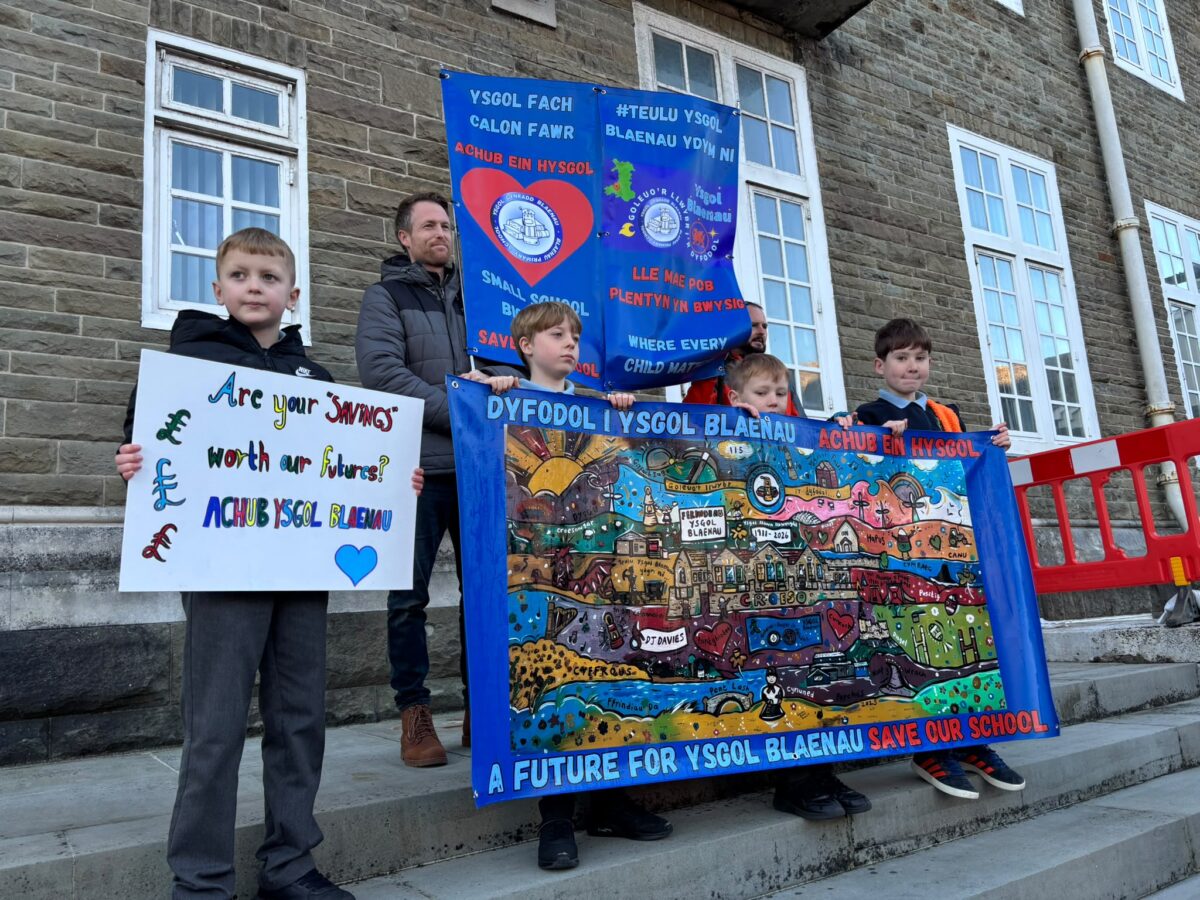
Stephen Price
A Welsh council has been warned that its plans to close four Welsh-medium primary schools risks damaging childcare provision in the county as well as adding to the ‘alarming decline’ in Welsh language speakers – at odds with Welsh Government targets.
Just three days after the CEO of Mudiad Meithrin expressed concern that the Welsh Government has no “clear targets or a plan in place” to increase Welsh-medium childcare, letters from her and the head of Early Years Wales have emerged, warning that Carmarthenshire Council risks damaging childcare provision in the county through proposed cuts to primary education.
Following a decision by the Carmarthenshire County Council Cabinet to consult on the closure of four Welsh-medium primary schools, letters sent to campaigners in Cwm Gwendraeth have highlighted planning shortcomings — specifically regarding nursery care — as well as the potential risk to the number of children beginning Welsh-medium education in the county.
The two national childcare organisations were responding to a query from campaigners acting on behalf of Ysgol Bancffosfelen and its Cylch Meithrin nursery group. On behalf of Early Years Wales, Chief Executive Dave Goodger wished to ‘raise concerns about the impact these decisions have on childcare providers in the area.’
He notes that these decisions are taking place against the backdrop of a national Plaid Cymru-led government ‘embarking on a significant childcare expansion programme,’ increasing the availability of Welsh-language provision ‘across Wales, [with] families supported to be able to access childcare in Cymraeg in their local area.’
Mr Goodger states that “supporting Cylchoedd, like Cylch Meithrin Bancffosfelen, a setting that has been successfully providing childcare in Carmarthenshire for 50 years, is central to ensuring accessible, local provision”.
In this context, “when schools close, the provision for a building and location that fulfils the requirements of the National Minimum Standards for Regulated Childcare is under threat [and] is further complicated when neighbouring Cylchoedd have waiting lists”.
‘The aspiration of the Welsh Government is to increase Welsh language childcare; proposed school closures thad do not consider this an important theme neglect to understand the required joined-up thinking that the government policies rely on.’
Consequently, he argues: “it is therefore essential that proposals to close schools take into account the… need for a coordinated approach.’ Indeed, ‘Early Years Wales urges the decision makers to read, research, and understand this from a national policy level, workforce and providers, and family and child level.’
And this is not merely a matter for the County Council or the Minister for Education: “it is central to the direction of the Welsh Government policy makers, First Minister and the Deputy First Minister.”
Mudiad Meithrin
In their letter, Mudiad Meithrin acknowledge the importance of the issues in question. Chief Executive Dr Catrin Edwards states that the ‘Cylch Meithrin represents the first step on the Welsh-language education continuum; therefore, school provision and childcare provision should not be considered in isolation from one another’.
Furthermore, ‘these playgroups and childcare services form an essential part of the linguistic infrastructure of our communities, creating environments that support families in using and transmitting the Welsh language both at home and within the community’.
She also warns that decisions concerning schools that host such playgroups could have ‘direct implications for the sustainability of the provision, families’ access to local Welsh-medium childcare, and the ability to retain an experienced workforce that is rooted in the community.’
The Mudiad emphasizes its belief that ‘any assessment of proposals regarding school organization should specifically consider their impact on the sustainability of Welsh-medium childcare.’ It further asserts that it must be ‘recognized that Welsh-medium childcare is an integral part of a single ecosystem, and that national ambitions to expand such provision cannot be realized without safeguarding the capacity that already exists within local communities.’
Threat
In response to the letters, Andrew Barlow, Chair of Governors at Ysgol Bancffosfelen, said: “Following Mudiad Meithrin’s statement last week regarding the need to expand provision, our situation in fact illustrates that things could get worse in Carmarthenshire—unless the Council reconsiders its plans in light of national policy. The Council is already responsible for the closure of one cylch meithrin in this part of Cwm Gwendraeth, having decided to strip the historic village of Llangyndeyrn of its school.”
“Similarly, the proposed closure of our school in Bancffosfelen raises serious questions about the future of the village’s cylch meithrin, which is currently located on the school site. And the Council would be advised not to suggest that Pontyberem offers a solution, given that its site is already packed to capacity.”
“This threat to the initial starting point of Welsh-medium education—in one of the strongholds of the Welsh language—is bordering on absurd, given the national context in which we have committed to creating a million speakers. Local people will surely see the irony of the situation, especially as the Government has announced a £55 million investment in childcare—a first step towards providing 20 hours of free childcare for children up to the age of four.”
“In the Cwm, where it would be a natural choice for parents to opt for Welsh-medium childcare provided by an unparalleled service—one trusted over the generations—it now seems possible that this pathway into Welsh-medium schooling will no longer be available.”
“People need to understand what is at stake with these plans,” says Tudur Jones, Chair of Governors for the Carwe, Gwynfryn, and Pont-henri Federation.
“In terms of the linguistic landscape, Carmarthenshire is not the same as Gwynedd—as evidenced by the alarming decline in the number of speakers here over the last two decades. The Carwe Cylch is doing heroic work by continuing to serve the lower part of the Cwm—even after being relocated following the Council’s failure to repair the school site—but given the plan to close the schools, one must ask what will become of these Cylchoedd in the long term.”
“If there is no provision within the local community, and parents are forced to travel to access childcare, there is no guarantee—once they are in the car—that they will choose Welsh-medium providers. Furthermore, with the loss of village schools, there is a significant risk that many children from the Cwm will fail to integrate into the Welsh-speaking community. In truth, we are still dumbfounded that the Council is actually serious about these plans.”
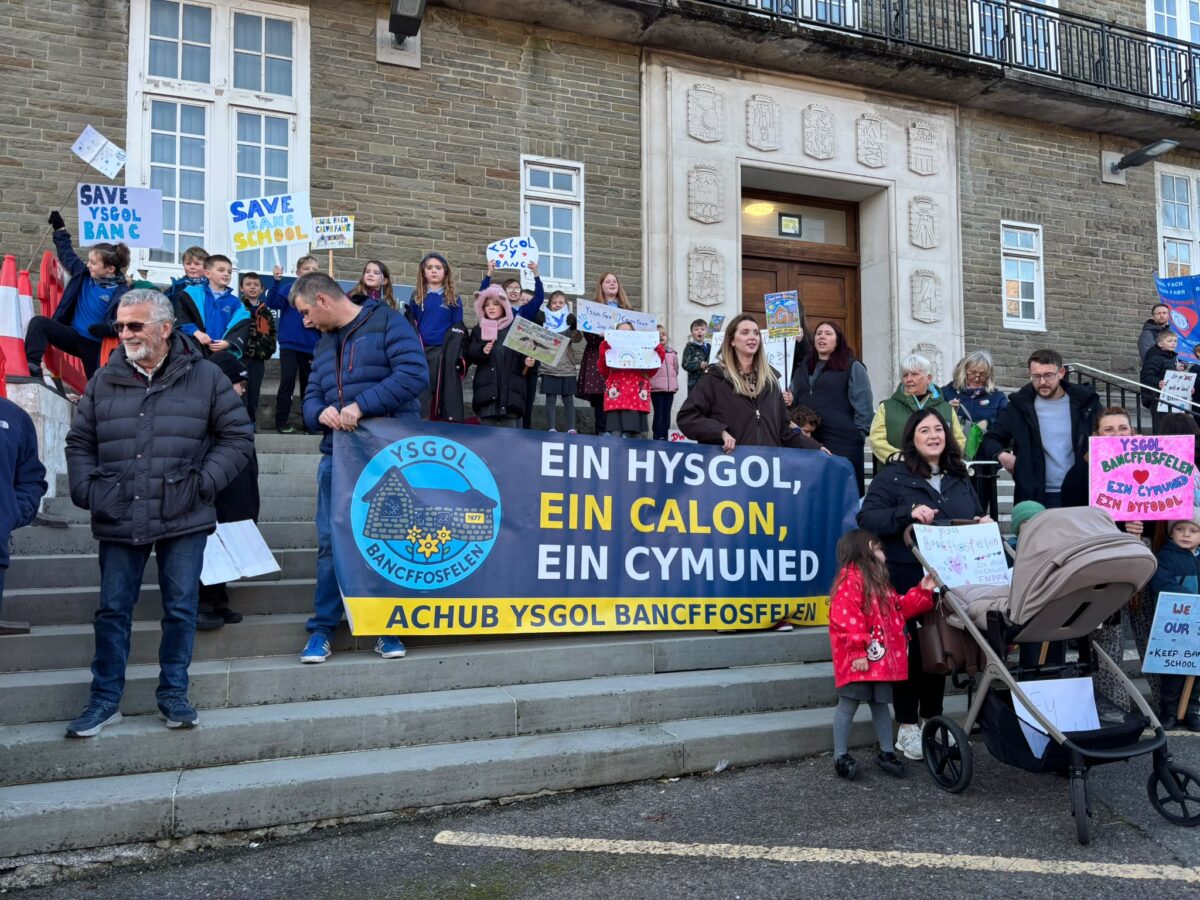
Further up the road, close to Llandybie, parents at Ysgol Blaenau suggest that they have already suffered as a result of the County Council’s hostile attitude toward small schools and Welsh-medium nursery care. Peter Roberts, Chair of the school’s Governing Body, states:
“We previously presented a practical and structured plan to the Council, yet that plan has been ignored over the past five years, despite several attempts by the school’s governors to engage constructively. In truth, we have received very little support from the Council to implement or further develop the ideas outlined in the consultation document. In July 2025, the school’s nursery unit was abruptly closed, even though we had requested for a number of years that the Council support a change to the pupil entry age in order to strengthen and safeguard this provision.”
“We have clear evidence of the need for this provision at the school, yet the local authority has not supported us in establishing an alternative. We do not believe it is justifiable to target small schools in this manner when the root cause of their financial difficulties lies elsewhere within the education system—including within larger schools. Consequently, these decisions raise serious questions regarding the Council’s commitment to safeguarding local children and ensuring the sustainability of their communities.”
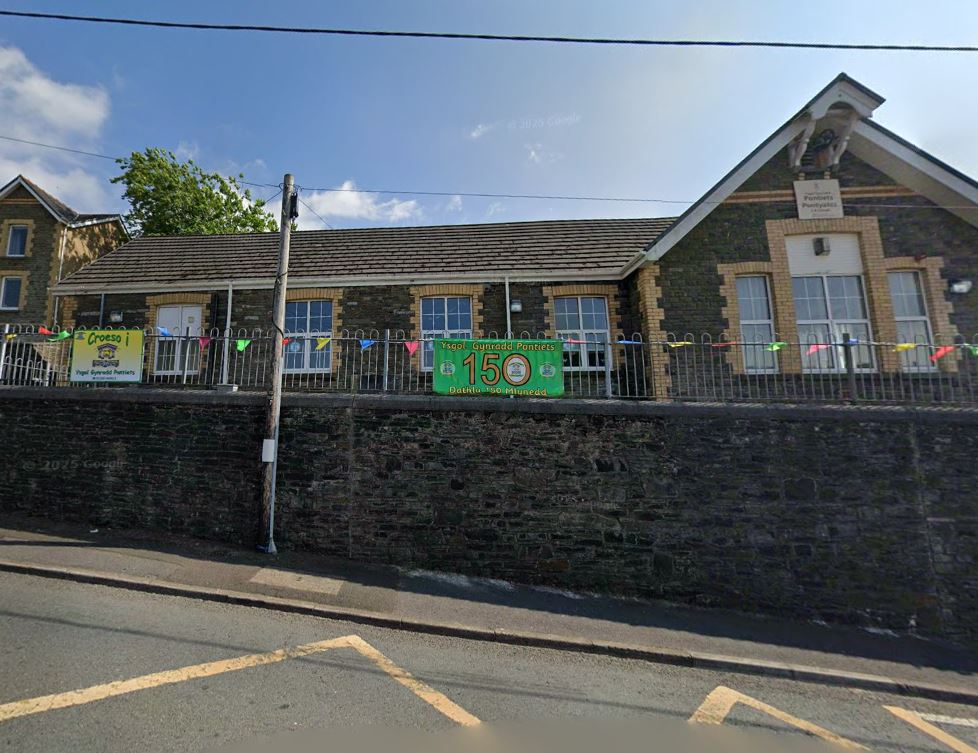
Elin Cullen, Chair of Governors at Ysgol Pontiets, added: “We have already pointed out that closing small schools is a completely inappropriate—indeed, —response to the financial crisis for which the Council is responsible, especially given that it is the county’s large schools that are primarily responsible for the £16 million overspend. The harm these plans will cause to the Welsh language and the community suggests a local authority that is losing its grip on the situation—and, regrettably, the implications for nursery care highlight this all too clearly.”
“This threat to the future of Welsh-medium nursery care is just one aspect of broader plans that are, at best, thoughtless and dismissive. It must be made clear that the Council is not ‘modernising’ – for example there are no proposals for an area school for a region where the historic underinvestment in our schools is well known to everyone—but is instead closing village schools with the intention of moving children from one village to another.”
“This is why we reiterate our call for the Welsh Government to implement a national moratorium now, while they work on putting the recommendations of the Welsh Communities Commission into effect.”
“As suggested in Mr Goodger’s letter, it is the responsibility of central government—ultimately the First Minister and his cabinet—to establish a clear policy framework for our Councils in these areas; a framework that is fair, places the Welsh language and our children at the heart of our actions, and prevents the kind of flawed and destructive planning seen here. We urge them to respond, before it is too late.”
“Case for closure must be strong”
The Welsh Government said: “We know how important schools are to rural communities, and any proposals affecting rural schools must be considered carefully, with full regard to their educational, language and community impact, including the impact on early years provision.
“The School Organisation Code which guides local authorities’ decisions makes special arrangements in regard to rural schools, with a presumption against their closure. This does not mean that a rural school will never close, but the case for closure must be strong and all viable alternatives to closure must have been conscientiously considered by the proposer.
“Welsh-medium childcare is integral to our plans for expanding funded childcare, and we have established a dedicated workstream to deliver more Welsh-medium provision.
“We are working with local authorities and partners, including Mudiad Meithrin, to expand Welsh-medium childcare alongside the wider expansion of funded childcare, including investing £3.3 million in Mudiad Meithrin’s qualifications programme between 2026 and 2029.”
Support our Nation today
For the price of a cup of coffee a month you can help us create an independent, not-for-profit, national news service for the people of Wales, by the people of Wales.
Get more trusted Welsh news
Choose Nation.Cymru as a preferred source in Google News to see more of our journalism.


