


Final Monumental Welsh Women statue unveiled in tribute to campaigner Elizabeth Andrews
Nation.Cymru staff
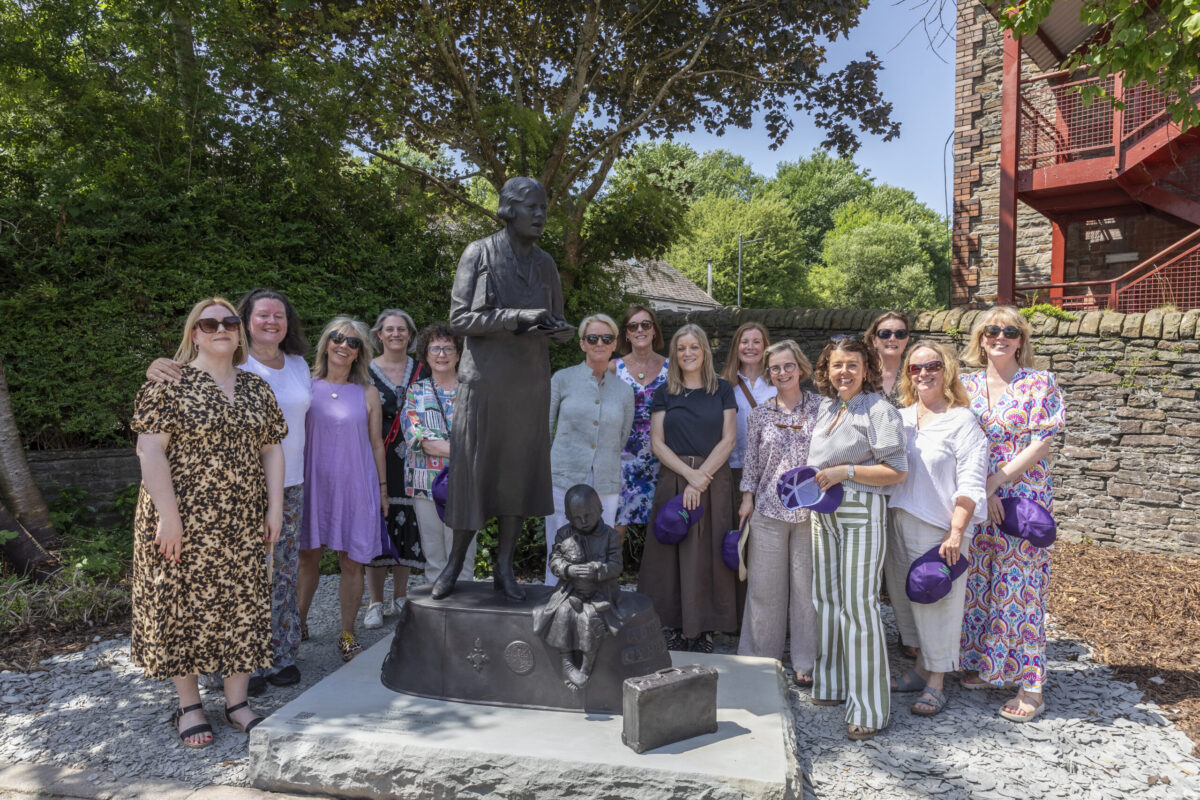
A statue honouring pioneering campaigner Elizabeth Andrews has been unveiled at Rhondda Heritage Park, marking the completion of a project to celebrate five remarkable Welsh women whose achievements had gone unrecognised in public monuments.
The 6.5ft bronze sculpture was revealed on Thursday in Trehafod, becoming the fifth and final statue commissioned by the Monumental Welsh Women campaign.
Before the group’s first statue was unveiled in Cardiff in 2021, Wales had no public statue dedicated to a named, real Welsh woman.
Elizabeth Andrews, who was born into a mining family in Hirwaun, became one of Wales’ most influential political activists during the early 20th century. A suffragist, socialist and campaigner for women and children’s welfare, she fought to improve living conditions in mining communities and became one of Britain’s first female magistrates.
As the first Labour Party Women’s Organiser for Wales after some women won the right to vote in 1918, she established women’s groups across the country, describing them as “working women’s universities”. She also translated election leaflets into Welsh to encourage women to use their newly won vote.
Her campaigns led to lasting improvements in the lives of working-class families.
In 1919 she gave evidence to a Royal Commission on the mining industry, highlighting the impact of coal mining on women and children. She became a leading advocate for compulsory pithead baths, arguing they would improve hygiene and reduce the physical burden placed on miners’ wives, who often had to carry heavy baths of boiling water into overcrowded homes. Pithead baths were made compulsory in 1924.
She also helped establish maternity and childcare services, including one of Wales’ earliest nursery schools, and organised relief efforts for mining families during the 1926 General Strike and the economic hardship that followed.
To many across the south Wales coalfield she became known simply as “Our Elizabeth”.
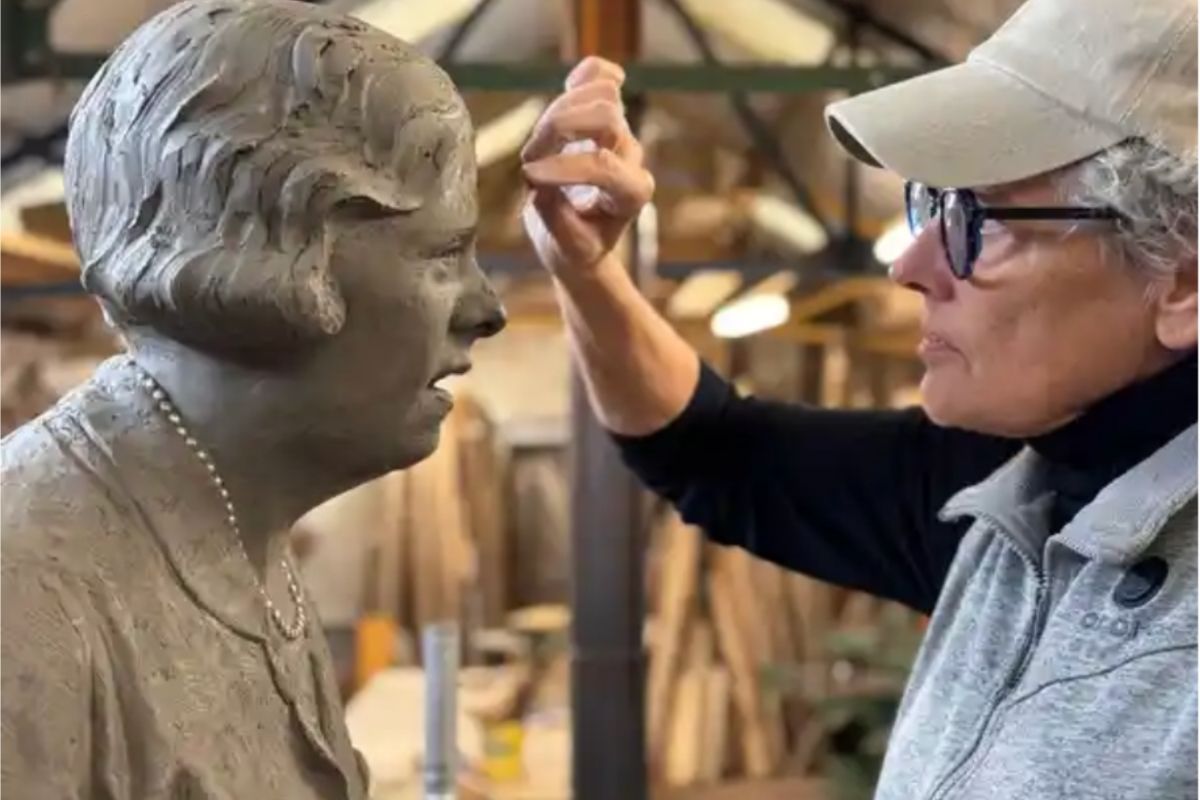
The statue, created by sculptor Billie Bond, depicts Andrews standing on an upturned tin bath holding papers, reflecting her campaign for pithead baths. At the base sits a young girl representing the children she helped during the 1926 miners’ lockout, when many were temporarily housed with families elsewhere in Britain to escape poverty.
The child is based on Rhona Allen, who was sent from the Rhondda to live with a family in England during the dispute. She was the aunt of broadcaster Carolyn Hitt, one of the founders of Monumental Welsh Women.
The words “Educate, Agitate, Organise”, Andrews’ lifelong motto, are stitched onto the sculpture’s tin bath, with the lettering based on work produced by a community sewing group from Hirwaun in a nod to Andrews’ early career as a dressmaker.
Transformed
Helen Molyneux, chair of Monumental Welsh Women, said the unveiling marked the end of a campaign that had transformed how Wales commemorates its female history.
“We are delighted to unveil our fifth and final statue of a real Welsh woman,” she said.
“Before the statue of Betty Campbell was unveiled in Cardiff, there was not a single statue of a named Welsh woman in Wales. We’ve always said, ‘You can’t be what you can’t see’, and now Wales has five statues telling the stories of these wonderful women.”
She added that while the project had reached its conclusion, many more pioneering Welsh women deserved greater recognition.
Legacy
Culture and Sport Minister Heledd Fychan said Elizabeth Andrews had dedicated her life to improving the lives of others.
“She did not accept inequality as inevitable: she challenged it and she changed things in very real, practical ways for the women, children and families of the coalfields,” she said.
“Today’s unveiling is a tribute to her extraordinary legacy and to the remarkable vision of the Monumental Welsh Women group who have ensured that five Welsh heroines now stand proudly in public spaces across our country.”
The unveiling was attended by members of Elizabeth Andrews’ family, including her great-niece Maura High, who travelled from the United States, and great-great-niece Melinda Hawthorne.
The Monumental Welsh Women campaign has now completed its goal of erecting five statues in five years. Alongside Elizabeth Andrews, the women honoured are Betty Campbell, Wales’ first Black headteacher; writer and evolutionary theorist Elaine Morgan; poet, preacher and mariner Sarah Jane Rees, better known as Cranogwen; and suffragette and businesswoman Lady Rhondda.
Support our Nation today
For the price of a cup of coffee a month you can help us create an independent, not-for-profit, national news service for the people of Wales, by the people of Wales.
Get more trusted Welsh news
Choose Nation.Cymru as a preferred source in Google News to see more of our journalism.



Wales has very few statues of its heroes. Period. The only statue of Llywelyn the Last is tucked away inside Cardiff City Hall, as is a fine one of Owain Glyndwr. Where is the Glyndwr statue in Machynlleth?
Yet we have a statue to a Norman conqueror in Pembroke.
And that’s about it.