


First homes connected to £15.5 million Cardiff Heat Network
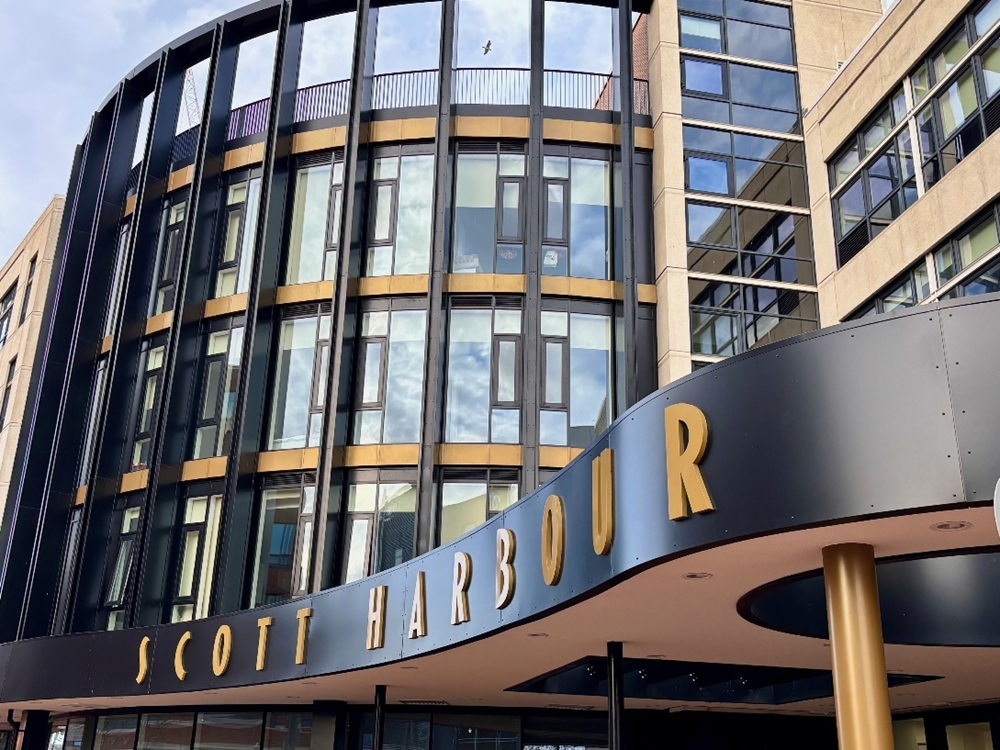
The first residential building has now connected to Cardiff Council’s low-carbon heat network, marking a major milestone in the drive to cut carbon emissions and provide sustainable energy in the capital.
Scott Harbour, a former office block in Cardiff Bay that has been converted into 78 council-owned apartments, is the first residential development in the capital to receive heating and hot water from the Cardiff Heat Network.
The district heat network captures surplus heat generated during electricity production at Viridor’s Trident Park Energy Recovery Facility.
Instead of being released into the atmosphere, this heat is transferred through a system of highly insulated underground pipes to buildings across Cardiff Bay, where it is used to provide space heating and hot water without the need for gas boilers.
Cabinet Member for Climate Change, Strategic Planning and Transport, Councillor Dan De’Ath, said the connection of the first homes demonstrated the real benefits of the project.
He explained that each building joining the network removes the need for gas boilers and delivers an estimated 80 per cent reduction in carbon emissions.
“This is a complex project to deliver, but the principle behind it is simple,” he said. “We are capturing heat that already exists and using it to warm homes and buildings instead of burning fossil fuels. It’s a major investment in infrastructure that will help Cardiff tackle climate change while building a fairer and greener city.”
Cardiff & Vale College was the first building to connect to the network, and further major sites in Cardiff Bay are set to follow.
The Senedd
Over the coming weeks, the Wales Millennium Centre, Butetown Hub, Nelson House, Tresillian House, Tŷ Hywel and the Senedd are all due to link up.
The £15.5 million project is being delivered by Cardiff Heat Network Ltd, the council’s arm’s-length company, with funding provided through a UK Government Heat Networks Investment Project grant and a loan from the Welsh Government.
The scheme is a key component of the council’s One Planet Cardiff strategy.
Once fully operational, the network is expected to save around 10,000 tonnes of carbon dioxide equivalent each year – comparable to switching off approximately 3,700 residential gas boilers.
The current network spans 4.9 kilometres of pipework and took four years to build, supporting around 30 local jobs during construction.
Although the initial heat source is Trident Park, the network has been designed to be heat-source neutral. This means future phases could draw on alternative sources, such as groundwater or geothermal heat beneath the city.
The local authority is already in discussions with additional potential customers near the existing network and is exploring funding options for a second phase, which could extend low-carbon heating further into the city centre.
Support our Nation today
For the price of a cup of coffee a month you can help us create an independent, not-for-profit, national news service for the people of Wales, by the people of Wales.



Hopefully they will get around to sticking carbon capture on top of the chimney to stop polluting the air over south wales.
This needs to be checked as to whether it is considered Residential heating or Commercial Heating, some people on such schemes got the short end of the stick and were not eligible for the energy price cap…