


First phase of consultation on controversial catholic super-school closed
Alec Doyle, Local Democracy Reporter
The first phase of consultation to close four catholic schools in north Wales and create a super-school to replace them is now closed.
Parents who oppose the scheme now face an anxious wait over the summer as the responses are collated into a report for Flintshire County Council’s Cabinet to consider when it reconvenes in September.
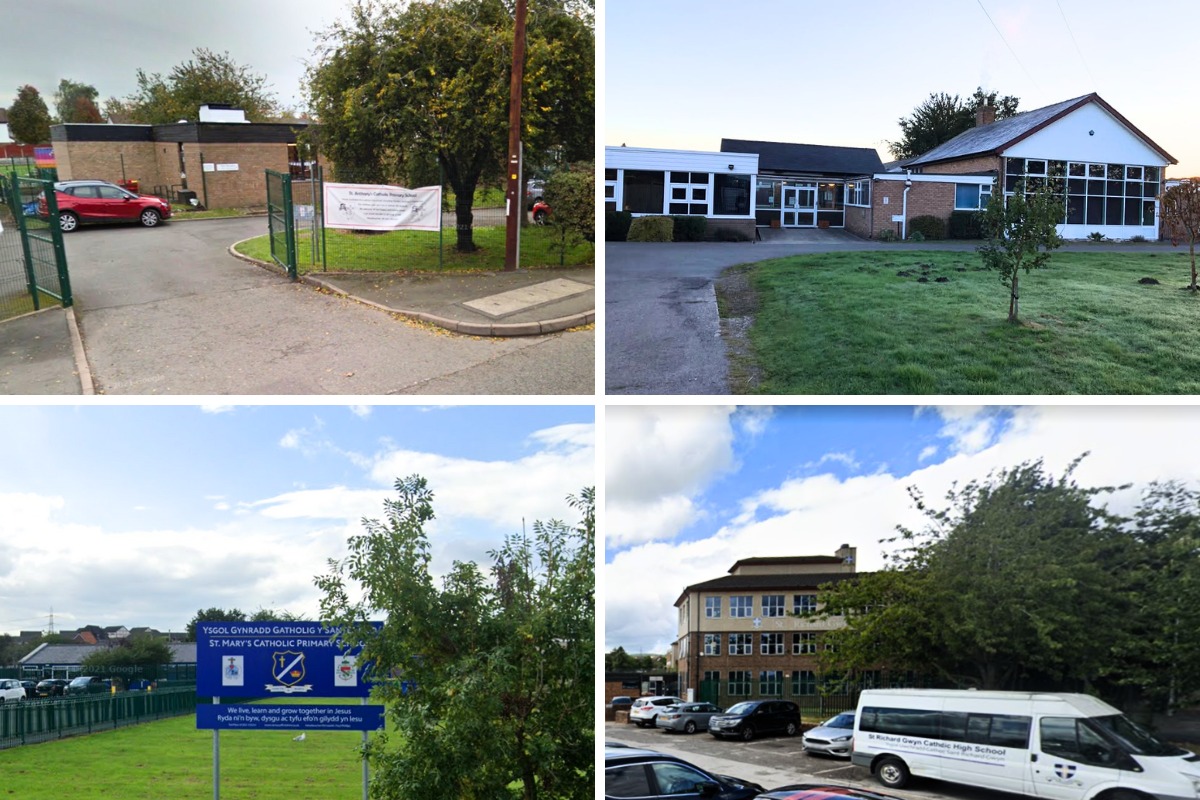
The plans were first revealed in January when the Diocese of Wrexham and Flintshire County Council’s Education and Youth department issued a video announcement to all four schools identified for closure – St Anthony’s Catholic Primary in Saltney, St David’s in Mold and St Mary’s and St Richard Gwyn in Flint.
In place of the three primary schools and St Richard Gwyn High School, the local authority and the diocese plan to build a £55.5 million catholic super-school for children aged 3-18 on the site of St Mary’s and St Richard Gwyn in Flint.
Funding
The proposals detail that 85% of the funding will come from Welsh Government’s Sustainable Communities Fund, with 15% coming from Flintshire County Council and the Diocese of Wrexham.
The consultation report, including feedback, is due to go before Flintshire’s cabinet on September 16.
Comments made by opponents are not considered objections at this stage. If an objection period is launched following the cabinet meeting the public will be able to make formal objections for a month.
According to the proposal documents, the plan would address a trend of falling pupil numbers at all four existing schools and an escalating cost of repair and maintenance that makes each school individually financially unviable.
Those claims have been challenged by parents at St David’s and St Anthony’s however, who have been vocal in their opposition to the plans since they were made public.
Parents at St David’s argue that its repair and maintenance needs are minimal.
Misinformation
One of the leading voices in the St David’s School Action Group, Sarah Cunningham, claims: “The school lives within its financial means, these proposals are based on misinformation.
“There are new housing developments planned for Mold in the near future – there may even be housing built on the former Shirehall site. This will increase demand for primary school places and the other primary schools in Mold have no capacity. By getting rid of St David’s the council and the diocese is getting rid of valuable capacity for children to learn within their own community.”
Both St Anthony’s and St David’s have also argued that educational standards and Special Educational Needs provision is excellent at both their schools – and will likely suffer if children are moved to a much bigger school.
Martina Crocombe is one of the St Anthony’s parents campaigning against the plans. She said the proposals – which would see St Anthony’s close first in September 2026 – could be detrimental to children with additional learning needs.
“The school has a number of neurodiverse children and children with disabilities,” she said. “St Anthony’s provides a supportive and inclusive environment for them where they thrive.
“Change can be a significant challenge for them and could have a serious impact on their learning journey. Going to a larger school where they cannot receive the same level of support would be a challenge anyway, but to do it in this way is unfair and unjust.”
They have also raised safeguarding and religious concerns. Pupils will be expected to travel much further to school from a young age – six miles for pupils from Mold and 14 miles from Saltney. Pupils in Saltney may even have to choose between a faith education and a Welsh education by electing to go to school across the border in England.
Protest
Earlier this month pupils and parents from St David’s protested outside Flintshire County Council’s Ty Dewi Sant headquarters in Ewloe before a meeting of full council.
In that meeting Cllr Mared Eastwood, Cabinet Member for Education, Welsh Language, Culture and Leisure told the council chamber: “As this is an initial consultation process no decision has yet been made on the future of these sites and buildings.
“Welsh Government expects local authorities to work in partnership with voluntary aided schools in developing school projects and this consideration is particularly important in the development of the Sustainable Learning for Communities programme.”
The Diocese of Wrexham has previously defended the plans, saying they were drawn up in consultation with all six catholic schools in Flintshire.
“The initial plans were drawn up after a full process of discussions with the chairs of governors and headteachers at the six Catholic schools in Flintshire in liaison with the Diocese and local authority,” said Director of Education for the Diocese of Wrexham Wendy White. “There was no disagreement from any of these parties regarding the proposed plans.”
Support our Nation today
For the price of a cup of coffee a month you can help us create an independent, not-for-profit, national news service for the people of Wales, by the people of Wales.


