


Government ‘chaos’ and failure to tackle Covid cost 23,000 lives, inquiry finds
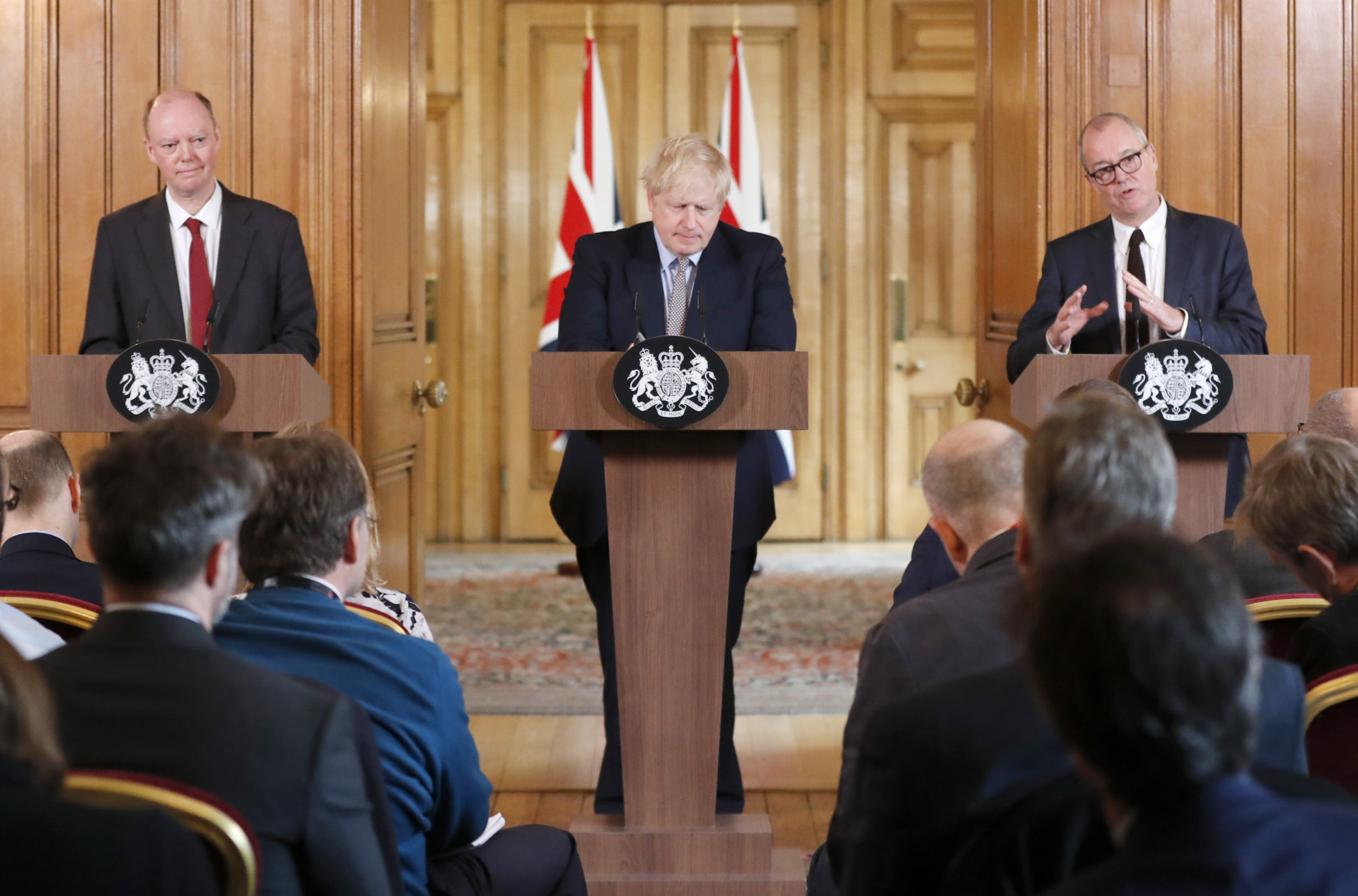
Chaos at the heart of UK Government and a failure to take Covid-19 seriously cost 23,000 lives in the first wave of the pandemic, a public inquiry has concluded.
Former prime minister Boris Johnson presided over a “toxic” culture in Number 10 and regularly changed his mind, while cabinet members including health secretary Matt Hancock plus key scientists all failed to act with the urgency needed to tackle the virus.
Baroness Heather Hallett’s report on the UK Government response to Covid accused Mr Johnson of being too “optimistic” in his outlook in the early months of 2020.
And she said his special adviser, Dominic Cummings, used “offensive, sexualised and misogynistic” language as he “poisoned” the atmosphere in Downing Street.
The inquiry found that the first and second lockdowns of the pandemic were not inevitable, but the UK Government was left with no choice after failing to implement measures such as social distancing and household quarantine earlier.
Not imposing any lockdown at all when it became apparent there was no choice would have “led to an unacceptable loss of life” but bringing in one a week earlier, on March 16, would have cut deaths in the first wave to July “by 48% – equating to approximately 23,000 fewer deaths” in England.
The inquiry found:
– The spread of the virus around the world represented “clear warning signs” but the four governments across the UK did not take the virus seriously enough until it was “too late”.
– By the end of January 2020 it “should have been clear that the virus posed a serious and immediate threat”.
– February 2020 was “a lost month” and the lack of urgency overall in government was “inexcusable”. Government scientists also underestimated how quickly the virus may be spreading in the early days.
– As the pandemic unfolded, Mr Hancock “gained a reputation among senior officials and advisers at 10 Downing Street for overpromising and underdelivering”.
– Adviser Mr Cummings observed that, in February, his view was that the Cabinet Office and Department of Health and Social Care “weren’t banging alarm bells at this point. Far from it, they were going skiing”.
– There was a “toxic and chaotic culture” at the centre of the UK Government throughout the pandemic, with the inquiry hearing evidence of the “destabilising behaviour of a number of individuals – including Dominic Cummings”. Lady Hallett said: “By failing to tackle this chaotic culture – and, at times, actively encouraging it – Mr Johnson reinforced a culture in which the loudest voices prevailed and the views of other colleagues, particularly women, often went ignored, to the detriment of good decision-making.” Mr Johnson should have “addressed” Mr Cummings’ behaviour, the report added.
– Had more stringent restrictions, short of a “stay at home” lockdown, been introduced earlier than March 16, “the mandatory lockdown that was imposed might have been shorter or conceivably might not have been necessary at all”.
– Early in March, the advice to the public was “weak” and focused on hand hygiene and little else. “Face masks were positively discouraged for the public, mass gatherings continued to take place, thereby reinforcing the message that close social contact was approved, and Mr Johnson’s optimistic nature frequently undermined the serious message he was meant to convey.”
– Similar mistakes were then repeated later in 2020 as the second lockdown approached, all of which were “inexcusable”.
– While the lockdowns of 2020 and 2021 undoubtedly saved lives, they also “left lasting scars on society and the economy, brought ordinary childhood to a halt, delayed the diagnosis and treatment of other health issues and exacerbated societal inequalities”.
– Alcohol-filled parties in Downing Street “undermined public confidence in decision-making” and significantly increased the risk of the public abandoning lockdown rules. They were also a blow to people who had “endured huge personal costs” to stick to the rules – including those “unable to be with their loved ones when they died”.
– The vast majority of children were not at risk of serious direct harm from Covid-19, “but suffered greatly from the closure of schools and requirement to stay at home”. Children “were not always prioritised” and the UK Government was not prepared for the “sudden and enormous task” of educating children in their homes “and failed sufficiently”.
– The Eat Out to Help Out scheme was “inconsistent” with public health objectives and was devised “in the absence of any scientific advice”.
– There was also a “lack of trust” between Mr Johnson and the first ministers of the devolved nations.
– Frequent law changes “fuelled confusion, misunderstanding and – at times – incorrect enforcement”. It said: “The public – and even the police – struggled to distinguish between government advice and binding legal restrictions.”
Emergency
In the report, Lady Hallett said the Covid threat was initially treated as a “health issue”, adding it was “surprising” that a UK Government Cobra meeting was not chaired by Mr Johnson until March 2.
The report added that Mr Johnson “should have appreciated sooner that this was an emergency that required prime ministerial leadership to inject urgency into the response”.
Instead, he failed to appreciate the urgency of the situation “due to his optimism it would amount to nothing”, his “scepticism arising from UK experiences of infectious disease” along with “misleading reassurances” from the Department of Health, headed by Mr Hancock.
Elsewhere, the report criticised the theory of “behavioural fatigue” – the concept that the public would not adhere to restrictions over a long period of time – which was promoted by England’s chief medical officer, Professor Sir Chris Whitty.
Lady Hallett said the behavioural fatigue theory has “no grounding in behavioural science”.
Testing capacity
On the ability to test for Covid-19, the report was highly critical of the UK’s lack of testing capacity which meant officials had “no real understanding of the spread of the virus”, with “dire” consequences.
After imposing the first lockdown, the government also did not have a strategy for exiting it, even though this “should have been at the forefront of decision-makers’ minds”.
Later on, there was also “insufficient attention” given to the prospect of a second wave of the virus.
The weakness of the restrictions in the middle of 2020 and Mr Johnson’s “oscillation” enabled the virus to continue spreading at pace, and ultimately resulted in a second lockdown.
In a statement, Lady Hallett said all four governments across the UK failed to “appreciate the scale of the threat or the urgency of response” Covid-19 demanded.
‘Immense loss’
The First Minister of Wales, Eluned Morgan, said: “I welcome the publication of the second report by the UK Covid-19 Public Inquiry. I would like to thank the inquiry chair, Baroness Hallett, and her team for their work and for today’s report.
“It is important that we remember the immense loss and suffering of so many people due to Covid-19. Today, our thoughts must first and foremost be with them.
“We will take time to read the report and will work with the other UK governments over the coming months to carefully consider and act on its recommendations. We are committed to learning lessons from the pandemic and continue to be actively involved in the UK inquiry.”
Commenting, Welsh Conservative Shadow Cabinet Secretary for Health and Social Care, James Evans MS said: “These findings prove we still need a Wales-specific independent inquiry.
“The report found, at times, there to be an “absence of any real strategy” pursued by the Welsh Government. This requires further investigation.
“Sadly, significant failures led to Wales having the highest death rate in the UK, despite the Welsh Labour Government enacting stricter lockdowns and depriving Welsh pupils of more school days than elsewhere in the UK – lessons must be learned.”
‘Profound impact’
Public Health Wales has welcomed the report, writing: “Continuing to learn from our experience of the pandemic is essential to improving how we protect the health and wellbeing of our population in the future.
“Our thoughts are with all those who lost loved ones, friends and colleagues during the Covid-19 pandemic. We recognise the profound impact the pandemic had on individuals, families and communities across Wales.
“We will consider the report and recommendations in detail and will work with Welsh Government, partners across Wales and the other public health agencies across the UK, to ensure any necessary changes or improvements are incorporated into the preparation for, and response to, any future emergency. “
Dominic Cummings posted via X on Thursday afternoon: “The Inquiry has been a mix of Inspector Clouseau, coverups, and rewriting history. The lawyers have paid themselves millions and made understanding of what happened even worse.”
He then provided lengthy “context”, finishing with: “If the Inquiry says I got anything right, bear in mind it’s probably got this wrong too.
“All the people who did the absolute worst got promoted and given gongs. Super logical. Only regime change can fix our pathological institutions.
“If you want to understand what happened on covid, buy the boxset of *Yes, Minister* — it’s all there.”
Support our Nation today
For the price of a cup of coffee a month you can help us create an independent, not-for-profit, national news service for the people of Wales, by the people of Wales.



800 pages in six words: “it was all Boris Johnson’s fault”
The Daily Star wins with their “Killer Clown” headline.
…and of course, the Senedd screwed up even more than than the Johnson government.
Did this report say there should have been a Welsh report?
Why would a Westminster report admit it wasn’t good enough?
Actually it says Wales had the best covid leadership under Mr Drakeford.
The biggest Welsh criticism was reserved the firebreak which was too late and too short, but it didn’t acknowledge this was because Cardiff Bay was blindsided by Rishi’s Eat Out scheme which had bribed everyone in Wales to spend August participating in superspreading events.
The basic problem is that the UK has shut down public health as a technical service with laboratories. It has emasculated the public health service. If you read Tony Redmond’s book – he was one of the international health experts appointed – the government decided it was too expensive to store proper high grade protection suits acquired after swine flu and burnt them about a year before Covid. This is an ingrained problem in the British establishment. Complete lack of competence and preparation so PPH was token. I remember being “trained” just after swine flu to don PPH which was… Read more »
What you describe isn’t incompetence, it’s the small government that people vote Conservative for.
The Fat Shanks Effect…Serial Killer fa, fa, fa, fa, fa…