


Gridlock fears after minister takes M4 relief road ‘off the table’
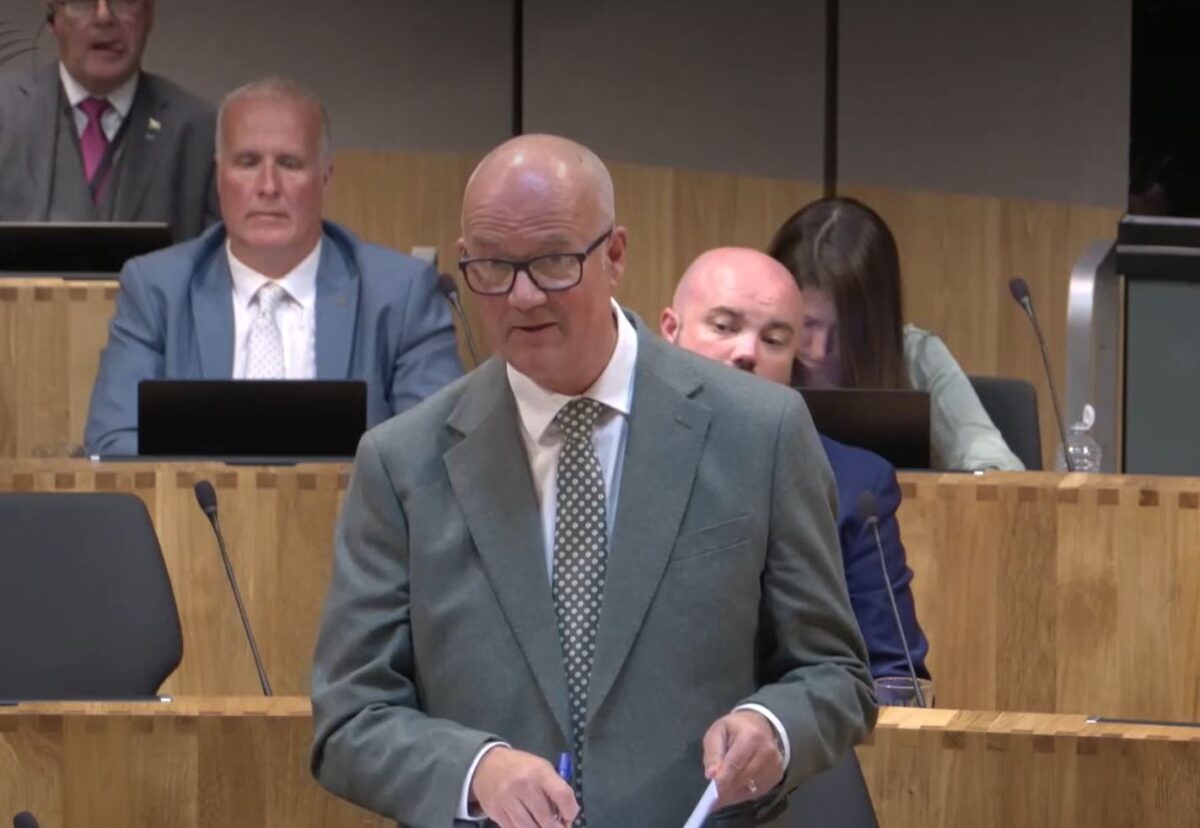
Nicholas Thomas, Local Democracy Reporter
Any improvements to motorway congestion around Newport should not come at the cost of gridlock around the city, its council leader has warned.
The new Welsh Government doubled down this week on Mark Drakeford’s previous decision to abandon the Black Route relief road over environmental concerns.
Deputy transport minister Mark Hooper said the proposal for a new stretch of motorway bypassing Newport to the south “isn’t a credible option for us” and Plaid Cymru was “taking it off the table”.
The government will instead consider “all other road options” including junction closures, and Mr Hooper said the overall solutions to Newport’s M4 problems are “public transport focused” – in line with the Burns Commission’s recommendations in 2020.
Cllr Dimitri Batrouni, who leads Newport City Council and its Labour group, warned against “shifting the burden onto local neighbourhoods” by reducing local access to the M4.
“I want to make it clear our opposition to any motorway junction closures and diversion of significant volumes of M4 traffic”, Cllr Batrouni told the Local Democracy Reporting Service – adding that “even when Welsh Labour were in power, I backed the Black Route because of this reason”.
“These roads are already heavily congested at peak times,” he added. “Redirecting additional motorway traffic through residential areas would worsen congestion, increase pollution, and place even greater pressure on local infrastructure and communities.”
The city council backed a relief road when the project was the subject of a lengthy public inquiry nearly a decade ago – but later supported the then-Welsh Labour government’s decision to scrap the Black Route plan and instead focus on public transport improvements, including a series of new railway stations in Newport.
Abandoning the relief road project was one of Mr Drakeford’s early major decisions as first minister, and was based on spiralling estimated costs and wider environmental concerns for the future of the Gwent Levels.
But despite government pledges to invest in improving Newport’s wider transport network, the relief road debate has never really gone away – and supporters of the project would have hoped for its revival during the recent Senedd election campaign period.
Candidates for some parties, such as Reform UK and the Welsh Conservatives, said outright they wanted the relief road to be built, while Plaid’s leader and the new first minister Rhun ap Iorwerth later advocated a “roads-based solution” to Newport’s M4 congestion woes.
However, any expectations the new Plaid government could build a relief road were erased this week when Mr Hooper made his statement.
Protecting the Gwent Levels is “one of the key reasons why the Black Route is off the table”, the deputy minister said, adding there were “other long-term solutions that relate to rail that would be better suited”.
But Mr Hooper noted the road network around the M4 in Newport was “not designed for the amount of traffic that it’s taking at the moment”, and accepted ministers would “have to recognise that if you make a change within Newport that solves some of these problems, you’ll start to have knock-on effects elsewhere”.
The government’s new position was welcomed by Plaid MS Peredur Owen Griffiths, who said a relief road was “a major talking point” in the Casnewydd Islwyn constituency, and added there was a “need” to protect the “unique” Gwent levels while still addressing “bottlenecks” at the Brynglas Tunnels.
But Labour MS Jayne Bryant urged Mr Hooper to “rule out” any junction closures, telling him “every time there’s an accident or congestion at the Brynglas tunnels, motorway traffic from the M4 is pushed onto our local roads [and] creates gridlock”.
Mr Hooper said he would report back to the Senedd in the autumn after working on “practical and deliverable alternatives” to a relief road.
“This is about making sure that everything works together,” he added. “So there may well have to be some junction closures, but this will be stuff that we deal with in the round.”
Cllr Matthew Evans, who leads Newport City Council’s Conservative group, said the original M4 Black Route plan “was the best scheme” but “anything which improves the road network has got to be welcomed”.
“The question is how efficient and effective they can be,” he said of the government’s new position. “Are they going to put down concrete plans and get on with it?”
Cllr Evans also said he has “always opposed closing junctions down”.
“It just increases congestion on other routes – that’s a daft way of trying to solve it,” he added.
Support our Nation today
For the price of a cup of coffee a month you can help us create an independent, not-for-profit, national news service for the people of Wales, by the people of Wales.
Get more trusted Welsh news
Choose Nation.Cymru as a preferred source in Google News to see more of our journalism.



Upgrading the Southern Distributor Road, building a Northern Distributor Road somewhere north of Newport and limiting local access to the M4 are the likely solutions that they will explore.
At the moment the M4 is both a national motorway and a Newport bypass, it wasn’t designed to do both.
It was only ever designed to take the A48 out of Newport.
In 2018 and 2019 used to drive that section every other week. Never a queue. It was however at 4am in the morning. However, a few times I did in the evening rush hour and there were loads of HGVs in the queue. There must surely be a mechanism of shifting the surge by time of day. It’s not as bad as the M20 where they have ‘operation Brock’ in Kent (Reform council) where the taxpayer pays to close it for channel congestion. Or the M25, billions spent but congestion still endemic despite spending.
Dynamic tolling on non-local traffic is the answer but would need to be part of some form of upgrade rather than just imposed on a fundamentally flawed road.
Ah, someone has seen the cost estimate on making the dozens of tonnes of unexploded ordinance safe enough to remove.
It was decided to leave the items buried in 20ft of mud for a very good reason.