


Gŵyl Fair y Canhwyllau marked across Wales today
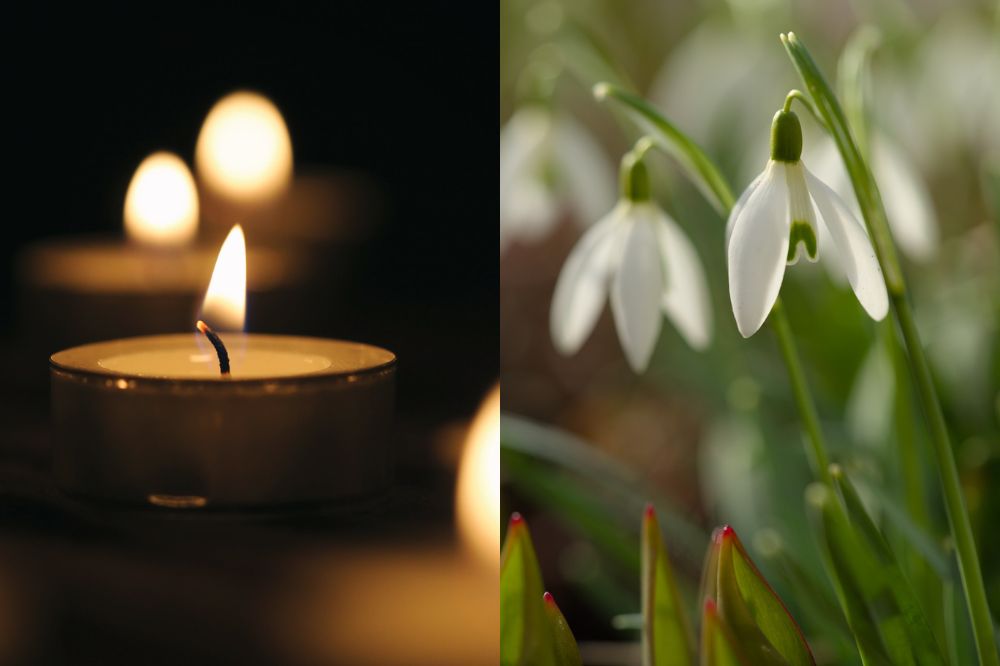
Whilst many in Wales marked Imbolc and Saint Brigid’s day yesterday, an overlooked Welsh festival, Gŵyl Fair y Canhwyllau takes place today (2 February) which marks the coming of spring.
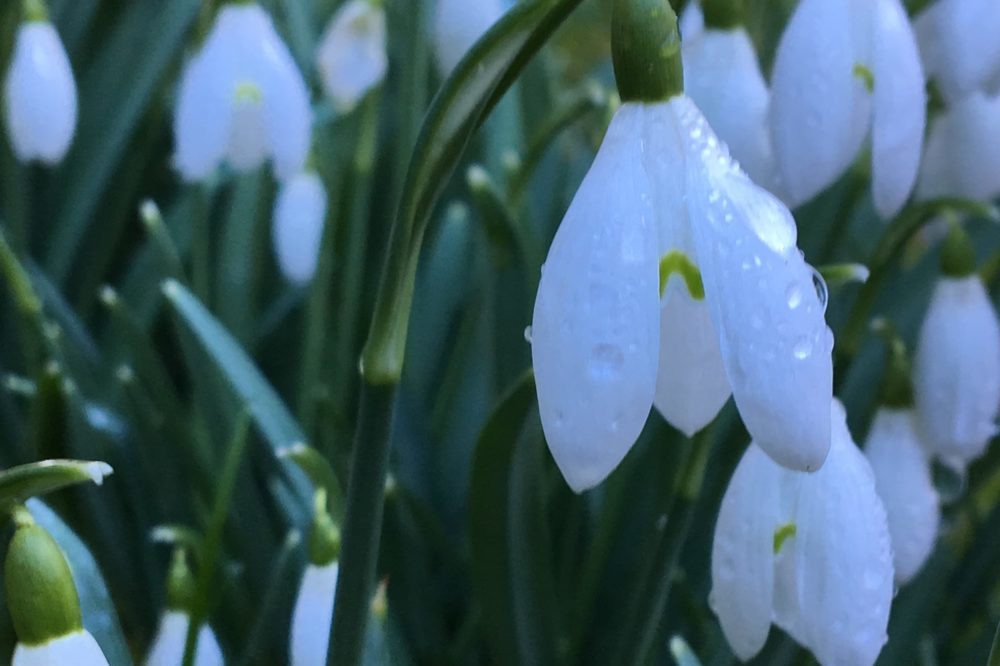
Known as Gŵyl Fair y Canhwyllau or Gŵyl Fair Dechrau’r Gwanwyn (Mary’s Festival of the Candles or Mary’s Festival of the Start of Spring) marks a change in our gardens and woodlands – with spring announcing its imminence with signs of snowdrops, crocuses, blossoms and a flurry of wildlife activity.
Traditionally, at Gŵyl Fair y Canhwyllau, candles were lit and parlour games player.
Although no longer a fixture on the calendar for most, the tradition has been kept alive at church and chapel, with candle-themes services, typically called Candlemas, taking place to celebrate the date.
Weather divination
According to legend, Saint Brigid visited Wales, crossing the Irish Sea and landing at Trearddur Bay, on Holy Island, Ynys Môn.
An 8-foot high limestone cross commemorating Brigid is situated above the beach at Trearddur. She is also remembered in the names of the villages of Llansantffraid in Ceredigion, Llansantffraid-ym-Mechain and Llansantffraed in Powys, not to mention St Brides Netherwent and St Brides Wentloog.
Similar to the festival of Saint Brigid, and also sharing the name Gŵyl Ffraed (Bridget’s Feast) in Welsh, a wealth of weather lore exists around Gŵyl Fair y Canhwyllau.
With days lengthening, many an impatient gardener might get caught out thinking that the only way is up with the temperature, but the festival brings with it a reminder similar to the old saying ‘ne’er to cast a clout till May be out’ – that bad weather, and even snow, aren’t yet off the table.
Traditions
Gŵyl Fair y Canhwyllau remains a fascinating window into the cultural and spiritual heritage of Wales, reflecting the deep connection between the natural rhythms of the seasons and the lives of the people.
People are said to have traditionally visited holy wells to pray for health while walking ‘sunwise’ (clockwise) around the well.
They might then leave offerings, typically coins or strips of cloth/ribbon. Historically, water from the well was used to bless the home, family members, livestock, and fields.
For many, candles were lit to take comfort in getting through another harsh winter, and to focus on thoughts for the new life spring brings.
For others, it’s cause for giving thanks, a symbol of light in the darkness and a promise that good times are to come.
Bendithion Gŵyl Fair y Canhwyllau – Gŵyl Fair blessings!
Support our Nation today
For the price of a cup of coffee a month you can help us create an independent, not-for-profit, national news service for the people of Wales, by the people of Wales.


