


‘Harrowing’ distress now the norm for unpaid carers in Wales
Chris Haines, ICNN Senedd reporter
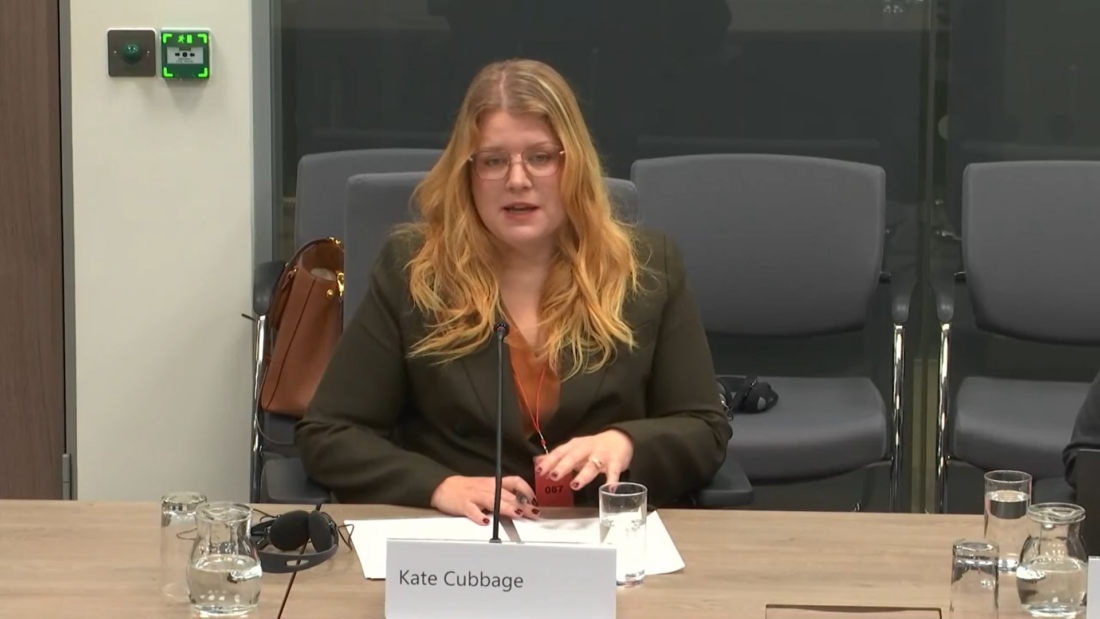
“Harrowing” levels of distress have become the norm for unpaid carers in Wales, a committee has heard, with charities warning of a support system “set up to fail”.
Kate Cubbage, director of Carers Trust Wales, told the Senedd’s health scrutiny committee: “There are too many carers who are reaching crisis point without any support.”
Ms Cubbage explained that most councils are supporting fewer than 500 carers, warning: “There are really, really high levels of unmet need within our communities.”
She told Senedd members that staff are receiving trauma training to support their mental health due to the levels of distress they are seeing among carers.
Ms Cubbage pointed to a University of Birmingham study which found an increased suicide risk among unpaid carers akin to that of veterans who have seen active service.
“One in eight carers has made a plan to end their own life,” she said, calling for carers to be specifically considered in the Welsh Government’s suicide prevention strategy.
“One in 10 has made an attempt… at a time when the average local authority has support plans for less than 0.5% of the caring population.”
Warning of deepening poverty in Wales, the witness expressed concerns about a 31% poverty rate among carers – “far higher” than the 22% in the wider population.
Ms Cubbage added that young carers miss more than six full school weeks each year, compared with pupils without caring responsibilities who miss nearer two weeks.
She told the health committee: “It’s no wonder young carers are achieving less at school. They are less likely to go on into further and higher education.
“And if they do make it to university, they’re less likely than their peers to actually graduate.”
‘Things are getting worse’
Reflecting on a personal note, Ms Cubbage, a parent carer, said her autistic son has accessed services from ophthalmology to audiology over the past 16 years.
“I have never once been signposted to anything that would suggest that I am an unpaid carer or that I can access support… That kind of lived experience is really important.”
Rob Simkins, head of policy at Carers Wales, added: “Things are getting worse: anecdotally, we see that through our services but also that’s what the research tells us.”
He pointed to a Carers Wales survey which has shown a “shocking” 53% increase in the number of carers cutting back on food and heating.
Giving evidence on Wednesday (December 17), Mr Simkins warned of a 39% increase in the number of carers reporting “bad” or “very bad” mental health since 2023.
‘Set up to fail’
“All the evidence that we’re collecting shows that this is going in one direction,” he told the committee, adding: “And that’s the wrong direction. It’s a bleak context.”
Mr Simkins said census data shows about 310,000 unpaid carers in Wales but research indicates the number could be nearer 500,000 – roughly 15% of the population.
He cautioned that charities across the country, including Carers Wales, are seeing real-terms cuts in funding from the Welsh Government every single year.
Mr Simkins warned of a “shocking” lack of data and a system “set up to fail” more than a decade on from the then-Assembly passing the Social Services and Well-being (Wales) Act.
Warning some councils cannot quantify how many carers’ assessments they could carry out over 12 months, he asked: “How on earth are you meant to collect data from unpaid carers and plan services if you can’t even figure out how many you can assess?”
‘Pitifully low’
Asked about carers’ assessments, he highlighted a lack of capacity within councils as he warned a “pitifully low number of carers go on to get any support at all”.
Greg Thomas, chief executive of Neath Port Talbot Carers Centre, told Senedd members the voluntary sector is being increasingly asked to plug gaps without necessary funding.
He warned the jam is having to be spread “ever-more thinly”, creating a tension between reaching as many people as possible and not wanting to compromise quality of support.
“We’re not quite saying ‘no’ to people,” he said. “But we’re having to say a qualified ‘yes’ about what we’re able to offer… We’re massively overstretched, massively oversubscribed.”
Mr Thomas told the committee the carers’ centre has the required reach and expertise, concluding: “It’s almost give us the tools and we can do the job.”
If you have been affected by anything in this story, the Samaritans can be contacted for free, 24/7, on 116 123, or by email at [email protected].
Support our Nation today
For the price of a cup of coffee a month you can help us create an independent, not-for-profit, national news service for the people of Wales, by the people of Wales.



Dw i wedi bod yn gofalu am fy nhad, sy’n dioddef o glefyd Alzheimers, ers bron i 3 blynedd. Yn fy mhrofiad personol i, mae pob gair sydd gan Kate Cubbage i ddweud am y sefyllfa’n hollol gywir. Weithiau, mae’r sefyllfa yn anoddefol. ~ I have been caring for my father, who suffers from Alzheimers DDisease, for almost 3 years now. In my personal experience, everything that Kate Cubbage has to say about the situation is completely true. Sometimes the situation is quite unbearable.