

Health board approves £3.9m investment amid patient safety concerns
Richard Evans, Local Democracy Reporter
A health board has approved a £3.9 million recurring investment in emergency department staffing after warnings that overcrowding and long waits are creating an ongoing patient safety risk.
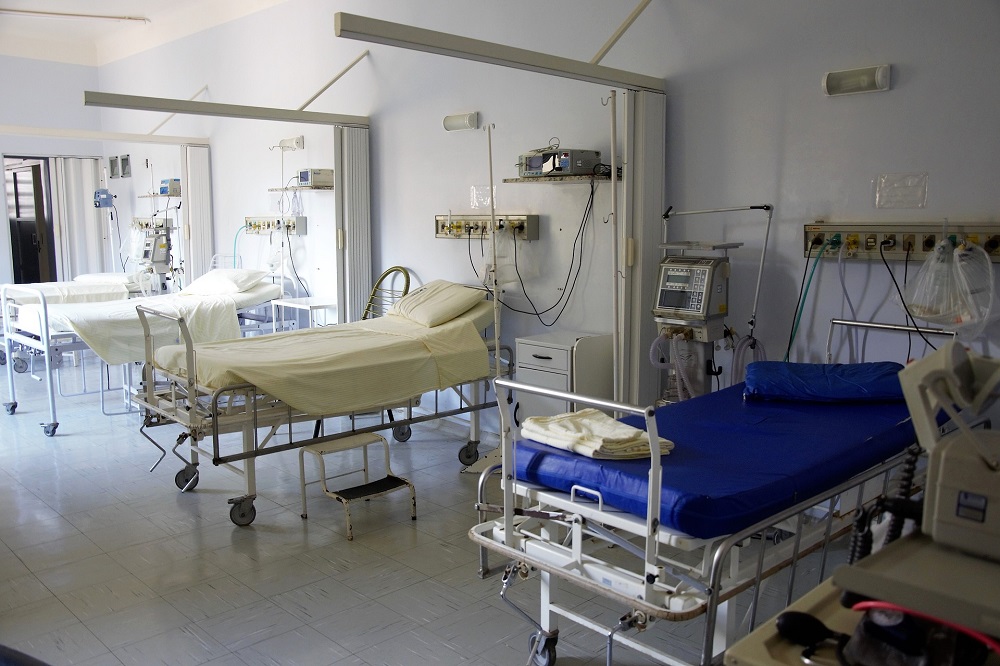
The decision was taken at a Betsi Cadwaladr University Health Board board meeting this week, where members were told emergency departments (ED) across north Wales are under “sustained and escalating pressure”, with overcrowding, delays in assessment and treatment, and care increasingly delivered in “suboptimal environments”.
Independent assessments presented to the board – including those from the Welsh Government and Healthcare Inspectorate Wales – said patient harm linked to delays and overcrowding is already occurring, with “system gridlock and workforce instability identified as key drivers of risk”.
The report considered by the board added that “without intervention, patients will continue to experience avoidable delays in care” whilst “staff will continue to operate in unsustainable conditions”.
The report concluded that if this occurred, “the organisation will remain subject to ongoing regulatory scrutiny and escalation”.
The funds will now be used to recruit permanent staff rather than over-rely on temporary agency staff, which is considered financially inefficient, without providing improvements to safety and performance.
The Health Board’s Chief Executive Carol Shillabeer told the meeting the pressures were not confined to emergency departments alone. “We know that the challenges around emergency care are throughout the system,” she said.
“So whilst this is a case about the emergency department, we must retain sight on the whole pathway. As we sit here today, we still have over 300 people in our hospital beds whose pathway of care should have helped them to move on to somewhere else, sometimes home, sometimes another care environment.
“The reason I draw that in is because that directly affects the levels of overcrowding in the ED department. The more overcrowding you get in the ED department, the worse patients’ and staff’s experience, but also the greater the challenge to patient safety.
“This is a patient safety case. So some might challenge, ‘Well, why are you putting more money into the ED when clearly the problem is elsewhere?’
“Well, we have got to take steps to improve the safety in the department whilst also investing and changing processes elsewhere.
“This isn’t a single approach here. We are not just putting more money into an area that is particularly challenged; we are looking at the whole (system).”
She added that staffing patterns were being reviewed using evidence, with emergency departments busiest from early afternoon into the evening.
“But if we don’t have the staffing complement to match that, then patients are more or less here overnight as well. So you’ll see the 12-hour waits in the ED department are very high at the moment. We want to get those down to one in ten rather than what is one in four at the moment.”
She added: “I’m confident, given that this is our biggest safety issue, that this is a really important step to improve safety and patient and staff experience.”
Board members were warned the investment is not affordable within existing financial plans and will require organisational reprioritisation and increased savings.
But the board heard the risks associated with inaction outweighed the financial pressures.
The report stated: “The investment is not affordable within current financial plans and will require organisational reprioritisation and an increase in the savings requirement.
“However, the current position already carries significant and recurrent financial inefficiency, with sustained expenditure on temporary staffing failing to deliver improvement in safety or performance.
“The case therefore presents a fundamental choice between continuing high-cost, high-risk arrangements or investing to achieve workforce stability and reduce harm over time.” The board unanimously backed the plans.
Support our Nation today
For the price of a cup of coffee a month you can help us create an independent, not-for-profit, national news service for the people of Wales, by the people of Wales.
Get more trusted Welsh news
Choose Nation.Cymru as a preferred source in Google News to see more of our journalism.



