


Health board chair admits emergency care in north Wales is in ‘crisis situation’
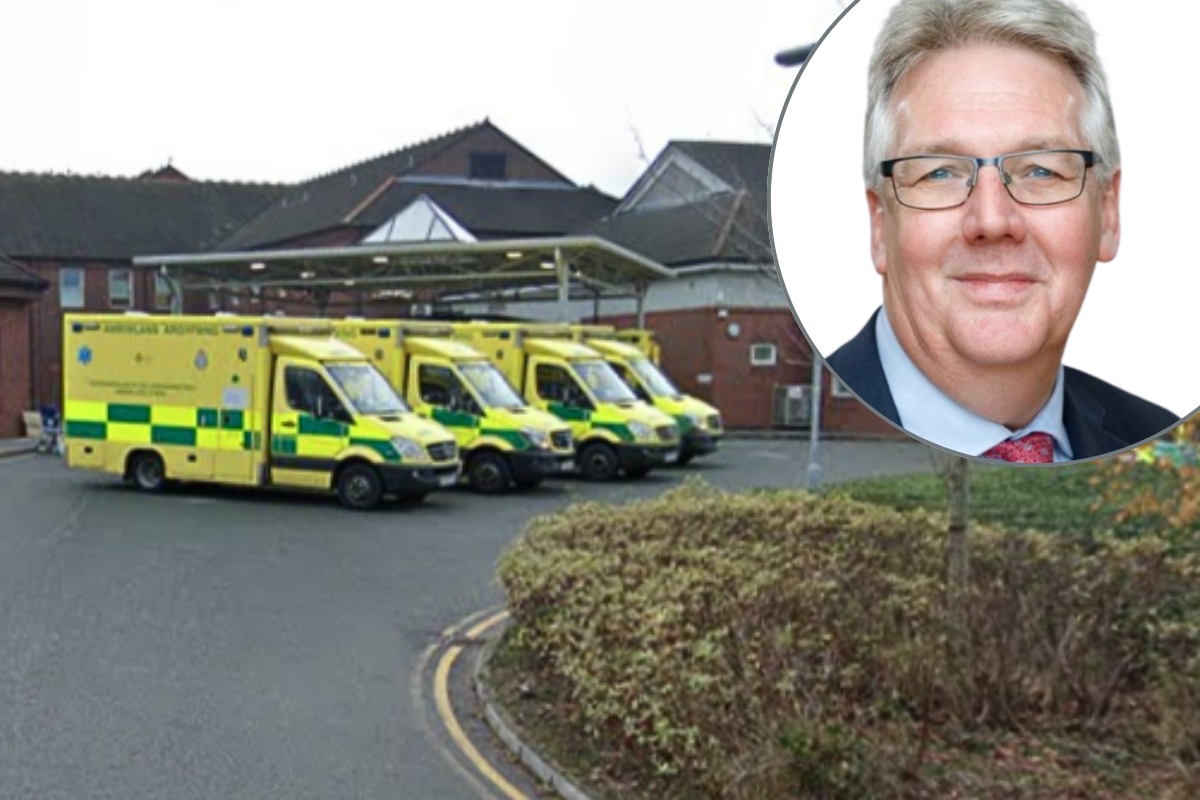
Alec Doyle, Local Democracy Reporter
Emergency care in North Wales is in a ‘crisis situation’.
That was the stark admission by Betsi Cadwaladr University Health Board chairman Dyfed Edwards when a report on Urgent Emergency Care in North Wales was presented to the board.
He said while having a strategy was important, BCUHB was letting people down and needed to identify short-term actions to end long ambulance handovers, corridor care, clogged emergency departments and discharge delays.
‘Extreme lengths’
“The reality is people are waiting in ambulances for extreme lengths of time, people are waiting in emergency departments (EDs) for extreme lengths of time, which is causing harm. That should worry all of us.
“We can have the strategies and all the rest of it, but that’s the reality for people out here. We’ve got a clogging up of the system we have to try to address somehow.
“This paper talks about potential improvements and a whole system approach but we need to do something short-term. We can’t wait for that.
“The situation is too desperate. It’s dire. We’ve got to do something in the short term.
“We’re failing pretty miserably on government targets but the most important thing is we’re failing our citizens. It’s not a good place to be for our staff, but for the people we serve there is a huge risk.
“What we need is not just strategy, not just policy but actually something that is going to make a real difference for people.
“That’s the challenge, it’s not easy but this is the time for leadership, this is the time where we need to step up and we need to make a difference. We are in a crisis situation.”
Patient flow
BCUHB Chief Executive Carol Shillabeer said that the key focus for the board needed to be improving patient flow – something which has driven success in other health boards across Wales.
“We have all got personal stories of family, friends, people in our communities and colleagues that have had a terrible experience,” she said.
“This isn’t about money. An additional £10m has gone into this area but it is funding failure demand. Who wants to be a ‘corridor care nurse’? We’re doing things because we’ve not designed the service properly and we’re funding failure.
“We are the worst performing health board in terms of our ED ambulances – that is not acceptable and none of us want that.
“Other health boards are making significant progress by doing one simple thing – focusing on flow. Half of our ED departments are occupied by people waiting for a bed. ”
It was a view supported by independent board member Chris Field who said: “I’ve heard the Maelor has been stacked with ambulances that had been there for time immemorial, but had plenty of space inside and perhaps were focusing more on the flow and getting people through whereas Ysbyty Glan Clwyd had no ambulances but a hospital that was almost entirely full and patients in corridors etc.
“They’re both targeting very needed elements in different ways. How do we rationalise and formalise the implementation across acute sites to ensure we are all doing the same thing and getting better results?”
Plans
Mr Edwards wanted to know what the short-term plan was to resolve the challenges facing emergency care in North Wale.
“We’ve got 300 patients across our hospitals waiting to go home and that number is constant across North Wales,” he said.
“The question is what’s going to be different? How will we reduce that 300 to 150?”
BCUHB said it will be seeking to liaise with local councils to see how they plan to spend their share of £30m of additional finding for social care – a key factor in enabling patient discharge.
“There is a government requirement for ambulance handovers to take no more than 45 minutes from October.,” said Mrs Shillabeer. “That is a requirement that will be tracked and very visible.
Longer-term, Tehmeena Ajmal, Interim Chief Operating Officer said the goal was to create a single model of operation for emergency departments across North Wales.
“We still operate around a three-site model with each doing things differently,” she said. “The big prize for Betsi will be pushing to have a single model.”
Support our Nation today
For the price of a cup of coffee a month you can help us create an independent, not-for-profit, national news service for the people of Wales, by the people of Wales.


