


‘Health board failed our pregnant daughter’, says family after epilepsy death

Nation Cymru staff
A family from Barry whose daughter died during an epileptic seizure feels she was ‘let down’ by a lack of specialised care.
Megan Gardiner was 25 years old, and 17 weeks pregnant when she died from Sudden Unexpected Death in Epilepsy, or SUDEP.
Megan’s mother, Alison Woolcock, discovered her daughter’s body after she suffered a seizure in her sleep on 4 June 2022.
In a special episode of the Welsh language current affairs programme, Y Byd ar Bedwar, presenter Nest Jenkins hears from the family as they recall that day.
“I went up to her room…and I could see Megan’s foot poking out of the quilt,” says Alison Woolcock, Megan’s mother.
“She’d fallen in between the wall and the bed. I pulled her out, but it was really clear that she’d already died.”
“That image will haunt me for the rest of my life,” Alison says.
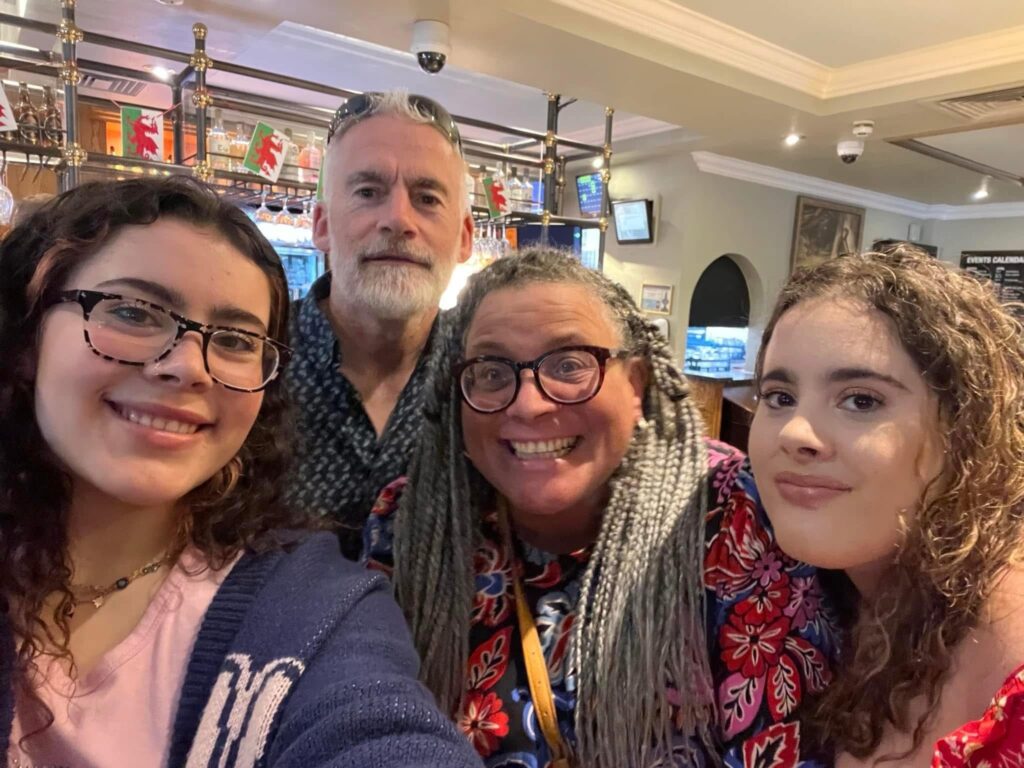
Megan’s younger sister, Tesni, remembers the moment she was told the news.
“I just said, ‘no, that’s not true…how could this happen to our family?’”
Megan was diagnosed with a severe form of epilepsy at the age of 13. According to Alison, her seizures were unpredictable and could happen “up to three times a week”.
In 2022, Megan became pregnant and was advised to reduce the dosage of one of her medications twice to protect the health of her unborn baby, which she consented to.
However, Alison claims that specialists at Cardiff and Vale University Health Board failed to explain that lowering the medication could increase the frequency of Megan’s seizures and, consequently, her risk of SUDEP.
SUDEP is the sudden, unexpected death of someone with epilepsy, who was otherwise healthy. In SUDEP cases, no other cause of death is found when an autopsy is done.
According to Epilepsy Action, more than 1 in 1,000 people with epilepsy die from SUDEP every year, but for those with severe epilepsy like Megan, that number increases to 1 in every 100.
The family believes that had Megan known about her individual risk of SUDEP, she may not have consented to the change in her medication.
“She has been failed,” Tesni says.
“[We] had no understanding of what SUDEP was. We knew she had severe epilepsy, but we didn’t think it was a life or death situation.”
Alison explained “If somebody had said to us ‘1 in 100’ we would have done anything we could have to support her… that information should have been shared to us…”.
The family says they would have implemented measures to protect Megan, such as 24-hour monitoring, alarms, and lifestyle changes, had they been aware of the risk.
She believes that Megan may still be alive “if only she had been given the right opportunities, the right support and the right care.”
“I wanted to support her to be a mum, but it was more important we have a Megan.”
An inquest into Megan’s death concluded in May 2026. It was the first in Wales to address the importance of SUDEP risk discussions in epilepsy care.
The Coroner found that there was no documented confirmation that Megan’s high risk of SUDEP was discussed with her, nor was there any discussion of wider protective measures up until April 2022. She found that even after that date, there was no individualised risk discussion with Megan.
The Coroner also identified two missed opportunities for discussions about risks and preventative measures prior to her death.
The Coroner has now requested a further statement from the Health Board setting out how SUDEP risk is discussed with patients and how patients’ individual risks are sufficiently considered and addressed.
Alison welcomes this outcome, and says “what we learnt is what good quality care could have achieved”
“If you’re having these appointments it’s supposed to be individualised care, not generalised care”
“We know there’s nothing that can change what happened, but the hope is that something good can come out of Megan’s death,” says Tesni.
“We want justice for her.”
In response, Cardiff and Vale University Health Board said:
“We would like to reiterate our sincere condolences to Megan Gardiner’s family following their tragic loss.”
“Cardiff and Vale University Health Board fully participated in the inquest process,” and “provided the additional information requested by the Coroner.”
“We remain committed to listening to the experiences of patients and families and to learning wherever improvements can be made. We have previously offered to meet with Megan’s family to discuss their concerns and this offer remains open.”
Watch Y Byd ar Bedwar: Epilepsi – Marwolaeth Megan on Monday 22 June on S4C, YouTube, BBC iPlayer and S4C Clic.
Support our Nation today
For the price of a cup of coffee a month you can help us create an independent, not-for-profit, national news service for the people of Wales, by the people of Wales.
Get more trusted Welsh news
Choose Nation.Cymru as a preferred source in Google News to see more of our journalism.


