

Hereditary peerages to go before next King’s Speech
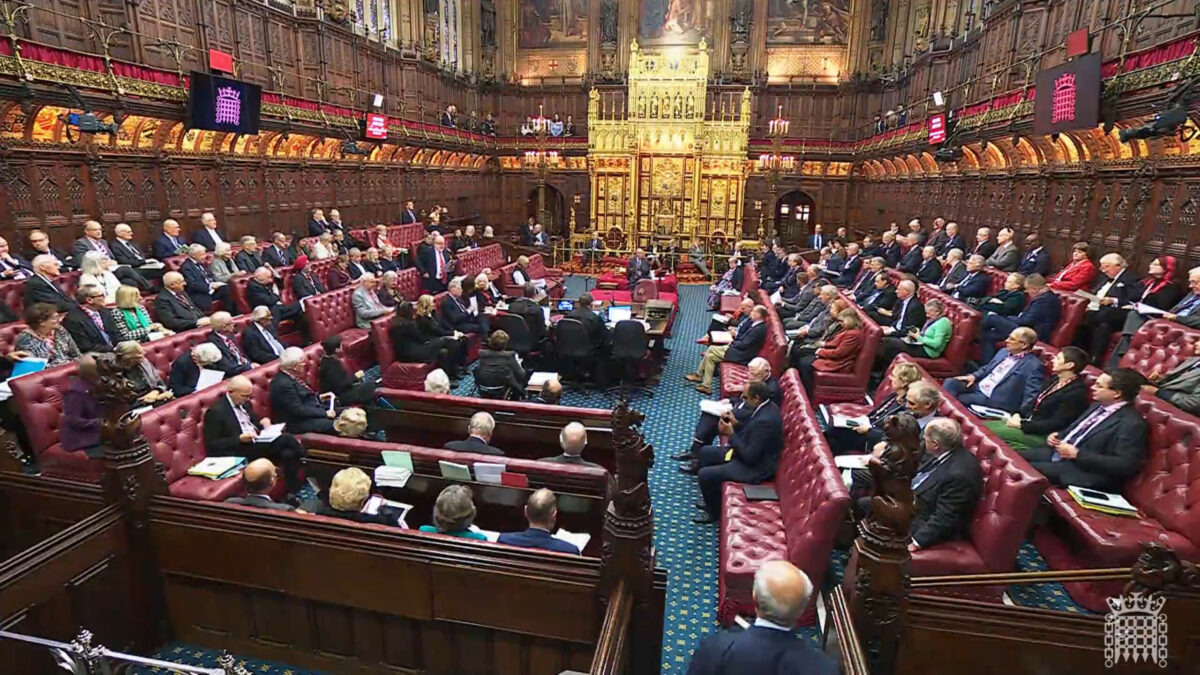
Hereditary peerages will be abolished before the next King’s Speech.
The Lords on Tuesday accepted a final draft of the House of Lords (Hereditary Peers) Bill, marking the end of its passage through Parliament and clearing the way for it to be added to the statue book.
Since 1999, 92 hereditary peers have been able to sit on the red benches and cast their votes in the lobbies.
The Bill effectively reduces this quota to zero.
Hereditary peers who have not been made life peers will no longer have a right to sit in the Lords once the current parliamentary session ends, expected later this spring.
Lords Leader Baroness Smith of Basildon said: “This has never been about the contribution of individuals but the underlying principle that was agreed by Parliament over 25 years ago that no one should sit in our Parliament by way of an inherited title.
“Over a quarter of a century later, hereditary peers remain whilst meaningful reform has stagnated.
“We have a duty to find a way forward.”
The Cabinet minister said Government teams have “had constructive conversations” with the Conservatives, and had agreed to allocate the party “a number” of life peerages.
“We appreciate the case that has been made by the official opposition that they rely significantly on the experience of hereditary peers, particularly on the front bench, but also in committees,” she said.
Of the 84 hereditary peers currently taking their seats, 42 take the Conservative whip while 31 are independent crossbenchers.
“As always, it will be for the party opposite to decide which individuals, either from within or outside the House, they wish to nominate for peerages, subject to vetting by the House of Lords Appointments Commission,” Lady Smith added.
The Lord Speaker has offered his thanks to hereditary peers for their service in the upper chamber.
Lord Forsyth of Drumlean said in a statement: “I would like to thank hereditary peers from all parties and none for their work in the House of Lords over many years.
“Whatever views people may have of this constitutional change, it is sad to say goodbye to friends, who in many cases have contributed significantly to debate and scrutiny and to our institutional memory.
“Recognising their contribution is not about party politics but acknowledging the value of service and commitment, and I am proud to do so and to thank them.”
‘Bitter pill’
Lord True, the Conservatives’ shadow Lords leader, described the Bill as a “bitter pill” for many of his colleagues.
“For dozens of our fellows on this side and on the crossbenches, April will be a cruel month of cold going but that is how it will be,” he told the Lords.
Lord True continued: “For others, the passage of this Bill will be a matter of high satisfaction, and that too is how it will be, but let us treat each other’s feelings with respect.”
He said: “So, here we are at the end of well over seven centuries of service by hereditary peers in this Parliament.
“They helped create our Parliament and they brought it back to life in 1660.
“In this House 250 years ago, The Elder Pitt called for a just settlement for the American colonies – it didn’t work out very well, did it?
“Here in 1807, (Lord) Grenville secured the Slave Trade Abolition Act.
“In 1832, (Earl) Grey moved the first Reform Act, and here too, the illustrious ancestor of the Duke of Wellington passed Catholic emancipation.
“Many thousands of peers served their nation here and thousands of improvements to law were made.
“It wasn’t all a stereotypical history of reaction in ermine. Many of those people, no doubt, were flawed but for the most part, they served their nation faithfully and well.
“This Bill draws a line under all that and it is drawn, but my lords, we remember them and we thank them, just as we thank and will always remember those of our comrades in this House on all benches who are being removed under this Bill today.”
‘Ancient thread’
Hereditary peer the Earl of Devon, a crossbencher, said he thought the Lords, Parliament and country would “miss” the departing members, “not as individuals but as an essential ancient thread in the complex and fragile constitutional fabric that supports our nation”.
And Conservative former minister Lord Hamilton of Epsom said: “When they have gone, we’ll be left with nothing other than political chancers like me and donors and members of the blob of one sort or another.”
Liberal Democrat peer Lord Newby said his “principle emotion is one of relief”, adding that the decision to remove hereditary peers was “long overdue”.
Support our Nation today
For the price of a cup of coffee a month you can help us create an independent, not-for-profit, national news service for the people of Wales, by the people of Wales.



this is window dressing. The UK Government needs to get on with making the 2nd Chamber representative of the regions and nations as well as expertise, elected by the people on a PR basis.
Well said Jenny. The Baroness says that “no one should sit in our Parliament by way of inherited title”. However, it appears that she’s happy that cronies selected by Prime Ministers sit in our Parliament! The House of Lords is undoubtedly an undemocratic institution and, as such, should be abolished or democratised to an elected Senate with equal members from the 4 home countries like the USA Senate.
well said. change one outdated system with another statistically more corrupt!
And a crackdown on second jobs and “consultancy” work which has allowed members of both Houses to monetise and profit from their posts. They should be there to represent OUR interests, not their own.
The deckchairs do look better like that.