


Home Office has chance to end ‘failed’ asylum accommodation system, MPs say
Ministers must set out a clear strategy of how to reduce the use of asylum hotels and have a chance to end the “current failed, chaotic and expensive” system that has wasted taxpayers’ money, a committee of MPs said.
The Government has promised to end the housing of asylum seekers in hotels by 2029 amid mounting pressure over rising costs and a backlash in local communities.
But the Home Affairs Committee has warned a promise to appeal to popular opinion without a clear plan for alternative accommodation risks “under-delivery and consequently undermining public trust still further”.
A report published on Monday said the Home Office has failed to share a long-term strategy for asylum seeker accommodation and repeatedly cut corners in its “chaotic” response to the pressures.
Tripled
Expected costs of Home Office accommodation contracts for 2019-2029 have since tripled from £4.5 billion to £15.3 billion, after a “dramatic increase” in demand following the pandemic and rising numbers of those arriving by small boat among the factors.
The report said: “The Home Office has undoubtedly been operating in an extremely challenging environment but its chaotic response has demonstrated that it has not been up to the challenge.
“The 2026 break clause and end of the contracts in 2029 represent opportunities to draw a line under the current failed, chaotic and expensive system and move to a model that is more effective and offers value for money.”
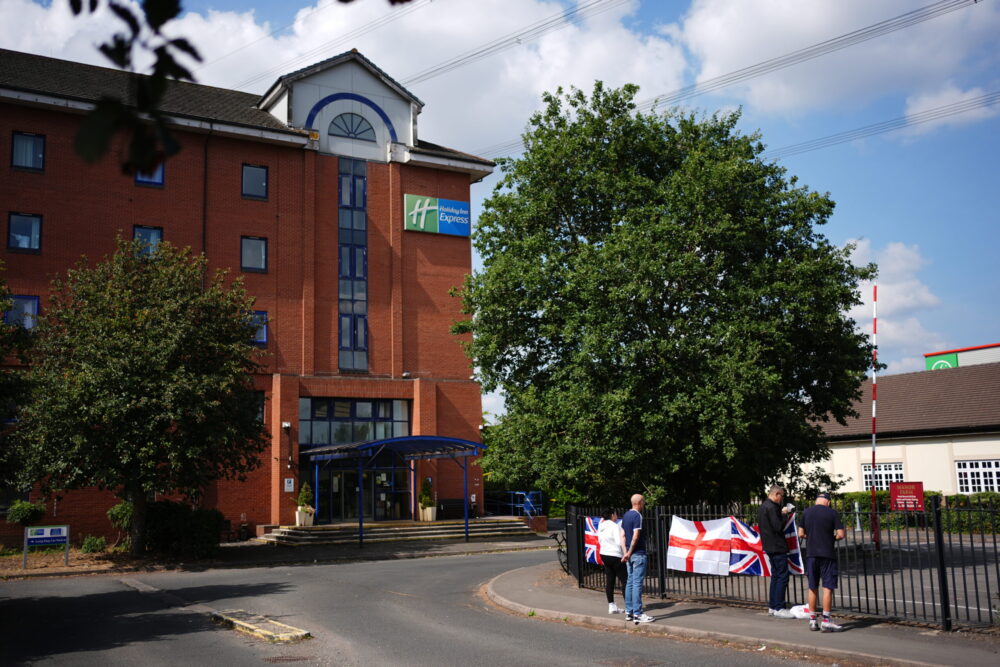
Asylum hotels became a focal point over the summer with multiple demonstrations particularly centred around the Bell Hotel in Epping, where an asylum seeker was charged and later jailed for sexual assault.
The MPs’ report added that protests at asylum sites have involved local residents with “genuine concerns”, as well as people travelling from other areas “to promote divisive agendas or instigate disorder”.
MPs pressed for the Home Office to prioritise closing hotels where there have been “significant community cohesion issues”, as well as hotels in remote areas that can place the most pressure on local services.
Missed opportunities
The committee said the Home Office’s failure to engage with communities has led to missed opportunities to address local concerns.
The report added: “The lack of engagement and transparency has left space for misinformation and mistrust to grow, which in too many areas has led to tensions and undermined the ability of local partners to promote social cohesion.”
The report detailed how the Government’s approach has led to an uneven distribution of asylum accommodation around the country, often concentrated in areas of high deprivation.
The committee called for a future accommodation system to be based on fairness rather than cost alone, improve communication with local communities and be flexible to meet unpredictable demands.
The chairwoman of the Home Affairs Committee, Dame Karen Bradley, said: “The Government needs to get a grip on the asylum accommodation system in order to bring costs down and hold providers to account for poor performance.
“While reducing hotel use is rightly a Government priority, there will always be a need for flexibility within the system, and the Home Office risks boxing itself in by making undeliverable promises to appeal to popular sentiment. It shouldn’t set itself up for more failure.
“The Home Office has not proved able to develop a long-term strategy for the delivery of asylum accommodation. It has instead focused on short-term, reactive responses.
“The Home Office must finally learn from its previous mistakes or it is doomed to repeat them.”
Financial penalties
The report also raised how the department neglected its day-to-day management of the contracts, and had not sufficiently ordered financial penalties for providers who have poor performance.
This includes no fines for failures at hotels and the large accommodation sites at Napier Barracks and Wethersfield, despite hotels making up more than 75% of spending on asylum accommodation.
Furthermore, excess profits from providers totalling tens of millions of pounds owed to the Home Office are yet to be reclaimed by the department.
The committee said the money should be used on public services, “not sitting in the bank accounts of private businesses”.
MPs said they had heard about “too many cases” where asylum accommodation was inadequate and safeguarding concerns about vulnerable people living there had not been addressed.
Reacting to the report, charity Freedom From Torture said that, for torture survivors, living in asylum accommodation makes rebuilding their lives “almost impossible”.
The charity’s head of advocacy, Sile Reynolds, said: “Everyday Freedom from Torture therapists see first-hand the devastating impact that hotels, military sites and shared bedrooms have on people who came to this country seeking safety.
“Living in fear, without privacy, stability, or access to proper healthcare, strips people of their dignity and undermines their recovery.
“The Government now has a crucial opportunity to once and for all transform our asylum accommodation system so that it is safe, dignified and based in our communities.”
A Home Office spokesperson said: “The Government is furious about the number of illegal migrants in this country and in hotels.
“That is why we will close every single asylum hotel – saving the taxpayer billions of pounds.
“We have already taken action – closing hotels, slashing asylum costs by nearly £1 billion and exploring the use of military bases and disused properties.”
Support our Nation today
For the price of a cup of coffee a month you can help us create an independent, not-for-profit, national news service for the people of Wales, by the people of Wales.



The Home Office is totally dysfunctional and needs to be shut down and its functions reorganised. It has been so for at least twenty five years. It is enmired in bureaucracy worse than most of the rest of government and has failed to sort out very basic simple problems like the Windrush Affair. To be fair some of these issues could have been solved by legislation or the Privy Council. There is evidence that the civil service has developed its own agenda and does not comply with political direction from ministers.
Failure is by design. Two thirds of senior civil servants have a private school background vs 7% of the population. But you can’t teach talent and no-one pays through the nose to educate their progeny just for a career in government so it’s a last chance saloon for their hopeless. The result is that the least capable from a tiny proportion of the UK talent pool enter the Whitehall club, where those that can’t are quickly promoted out of harms way.
Most of the issues fall to chronic under investment and not recognizing the challenge. There just simply isn’t enough staff to process all of the claims in a timely manner. To say that the Home Office is not complying with the legislation or standing in the way is just demonstrating a lack of knowledge of the pressures the Civil Service as a whole is facing. (Not that there aren’t departments that do need to be downsized). Also compounding the problems at the Home Office is the pressures of the legal system (also underfunded and understaffed). The legal system is under… Read more »
The courts could start by deprioritising private prosecutions.
Didn’t need hotels in 2016.