


Home-schooling on the rise and most pupils unlikely to sit GCSEs
Nicholas Thomas – Local democracy reporter
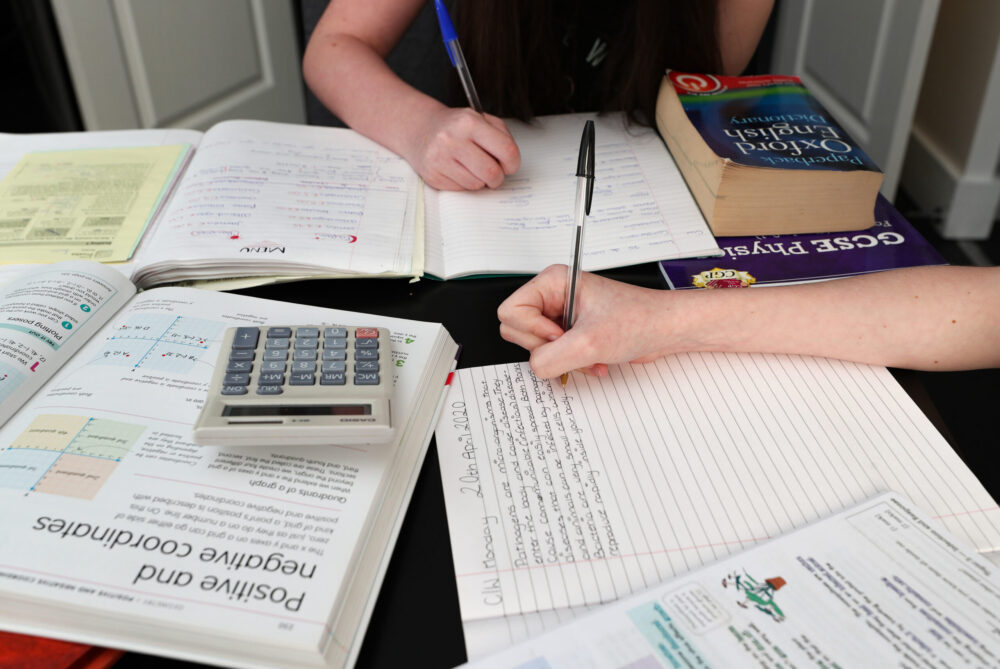
Nearly 200 GCSE-age children across a county borough are not likely to sit exams because they are being home-schooled.
A Caerphilly County Borough Council report shows just 7% of the borough’s GCSE-age children who receive an elective home education (EHE) will be entered for the qualifications this year.
Home-schooling is on the rise in Caerphilly – up 11% in the past year – and has nearly trebled in popularity across Wales since 2019.
There are currently 451 EHE children in the borough, of whom nearly half would be in Year 10 or Year 11 if they were in school.
At a meeting of the council’s education committee, on Tuesday June 2, members heard councils – acting as local education authorities – have very limited powers to intervene in home-schooling or set curriculum standards.
Melanie Archibald, a senior advisory teacher, told the committee the council expects parents to teach literacy and numeracy, show progress is being made, and provide opportunities to socialise in their wider community.
“It’s quite broad – we have to be mindful it’s the parents’ choice how they educate their children,” she said.
But the council’s role is effectively limited to “signposting” parents towards resources and exam preparation materials, the committee heard.
Ms Archibald said councils have “no control over” how home-schooling is provided, and while the local authority is “extremely mindful” of children’s welfare, she said “EHE in itself is not considered a safeguarding risk”.
Some committee members expressed concerns about the pupils not sitting national exams.
“Are we satisfied that young people being educated at home are not being disadvantaged in terms of qualifications or future opportunities?” asked Cllr Teresa Heron.
“We have no control over what the outcomes for those young people would be,” replied Ms Archibald. “Whether we’re satisfied or not, I think, is a difficult one to answer, but it’s essentially something we have no control over.”
Keri Cole, the council’s director of education, expressed reservations about the rise of home-schooling, and said she was “not comfortable with 93% of Key Stage 4 not sitting exams”.
“I think the danger here is that if we make this very comfortable and very easy to manage, we run the risk of more children becoming EHE,” she said. “That isn’t something we particularly want to see. It’s a balance between doing the best for those children – because it’s not the children who make the decision, it’s the families – with the needs of the other pupils in our care.”
Where EHE parents fall short in their teaching, councils can step in with guidance or enforcement.
But Ms Cole said punishing parents was a “very contentious” issue, with Welsh councils offering “mixed” views on matters such as fines.
“We keep going back with more information, more allowances, because we don’t want to press a nuclear button and alienate them completely,” she said of the approach in Caerphilly.
“Some authorities have gone down the road of issuing orders, fining families… and telling them they have to return to school.
“We’ve got no right to see the child, but we have a right to request an explanation of the education.”
The committee also heard 15 EHE children returned to mainstream education this year, which was roughly twice the number of returning pupils from the previous year.
Ms Archibald said that despite concerns there had been “really positive examples” of at-home education.
“For some children, this is a really positive choice and we do have to respect the rights of parents to take this option”, she said, adding that mainstream education “doesn’t work” for all young people.
Support our Nation today
For the price of a cup of coffee a month you can help us create an independent, not-for-profit, national news service for the people of Wales, by the people of Wales.
Get more trusted Welsh news
Choose Nation.Cymru as a preferred source in Google News to see more of our journalism.



The fact that Local Authorities admit they have “no control” is worrying. How can there be a national curriculum if there is no control?
There’s not a national curricurlum for home educated children or indeed children that are privately educated as the law says you don’t have to follow that. It is only for state schools. I home educate and one of the reasons was I objected to some of what is taught in schools and wanted to choose the subjects my child was taught and also have them direct me with what they want to learn instead of being forced to look at subjects they have no interest in.
Two hundred Yr 11 pupils is the equivalent of a year group in quite a large secondary school. At the very least the LA needs to have an idea if these pupils are actually being properly educated at home or have been off rolled and doing very little meaningful in an educational context. I would think this could be something that is happening across Wales and will have serious consequences for society in years to come.
The LA does know, they are in contact with them and make them submit reports. If they dont feel the child is being educated they can force them back to school. One part of the issue is that they make home ed families pay to do GCSEs. If the government cared that much they could remove this barrier. But they’d rather make parents look bad via articles like this. My kids are in school but I know 3 or 4 home educating families and all of them do it because school was not a safe place for their child –… Read more »
I imagine the exam fees are a major barrier running into many hundreds of pounds at a private centre. So do local authorities offer free entry to exams for home schooled kids at their local school? I doubt it.
You’re correct. Parents are expected to cough up for exam fees, and there is a severe shortage of places where home educators can sit exams privately at an affordable fee. The government has made it clear that they won’t fund these, or provide affordable access to exams, even though many of those parents are paying for the education of others through their taxes.
I see “homeschooling” examples most days of the week in work
It normally involves at least one parent sitting on the sofa while scrolling through social media and making random Qanon-esque type statements about education being brainwashing, and qualifications are a conspiracy.
Somewhere along the line “school of life” comments will emerge while the child plays ps5 in the bedroom.
Tell me you’ve never home educated without saying it. For a start, home schooling in the UK is not home education. They have separate meanings. Home schooling is where the school provide materials for a student to learn from home, usually because they are too sick to go to school. I was home schooled myself for a few months as a child because of major surgery. The school sent a teacher to my home. Home education is where the parent has elected to educate their child outside of the school system, either full or part time and also covers flexi… Read more »
Genuinely interested in what is your job?? Also are these different families you are observing or the same ones over again? Genuine question
Utter nonsense. Most parents who home educate do it because the school failed their SEND child or they disagree with some of what is taught in schools and want more say over what their child is taught, or want to allow their child the freedom to choose what they learn. I had 6 children, all were home educated. 5 are adults now and all took GCSE’s. My oldest son is just doing his Maths and English GCSE’s today and he already has BTECs. As a home educated student, you can study the GCSE’s yourself from books, you can hire a… Read more »
There are numerous barriers to accessing GCSEs in Wales. The first is cost. It costs on average £200-300 per subject, excluding costs of travel. That is just for a straightforward exam only GCSE. When non-examined assessments come into play, or travel is required, it can cost substantially more, The GCSEs regulated in Wales mostly require non-examined assessments, which means that they are hard or impossible for private candidates to access. Many children in Wales instead travel to England to access GCSEs regulated in England or have to access an independent school or costly private exam centre in order to access… Read more »
I would like to know where they get their figures from. There are a great many home educated children who do sit GCSE’s, but many pursue alternative qualifications (who knew? GCSE’s are not the only pathway???) I have children who were home educated, have no GCSE’s to their name, yet were accepted into university? Let’s educate ourselves, people! GCSE’s are not the only way, and are no guarantee of future success! Learning can be evidenced in many different ways, and there’s a significant number of people out there who have been successful without such “pieces of paper” (Richard Branson, for… Read more »
You say less home educated children take exams but what about the third of schooled children that are unable to meet the pass grade neeed in Maths/English despite taking said exams? When a system isn’t providing the results then the users will jump ship. We did. My teenager became disinterested in school as the subjects weren’t what she wanted to learn (nor were they what she needed for her future ambitions) and the teaching styles did not keep her engaged. It was clear she could easily become part of the failing third if left in that situation as she was… Read more »