
Housing order for flocks of poultry and captive birds enforced in Wales
Nation.Cymru staff
The RSPCA has issued advice to bird owners on keeping their flocks happy and healthy amid the latest mandatory housing order in force in Wales to curb the spread of Avian Influenza.
From noon yesterday (November 23) anyone keeping 50 or more birds of any species will be legally required to house them. However, the requirement will also apply to smaller flocks if eggs or poultry products are sold or given away due to the increased risk of disease transmission associated with trading or giving away poultry products.
The housing order will be added to the all-Wales Avian Influenza Prevention Zone introduced on November 16 which already requires bird keepers to follow strict biosecurity measures.
Top advice:
- Keep the area where birds live clean and tidy and regularly disinfect any hard surfaces
- Clean footwear before and after visits
- Place birds’ feed and water in fully enclosed areas that are protected from wild birds, and remove any spilled feed regularly
- Put fencing around outdoor areas where birds are allowed and limit their access to any ponds or areas visited by wild waterfowl
Where possible, avoid keeping ducks and geese with other poultry species
Charlotte Arthur, poultry expert at the RSPCA, said: “We are sadly once again entering the time of year when bird flu becomes more prevalent. Governments are issuing important biosecurity advice for bird keepers to try and control the spread of the disease after rising cases in Wales. Whilst the housing order predominantly applies to commercial or larger flocks in Wales, it’s important for all bird keepers to be mindful that over the coming months a wider housing order is likely to be put in place across England and Wales.
“Keeping hens in particular has become increasingly popular in recent years so it’s important that new and experienced owners alike follow official biosecurity advice, staying vigilant for signs of disease and ill health in their flocks, and seeking veterinary advice if they have any concerns for their birds.
“It’s also important to report any suspected outbreaks of avian influenza to the Animal and Plant Health Agency (APHA).”
Providing enrichment
The RSPCA is also urging bird keepers to keep their flocks ‘hentertained’, particularly during housing orders, although enrichment is important all year round. Providing enrichment is a great way to keep birds entertained, encourage natural behaviours and keep them mentally stimulated.
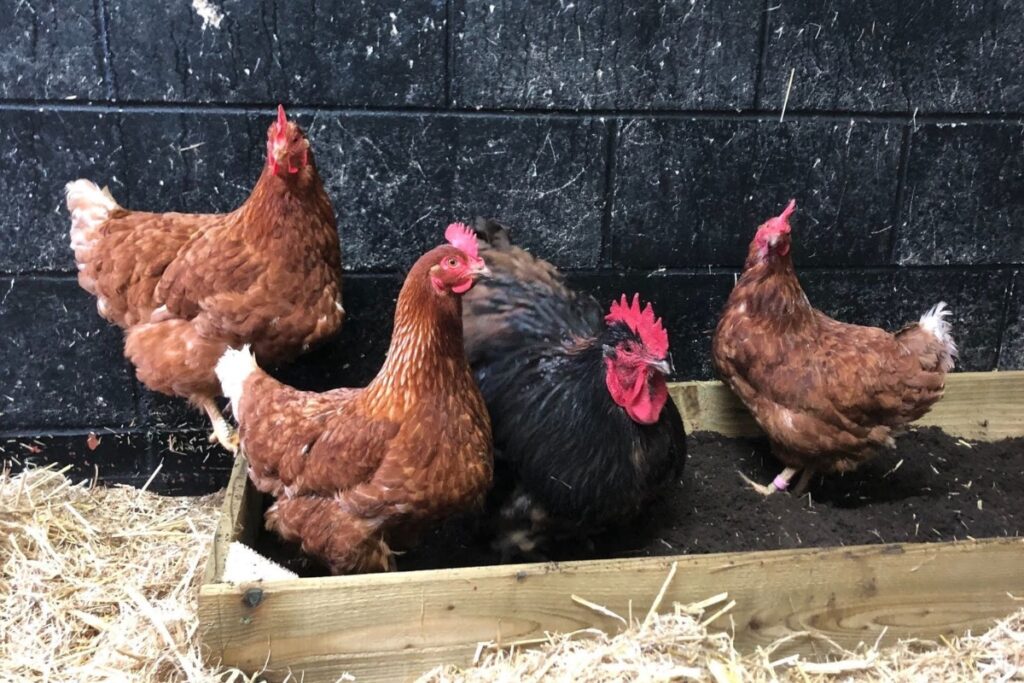
This could include placing straw bales with hidden food to encourage foraging, hanging up objects such as CDs or corn on the cob to encourage pecking and exploration, or providing a dedicated dust-bathing area.
A suitable dust bath could be made using a large, shallow-sided tray or an old tyre filled with sand or suitable dry material, such as dust-free wood shavings, giving hens the opportunity to enjoy this important natural behaviour.
Charlotte added: “It’s really important to make sure birds have lots of enrichment to keep them happy. Having nothing to do can lead to boredom, stress and contribute to problems such as feather pecking.
“Fortunately, there’s loads of great things keepers can do to keep their animals ‘hentertained’ such as providing perches, woodchips, straw bales, dustbathing areas, puzzle feeders and verandas which allow the birds access to natural light and fresh air in safe, secure manner.”
More information on how the RSPCA is improving hen welfare can be found on the charity’s website.
Support our Nation today
For the price of a cup of coffee a month you can help us create an independent, not-for-profit, national news service for the people of Wales, by the people of Wales.
Get more trusted Welsh news
Choose Nation.Cymru as a preferred source in Google News to see more of our journalism.