

Housing proposal refused amid concerns over impact on Welsh language
Dale Spridgeon, Local Democracy Reporter
Proposals to build 25 houses in a rural village, sparking fears over the ‘harmful impact’ the estate could have on the Welsh language have been rejected.
Cyngor Gwynedd’s planning committee rebelled against planning officers’ advice voting instead to refuse the affordable housing development at Chwilog.
At the planning meeting on Monday (April 27), eight committee members turned down the homes with no abstentions and only four in favour.
The matter will now be referred for a “cooling off period” before being reconsidered.
The application was lodged by Williams Homes (Bala) Ltd and Grŵp Cynefin.
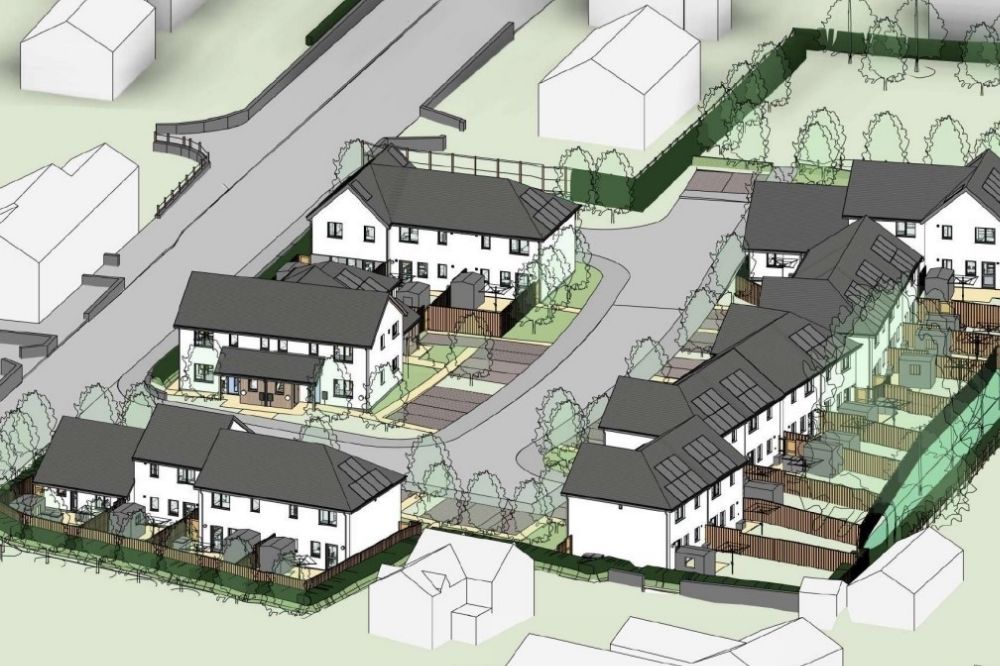
It involved the creation of a new estate of affordable homes, new vehicle access from the B4354 and associated works on land adjoining Brynhyfryd/Cae Capel.
The properties included a mix of social rent housing and some intermediate affordable rented housing.
Planning officers said the homes met “local housing needs” and a “comprehensive” language assessment concluded that accepting the scheme could create “a substantial positive impact on the linguistic resilience of Chwilog”.
Petition
The village is an area where 80% of residents speak Welsh.
The plan prompted strong local feeling with a 160 signature petition submitted in opposition to the scheme.
A public consultation also highlighted a raft of concerns including fears of “over development” and concerns about “causing substantial harm to the character and language balance of the community”.
During the meeting, public speaker Trefor Morris said: “The majority of people in Chwilog are against the application, an area where housing had already been built.
“Our feeling in Chwilog is that more [housing] will have a negative impact on the community, the school and Welsh language.”
There were already “not enough facilities” to accommodate more people, there’s no shop, Post Office and a “weak” bus service to cope with a larger population, he said.
He added: “The pavement from the access would end near the edge of the telephone exchange…so residents using the pavement would have to step out into the road, very dangerous for the elderly, disabled, and children.”
Transport
He also disputed findings of a transport survey which he claimed was compiled in the “quietest month of the year” which he said was “unfair and incorrect”.
Speaking for the agents, Sioned Edwards said the homes provided “a logical extension to the village” and were designed to meet “the increasing needs for affordable homes” and were “in response to a local housing crisis”.
She said a “comprehensive language assessment had been submitted,” adding that there was “no evidence presented to suggest the homes would have a harmful impact on the Welsh language”.
“The housing will be let to people locally, with a high percentage being Welsh speakers,” she said.
Cllr Rhys Tudur, who represents the Llanystumdwy ward, said “nearly everyone is against this application”.
He described how the local community council had “unanimously objected” and that 160 signatures on a petition represented a “substantial number” for the small village.
Waunfawr councillor Edgar Wyn Owen proposed accepting the scheme, saying there was “a need for affordable homes” and they were “earmarked in an area already allocated for housing”.
“The 160 signature petition against, it is not a referendum, we must go with the planning advice,” he said.
He was concerned that by refusing the plan, it could be successfully appealed and create costs for the local authority.
“It could bring costs the council if it goes to an appeal, money we can’t afford to throw away,” he said.
In agreement
Cllr Anne Lloyd Jones, who represents the Gorllewin Tywyn ward, agreed. “There is a need for homes like these in our area,” she said.
“These are all to be 100% affordable homes, looking at the lists there are 79 people waiting for homes.”
During the debate, Cllr Gareth Roberts, who represents the Dewi ward in Bangor, spoke about wider language concerns, claiming Bangor was “no longer a Welsh speaking area”.
He said: “I’m very concerned for the impact on the Welsh language of this development, in such a small place, it could undermine the local population.
“In Bangor, in the last five to 10 years, Bangor is no longer a Welsh speaking area, it was when I was child, it is no longer.
“I see Bangor’s Welsh language population diminishing on a daily basis, in every aspect of my life in Bangor. I have lived in Bangor all my life.
“Certainly, within the last five years, I’ve seen hundreds if not a thousand more people coming here to live, migrants.”
Primary school
Regarding a local primary school, he stated: “I was told there are 42 different languages being spoken there. They are really struggling to cope with that number of new languages and to implement Welsh as a Welsh language option.”
Monitoring officer Iwan Evans reminded councillors they were “talking about the situation at Chwilog” and warned: “Without quantitative evidence to support and demonstrate language impact the matter could be approved on appeal.”
Cllr Gareth Jones, who represents the Morfa Nefyn a Thudweiliog ward, stated: “Enough is enough, we must listen to the voice of the local people…their message is clear, they don’t want 25 more houses in Chwilog.”
After the vote, assistant head of the environment department Gareth Jones said the decision would go back for a “cooling off period” for discussion again at another meeting.
Support our Nation today
For the price of a cup of coffee a month you can help us create an independent, not-for-profit, national news service for the people of Wales, by the people of Wales.
Get more trusted Welsh news
Choose Nation.Cymru as a preferred source in Google News to see more of our journalism.




And this kind of racist nationalist attitude is why I’ll never vote for Plaid