


How negligence allowed a paedophile priest to become a Church in Wales Bishop
Martin Shipton
A paedophile priest was able to become a Bishop in the Church of Wales even though senior clerics were aware of allegations concerning his behaviour, an independent review has concluded.
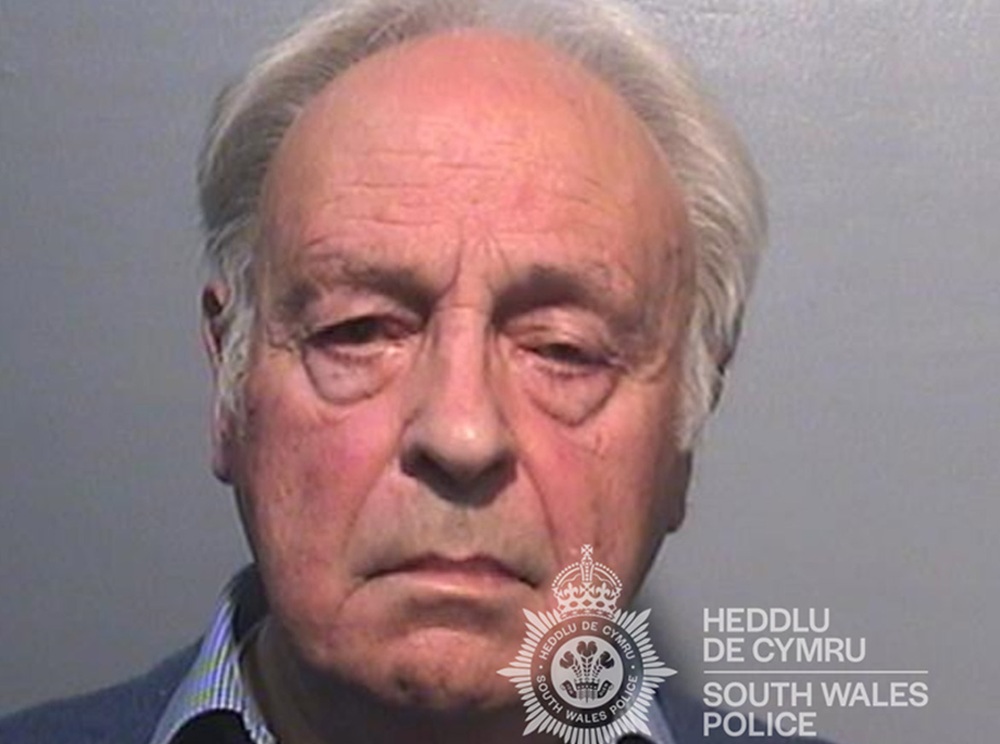
Anthony Pierce, the former Bishop of Swansea and Brecon, was eventually jailed for four years in February 2025 after pleading guilty to five charges of indecent assault in the 1980s on a boy under the age of 16. At the time Pierce was a parish priest in the West Cross area of Swansea.
When those offences were admitted in 2025, the Church in Wales reviewed how issues relating to Mr Pierce had been handled in the past and found that senior clergy had apparently been aware of sexual abuse allegations against him when he was appointed Archdeacon in 1995 and then Bishop of Swansea and Brecon in 1999. These allegations were not reported to the police until 2010.
The damning report from independent investigator Gabrielle Higgins traces how concerns about Pierce’s behaviour towards the other boy were known about but not pursued for decades.
Ms Higgins, a former practising barrister and Diocesan Secretary in Chichester with previous experience of investigating sexual abuse cases in the Church of England, writes: “I am told that the disclosure which led to his prosecution was reported to the police in late 2023, on the same day as it was received from the survivor, with relevant information also shared and appropriate engagement with both the survivor and AP [as Pierce is referred to in the report].
“However, during the investigation of those offences, papers relating to AP were reviewed and gave the Church in Wales substantial cause for concern in respect of the handling of another disclosure of conduct in respect of another boy, probably aged 15 or 16, which occurred in or around 1990. I am instructed to review the handling of this earlier disclosure, seeking to establish, as far as possible, who within the church received relevant information and what they did with it.
“Various individuals from the Church in Wales knew of a safeguarding concern in respect of AP on four occasions: in or around 1993; in 1999; in 2009-2011 and in 2016. At no point did anyone know what it was alleged AP had done, merely that it was sexual and involved a boy variously described as 15 or 16 years old.
“The handling in 1993 was, at least by modern standards, wholly inappropriate and inadequate. Bishop B and Archdeacon G both knew of the allegation. It does not appear that they shared the information with anyone else in the Church, and it seems clear that they did not share it with the statutory authorities, despite the fact that it seems Bishop B knew that the police were making unrelated enquiries about AP in respect of sexual abuse.
“The only action taken was to visit AP. It appears AP implicitly admitted that something inappropriate had happened with the boy, yet no further action was taken, and Bishop B later described the allegation as unsubstantiated.
Inappropriate
She continues:“The handling in 1999 was also wholly inappropriate and inadequate, at least by modern standards. Archbishop C and Archdeacon H both knew of the allegation shortly after AP’s election as bishop. Archbishop C at least knew that AP appeared to have admitted a criminal offence to his friend and Archdeacon H received an admission of an improper incident from AP directly. Again, it does not appear that they shared the information with anyone else in the Church except Bishop B, now retired, and the Ministry Officer. They do not seem to have sought advice from the child protection officer now in position. Again, they did not share it with the statutory authorities. Again, the only action taken was a visit to AP.
“At a later stage in 1999, Head of Corporate Services J received a copy of [a] letter, making … unspecified allegations. It seems it was left for the Secretary General when he returned from sick leave the following month. It does not appear that either of them shared the information further.
“Archbishop D received a copy of the 1999 report, which contains the apparent admission of a criminal offence, but by reason of the manner in which it was given to him, he did not read it.
“In 2009, some of the information from 1993 and 1999 was shared with Bishop F at the outset of the Historic Cases Review (HCR), although neither of the two key documents from 1999 were available.
“Bishop F did not share what he had with independent Officer K, who was undertaking the HCR until she asked about it in 2010. There is a conflict of evidence as to whether that was on the basis of advice, and if so, what and from whom. In 2010, Independent Officer K, who knew of the matter from other sources, pursued the matter and diligently uncovered much information. The handling was markedly better, although still with significant flaws.
“AP’s Permission To Officiate (PTO) [at Church services] was removed and the matter was ultimately referred to the police. However, the referral to the police was made only once. The 1999 report surfaced, with its indication of AP’s admission of a criminal offence. Prior to that, it had been resolved only to report to the Independent Safeguarding Authority on the basis that the police would not take the matter forward – which was ultimately vindicated – and in the apparent belief that the ISA was an investigatory body, which was mistaken.
“Independent Officer K’s attempt to have that decision reviewed was unsuccessful. Neither the report to the police nor the later report to the ISA shared all the relevant information, and in particular the 1999 report does not seem to have been shared with either police or the ISA for a variety of reasons.
“It does not appear that any one individual had a full picture of all the information available at any point. At an early stage, Independent Officer K was the person collating all the knowledge, but she was taken off the case part way through and not told subsequent information and no clear replacement for her was identified.
“In 2011, the ISA resolved not to place AP on the barred list. Bishop F seems to have taken this as a complete answer to any concerns and restored AP’s PTO. Although the ISA indicated in a letter to the Head of Resources that they would have expected an internal investigation and disciplinary procedure prior to referral, I have seen no evidence that any consideration was given to conducting an internal investigation.
“The handling in 2016 was better still with full sharing of information with the statutory authorities. However, despite now having a copy of the 1999 report with its indication of admission of a criminal offence to AP’s friend, the police still did not interview AP or his friend. “Despite the failings on the part of the Church in Wales over the years. It can therefore not be known if they would have interviewed him had the information been fully shared in 2010. It seems more likely that they would have done had it been shared in 1993 or 1999, but even that is uncertain.
“It should also be borne in mind that safeguarding policies and practices, and the understanding of safeguarding, have moved on immeasurably over the years. In 1993 there were no policies or safeguarding officers. In 1999 there was a recently adopted policy, but it is not clear if any training was given on it and there were voluntary child protection officers, but no paid safeguarding staff. In 2009-10 policies and it seems training had developed to some extent, but there were no paid safeguarding staff until July 2010, and that individual was, as explained above, not involved with the case at critical points. By 2016, still further improvements had been made and more still in the following decade before this review.
“Recommendations to have paid safeguarding staff empowered to report to statutory authorities to ensure reporting obligations are understood; to manage conflicts of interest; to improve record keeping and processes for granting PTO and the like would be otiose given the developments since the events of this review. I therefore do not make any recommendations beyond seeking assurances that the weaknesses of the past identified in this report have indeed been remedied, except in respect of the arrangements for appointing bishops and archdeacons, where there are clear continuing flaws.”
While the review was being prepared, the Church in Wales has taken forward a referral to its Disciplinary Tribunal. As a result of the Tribunal’s findings, the Bishop of Swansea and Brecon, the Rt Revd John Lomas, has deposed Mr Pierce from holy orders and he is no longer a priest of the Church in Wales.
Welfare
Responding to the Review, The Archbishop of Wales, the Most Revd Cherry Vann, said: “The welfare of the victims of sexual abuse must always be our paramount concern, and we offer our most heartfelt apologies to those who have been failed by the Church in the past.
“I want to thank Gabrielle Higgins for her painstaking and conscientious work on this Review, which has engaged in a deep examination of complex and difficult issues dating back many decades. We owe her a debt of gratitude for the thoroughly professional way with which she has approached this challenging task.
“The Review shows in painful detail the missed opportunities, the harmful assumptions and the inadequate processes which characterised the Church’s response to these allegations of abuse for far too long.
“This catalogue of failures can only be a source of shame for the Church and will have caused further trauma to abuse victims and their families.
“While the safeguarding processes of the Church in Wales have improved immeasurably since the periods covered by the Review, there is no room for complacency, and we are committed to ensuring that our processes always follow current best practice.
“I welcome and fully accept the Review’s findings and recommendations, and we are implementing all the changes that need to be made.”
Trauma
The Bishop of Swansea and Brecon, the Rt Revd John Lomas, said: “The trauma experienced by victims of abuse within the Church is made all the worse by the breach of trust they have suffered, and, as this Review has shown, by the failings of the Church as an institution.
“While nothing can undo the wrongs of the past, and while we can only apologise unreservedly for the failings this Review has brought to light, we hope that this Review will go some way towards showing our determination to be clear and robust in ensuring these issues can never happen again.
“It is only through doing the right thing that we can begin to restore confidence in the Church, and the publication of this Review, and our commitment to the actions arising from it, shows that we are resolved to do that.”
Professor Medwin Hughes, Chair of the Representative Body of the Church in Wales, said: “In commissioning this Review, the Church in Wales has shown its willingness to confront its past failings and to ensure that its processes are fit for purpose for the present and the future.
“It is true that enormous progress has been made with safeguarding within the Church since the events covered by this Review. But there is work still to do, and we are determined that all the necessary changes will be made as swiftly as possible.
“Throughout this process, the interests of victims and their families are central, and I know the Church in Wales’s safeguarding team is working hard to ensure the best possible response for anyone reporting abuse or concerns within the Church in Wales.
“The lessons highlighted in this Review are hard ones, but we intend to ensure that they are learned thoroughly and applied consistently, so that the circumstances this Review has uncovered can never reoccur.”
Compassion
A spokesperson for the Church in Wales said: “The Church in Wales is determined to demonstrate that it is a safe place, and that anyone coming forward will have their concerns or disclosures taken seriously, treated with compassion, and taken forward according to the highest current standards.
“If our people and processes have failed victims and survivors of abuse in the past, we intend to take responsibility for that fact and to fully apply the lessons which have been learned.
“There is no place for any form of abuse in the Church in Wales. We give the highest priority to the care and protection of children and vulnerable people in our communities. To this end we regularly review our safeguarding procedures and provide extensive training to staff and volunteers”.
Tel: 02920 348200
Alternatively, Safe Spaces is a free and independent support service, providing a confidential, personal and safe space for anyone who has been abused through their relationship with either the Church of England, the Catholic Church in England and Wales or the Church in Wales. You can contact the Safe Spaces team at www.safespacesenglandandwales.org.uk Tel: 0300 303 1056 (answerphone available outside of opening times)
Email: [email protected] Anyone with concerns or information about this case should contact South Wales Police on 101.
Support our Nation today
For the price of a cup of coffee a month you can help us create an independent, not-for-profit, national news service for the people of Wales, by the people of Wales.



And meanwhile, those that need the distraction welcome social discourse to be focussed on immigration and trans rights. So many of our ‘great British institutions’ get away with this awful behaviour. Sickening.