


Hundreds of Welsh clinicians urge Senedd to reject assisted dying Bill
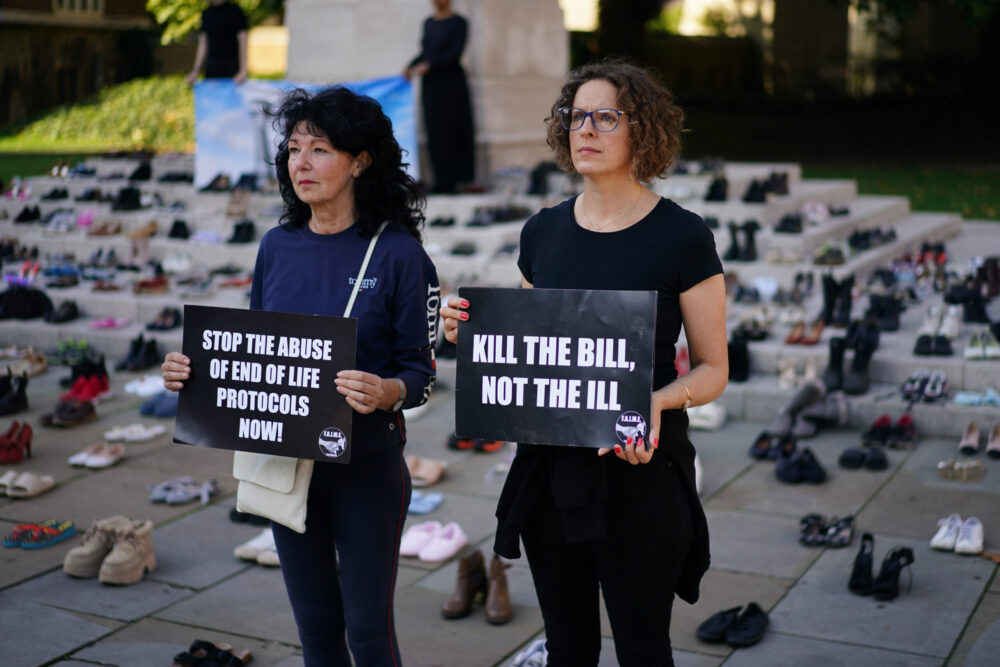
More than 250 healthcare professionals from across Wales have urged Members of the Senedd to refuse consent for Westminster’s proposed assisted dying legislation.
The clinicians warn the proposed legislation threatens patient safety, undermines devolved health powers and risks harm to vulnerable people.
In an open letter released ahead of a Legislative Consent Motion (LCM) scheduled for Tuesday 20 January, doctors, nurses and allied health workers from the group Our Duty of Care, raise strong objections to the Terminally Ill Adults (End of Life) Bill, which would allow adults with a terminal illness and fewer than six months to live to apply for an assisted death in England and Wales.
The signatories include former Chief Medical Officer Dame Deirdre Hine, multiple professors in palliative and respiratory medicine, consultants, psychiatrists, GPs, specialist nurses, paramedics, physiotherapists and pharmacists.
They argue that assisted suicide risks becoming a substitute for a palliative care system they say is already under-resourced across Wales.
Consequences
Dr Sarah Davies, a respiratory consultant in north Wales, stressed that the Senedd’s decision carries concrete consequences.
“This vote concerns the details of how the legislation will operate in Wales. It is not a general vote on the ethics of assisted suicide,” she said.
Signatories argue the Bill is poorly designed and unsafe in practice. Among key objections are concerns that Wales lacks adequate specialist palliative care capacity to offer patients genuine alternatives.
Palliative care consultant Dr Victoria Wheatley said parts of Wales still have no access to hospice beds.
“People living in a quarter of Wales cannot access a hospice bed. That means they lack real choice,” she said.
“Funding a state-sponsored suicide service without first ensuring comprehensive palliative care is not the right approach.”
Mental health
Clinicians also highlight a conflict between the Bill and Welsh mental health policy.
Consultant psychiatrist Dr Stuart Porter said the proposals clash with the Welsh Government’s Suicide Prevention and Self-Harm Delivery Plan (2025–2028).
“The Mental Capacity Act was never designed to assess suicidality,” he said.
“Psychiatrists have repeatedly highlighted that the role suggested for them is not supported by the Royal College.”
Several warn the Bill risks normalising suicide for people struggling with illness, disability or poverty.
Vulnerable groups
Former Welsh CMO Dame Hine said changing the law could have unforeseen consequences, particularly for people who feel like a burden or lack secure housing and support.
Other clinicians warned that coercion—especially by family—often goes undetected, and that the Bill’s oversight system does not require patients to be seen in person by the decision-making panel.
The open letter states: “Patients will be eligible for lethal drugs if they feel a burden or because of a lack of services. Coercion is often covert and difficult to detect.”
Devolution
Another central criticism is that the Bill would allow UK ministers to regulate end-of-life care in Wales via broad secondary legislation powers.
Professor Ben Hope-Gill and others warn that the Bill’s “Henry VIII” clauses could allow Westminster to dictate elements of Welsh health policy.
With more than 13,000 Welsh patients registered with English GPs, and 21,000 English patients registered in Wales, signatories say cross-border legal and clinical uncertainty could follow.
The letter calls for investment in hospice services, psychological support, community nursing and pain management instead of legalising assisted suicide.
Clinicians note that the Senedd opposed assisted dying proposals in 2024 and say conditions have not changed.
“This Bill undermines devolved independence in healthcare and poses unacceptable risks to patient safety and equity,” the letter concludes.
“We urge Members of the Senedd to reject legislative consent for this deeply flawed Bill.”
Westminster
The letter comes as the House of Lords continues to scrutinise the Bill line by line. More than 1,000 amendments have been tabled — a record for a private member’s bill.
Peers backing the measure argue it offers terminally ill adults control over the timing and manner of their death.
Opponents say debate is being rushed and warn the Bill is “unsafe in its current form”.
For the legislation to apply in Wales, both Houses of Parliament must pass identical versions and the Senedd must agree to devolved health implications.
Support our Nation today
For the price of a cup of coffee a month you can help us create an independent, not-for-profit, national news service for the people of Wales, by the people of Wales.



State Assisted Murder ? No thanks
I’d like my right to choose please. If I’m terminally ill and it’s only getting worse and not better, I want the freedom to choose how my last moments are and when they are. Honestly, I’d prefer Assisted Dying to be widened rather than killed or even just narrowed. This is already the most restrictive Assisted Dying type legislation in the world. Currently, assisted dying is only for the moderately wealthy… i.e. those with about 10k in the bank and can get to Switzerland. Those that go with us are typically subjected to years of stress as they are interrogated… Read more »