

Hydro-electric generation plan tipped for approval by planners
Dale Spridgeon, Local Democracy Reporter
A Welsh farming family’s proposal to create a hydro electric generation scheme has been earmarked for approval.
In a re-submission, plans for the Afon Cynfal scheme near Pont yr Afon Gam, Llan Ffestiniog are being recommended for approval by Eryri National Park Authority planners.
The major scheme has prompted strong reactions locally, with some believing it could blight the iconic waterfall and stunning location, leaving scars on the landscape.
However, others in support emphasised the project’s contribution to decarbonisation, as well as it including a farm diversification plan.
The proposal for the hydro-electric generation scheme estimates the creation of up to 600kW of power.
It includes development of a pipe route, intake, weir, extraction pond and below ground penstock. There would also be a turbine building, metering building, alterations to existing access and repositioning of an existing highway access.
A temporary construction compound, temporary footpath diversion, and above and below ground electric power connection to the National Grid would also be created.
The plan is proposed by three farming brothers under the name MED Dafydd, through the agent Richards, Moorehead & Laing Ltd.
The application will come before the authority’s planning and access committee on Wednesday, January 21.
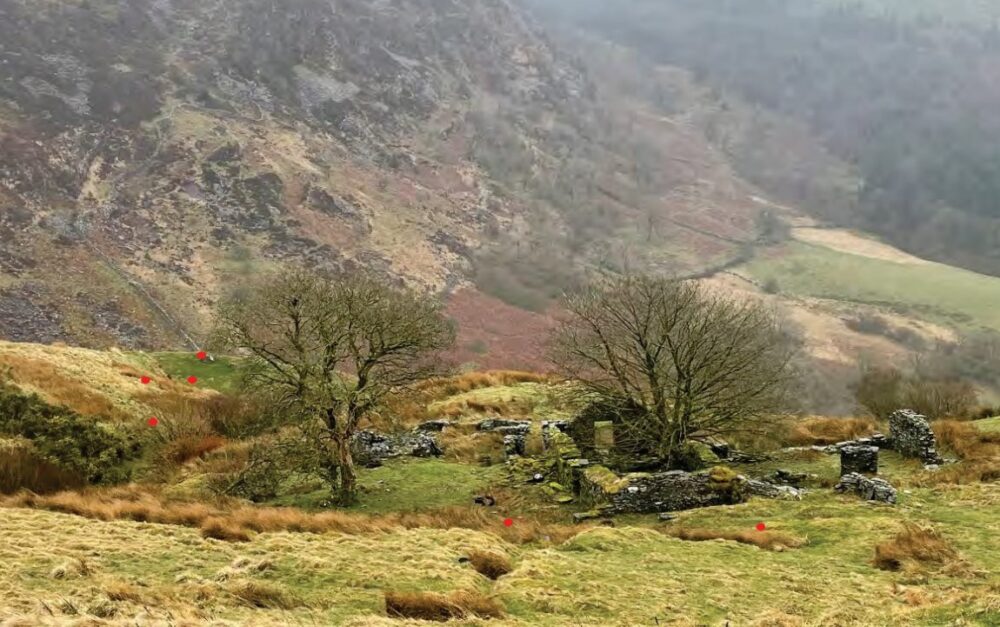
The site is approximately 1.2km west of the junction with the B4407, and 3.8km east of Llan Ffestiniog. It is on Cwm Farm land, on the fringes of the Migneint uplands.
Afon Cynfal is a steep upland river, draining south-east of Llan Ffestiniog through a deep gorge and over the Rhaeadr y Cwm waterfall.
It has associations with the Mabinogion and was depicted by the artist David Cox in the painting ‘Rhaiadr Cwm’.
Heritage
The area includes the Snowdonia Slate Trail, while other Public Rights of Way traverse and overlook the gorge, providing views of the falls and valley.
The area has also been identified for its historic and archaeological heritage interest, as the area was mined for copper.
It falls inside the Ardudwy Historic Landscape of Outstanding Interest and is an International Dark Sky Reserve core area.
It also forms part of the Cwm Cynfal Site of Special Scientific Interest (SSSI) and the wider Migneint–Arenig–Dduallt SAC/SPA complex. It is also recognised for its blanket bog, upland heath and associated fauna, including ‘oceanic bryophytes’ – types of mossy plants.
The project could generate power “indicatively equivalent to [around] 700 homes’ annual electricity demand,” a planning report stated.
Diversification
A letter to the park from the applicants read: “Given the need for diversification in the agriculture sector this proposed scheme will provide security for future generations, as well as allowing us as a family to play a part in tackling the current climate crisis by generating electricity from a renewable source for the local community to use.
“The proposed scheme also aligns with the goals of the Welsh Government in achieving net zero emissions for the benefit of future generations.”
The park said it had received 592 representations from the public over the plans. Of those, 453 objected, whilst 139 gave support. Of the objections, 411 were “identical submissions” following an online campaign, it was noted.
Issues raised against the scheme included the risk to the bryophyte-rich habitat and impact on the valley, described as “a place that has inspired storytellers, artists and poets for over a millennium”.
Others were concerned for the “visual impact on Eryri’s most majestic and, at present, completely unspoilt waterfall” and “flimsy evidence” was cited over delivery of a “net benefit” for biodiversity.
Visual damage
“Insufficient information” that the pipe crossing will not create “significant localised erosion damage and sediment pollution of water course and downstream SSSI,” was also raised.
Another felt a local energy club to provide cheaper electricity for the community had been not secured, as well as loss of recreational amenities and ecological damage.
However, support rounded on the positive aspects of decarbonisation, farm diversification, local employment, energy resilience and the “sensitive design and reinstatement methods within a protected landscape”.
Others stated there was “no evidence” it would impact the setting, and that there was a need for businesses to have “opportunity and support” to develop green energy plans.
Support our Nation today
For the price of a cup of coffee a month you can help us create an independent, not-for-profit, national news service for the people of Wales, by the people of Wales.



Surely only massive wind turbines are allowed to blight the landscape. The wind lobby in the Bay will be after having repayment of inducements if this sort of deviance is allowed in rural Wales.
It is a drop in the ocean at what cost to a pristine spot surrounded by extraction on a massive scale.
What is the point of the idea of national parks…
An aside; two films two adjacent waterfalls name both films both shot in Cymru…
What about the Pylons?
Double standards here
This is such a shame. Why on earth can we not devise schemes that don’t destroy our most beautiful and irreplaceable places? Why do we always think our own needs come first at whatever cost to the environment? Small schemes are great, yes but not when they do this kind of damage.