
‘I was made to feel stupid’ — but dyslexic mum Steph now runs multi-million firm
Nation Cymru staff
A Welsh entrepreneur who once feared being labelled “stupid” because of dyslexia is now running a multi-million pound business.
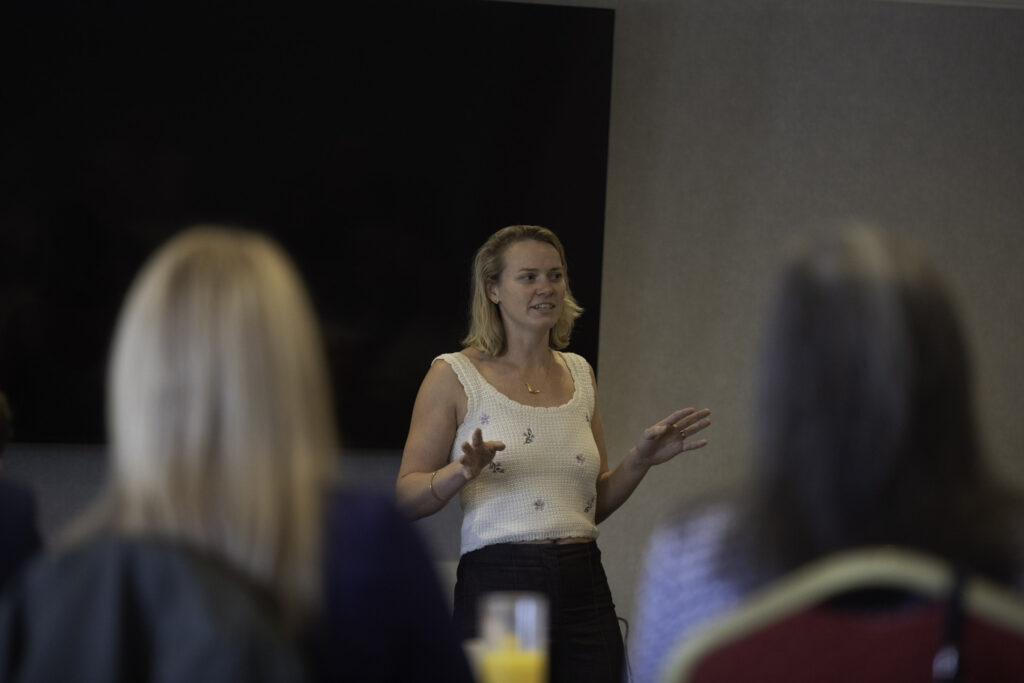
Steph Hind, 34, told Wrexham Business Professionals she is living proof that neurodivergent people can be a major asset to employers if they are given the right support.
The mum-of-two, from Hawarden, was diagnosed with dyslexia aged five and struggled at school before specialist support helped her fulfil her potential.
She went on to gain a first class university degree and co-found employee benefits firm Heka with husband Alex.
The company, which uses AI to personalise workplace benefits, works with some of the biggest banks and law firms as was as global organisations.
Steph told the meeting at Hotel Wrexham: “I created Heka because I have had first-hand experience of going through school thinking ‘this wasn’t built for me’.
“I was diagnosed with dyslexia when I was five and later diagnosed with dyspraxia and I used to dread spelling at school.
“And it was the same when the teachers would go round the class and ask you to read the next paragraph, and I would have anxiety and fear about it because I didn’t want to be seen as stupid.
“I was getting one out of 10 for my spelling and I really hated reading out loud because I was very slow at it.
“I was diligent and bright and had a real thirst for knowledge but couldn’t show it in the school system that we had, and I did Year 2 twice and was bottom of all the sets.
“In Year 3 I changed schools and for the first time I started getting one-to-one dyslexic support.
“The way that I was thinking was different, but I wasn’t ‘just slow’.
“It was such a turning point, because all of a sudden everything clicked and it changed my life.
“The results of those early interventions meant I went on to Sixth Form, went on to university and got a first class degree.
“I founded and run Heka, a multi-million pound business where we work with well-known global companies to do their benefits and some of the biggest banks and law firms in the country.
“If I hadn’t had that initial support, I don’t know what I would be doing.
“But I am living proof that the gap was never about ability, it was about access to that support.”
According to Steph, people who are neurodiverse have skills, talents and resilience which can help businesses achieve success.
She said: “I was able to harness my neurodiversity advantage, and it is an advantage, because if you have gone through life in your early days and had to find that extra layer of resilience, then who wouldn’t want to hire somebody who is more resilient and who is used to those challenges?
“I always had to work harder because of my dyslexia, and I continue to do so.
“Who wouldn’t want to hire somebody who wants to go that extra mile and feels like they have to try harder?
“But in order to that we need to build that scaffolding to give people that neurodiversity advantage.
“When it comes to neurodiversity talents, I think when we give people the right support, it is not just a personal win, it is an economic one.
“If we have a big section of people, and probably a growing section as we understand more about neurodiversity needs, and we just neglect that, it is an economic loss.
“If we can implement early neurodiversity support, we can get ahead of it and we can all benefit.
“We do all want neurodiverse workforces so we can weather the storm together and in North Wales we can be the leaders who harness the neurodiversity advantage and see it as an asset for our regional growth, not a challenge that we need to accommodate.
Steph added that her experience with dyslexia was the catalyst to developing Heka’s personalised approach to employee benefits.
She said: “When it comes to neurodiversity, that different levels of thinking is what we want.
“We want it in our business, we want it in our colleagues, we want it in ourselves.
“We want the ability to get out of that comfort zone and think differently, because that is how we all come to something different.
“That is why I built Heka – to reject this generic, one size fits all, benefits.
“We use AI to deliver the personalised benefits to the right people at the right time.
“You cannot apply a standard education to every person because we are all different, and that has to apply to the world of benefits as well.”
The other keynote speaker was Dr Faye Favill, Special Needs Coordinator (SENCO) at St David’s College in Llandudno.
The school specialises in high standard education provision for students diagnosed with dyslexia, , ADHD and a range of other conditions widely classified under the umbrella term neurodiversity.
She highlighted that neurodiverse people offered skills including creativity, problem-solving, attention to detail, pattern recognition and lateral thinking that businesses could miss out on if recruitment continues to focus too heavily on traditional qualifications.
Wrexham Business Professional committee member Ian Edwards added: “I would hope the meeting allowed people to go away and think more deeply about neurodiversity than perhaps they have done in the past.
“It is something all businesses should consider and I really think businesses can benefit from it if they embrace it.”
It was a message echoed by fellow committee member Louise Harper said: “Faye and Steph gave a hugely useful insight into the challenges neurodiverse people can face, but also how they can add to the skillset of every workforce.
“It was interesting to hear about how if the right support is in place, we can all benefit from the skills neurodiverse people have.”
Support our Nation today
For the price of a cup of coffee a month you can help us create an independent, not-for-profit, national news service for the people of Wales, by the people of Wales.
Get more trusted Welsh news
Choose Nation.Cymru as a preferred source in Google News to see more of our journalism.