


Industry leaders call for action over scrap steel exports
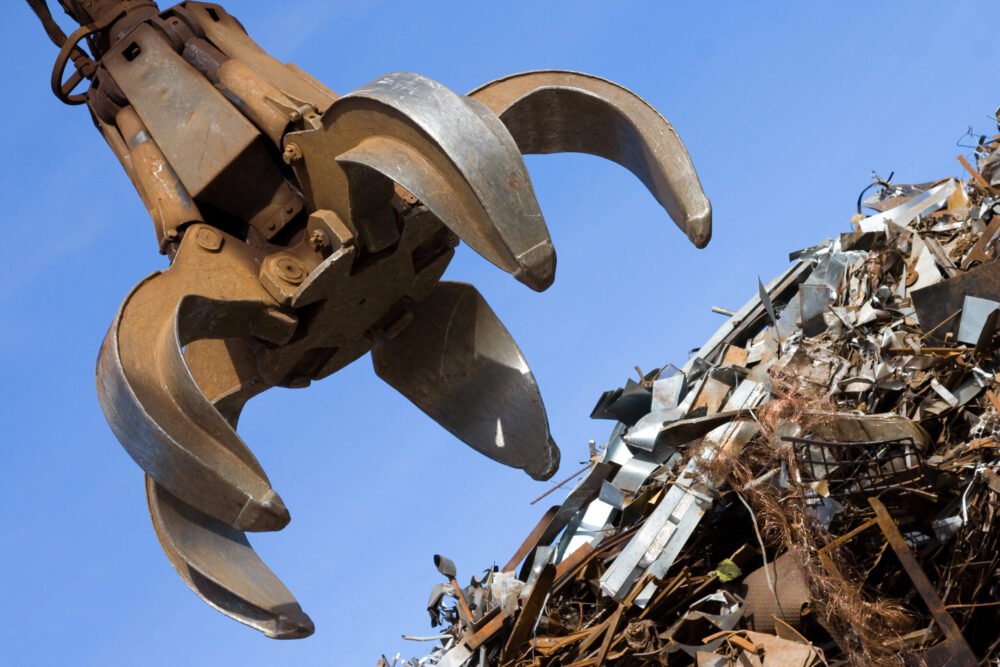
The UK’s leading steelmakers and metal recyclers have joined forces to demand urgent government action to overhaul how steel scrap is handled.
A new report published on Monday by the Circular Steel Sub-Committee of UK Steel warns that the UK is currently “exporting jobs, value and emissions” by shipping most of its high-quality steel scrap overseas rather than using it to produce low-carbon steel domestically.
Tata Steel UK’s Port Talbot plant, which is now shifting towards electric arc furnace (EAF) production, stands to be one of the biggest beneficiaries of a new circular steel strategy. But industry leaders say the UK risks squandering the opportunity unless governments act quickly.
The report, Circular Steel: Strengthening the UK’s Industrial Supply Chain, highlights a major problem, as it is cheaper to export steel scrap and re-import finished products than to recycle and manufacture steel here.
The UK produces around 10 million tonnes of steel scrap every year, yet exports more than 80% of it.
With Port Talbot preparing for a transition to EAF technology, high-quality scrap will soon become the backbone of Welsh steel production. But the report warns the UK currently lacks the domestic processing capacity, regulatory standards and economic conditions to make use of its own scrap.
Jacob Hayler, chair of the Circular Steel Sub-Committee, said the current system “makes no economic or environmental sense”.
“The UK has the scrap, the skills and the ambition to be a global leader in circular steel. But without the right policy framework, we will continue sending this valuable resource abroad, along with jobs and investment,” he said.
Infrastructure
The report calls on the UK and devolved governments to work together to strengthen the domestic market by:
Investing in scrap processing infrastructure, including refining and screening operations needed to meet the higher standards required for EAF steelmaking at plants such as Port Talbot.
Reducing industrial energy costs, which currently make domestic recycling less competitive than export.
Introducing national standards and definitions for EAF-grade steel scrap, to improve consistency and traceability.
Improving regulatory oversight of recyclers via unified licensing and inspections.
Including metal recyclers in the British Industrial Competitiveness Scheme to support decarbonisation and modernisation.
‘Competitive’
Rajesh Nair, chief executive of Tata Steel UK and chair of UK Steel, said the UK’s move to EAF production represented a “once-in-a-generation opportunity” for Wales and the wider UK steel sector.
“To seize it, we must build a competitive domestic steel scrap supply chain that supports investment and strengthens manufacturing. A circular materials strategy will help ensure more economic value stays in the UK.”
Gareth Stace, director-general of UK Steel, said the reforms would benefit the entire supply chain.
“We enjoy a surplus of steel scrap in the UK, yet most of it is exported unsorted and low-grade. This must change if we are to secure the raw materials needed for the future of low-emissions steel in places like Port Talbot.”
The Circular Steel Sub-Committee, founded in 2025, brings together producers, recyclers and policy experts to drive the UK’s transition to a fully circular steel economy.
Support our Nation today
For the price of a cup of coffee a month you can help us create an independent, not-for-profit, national news service for the people of Wales, by the people of Wales.


