

International collaboration launched to protect endangered marine life

A new international project led by a Welsh university is aiming to support recovery of shark and ray populations through action in the world’s largest shark-fishing nation, Indonesia.
The three-year initiative, funded by the Shark Conservation Fund, will bring together scientists, government agencies, and local communities to develop, test and scale innovative approaches to reduce fishing pressure on some of the world’s most threatened marine species.
The project is a collaboration between Bangor University, Yayasan Kebersamaan Untuk Lautan (KUL) – an Indonesian grassroots organization whose name means Togetherness for the Oceans – and the Center for Coastal and Marine Resources Studies (PKSPL) at IPB University, one of Indonesia’s leading marine research institutes.
As migratory predators, sharks and rays stabilize food webs, support nutrient transfer, and act as a general barometer for ocean health.
Yet recent studies show that shark and ray populations are experiencing catastrophic global declines. Global abundance of oceanic sharks has declined by over 70% in the past 50 years, reef sharks are entirely absent from almost 20% of the world’s sampled reefs, and one in three species are threatened with extinction, all primarily due to overfishing.
Academics and campaigners warn that declines in shark and ray populations are an early warning signal of declines in overall ocean health – due to escalating pressures like climate change, pollution and overfishing.
Of the earth’s nearly 8 billion people, over 1 billion depend on seafood as their primary food source, and the seafood industry provides over 780 million jobs worldwide. As such, declines in ocean health also threaten human welfare due to loss of food security, jobs, profits and recreation and tourism assets.
However, healthy shark and ray populations can support recovery of marine ecosystems, which in turn support human flourishing and greater resilience to climate change.
Indonesia is both a global hotspot of marine biodiversity and of fishing pressure, home to more than 2 million small-scale fishermen who depend on fisheries for food and income.
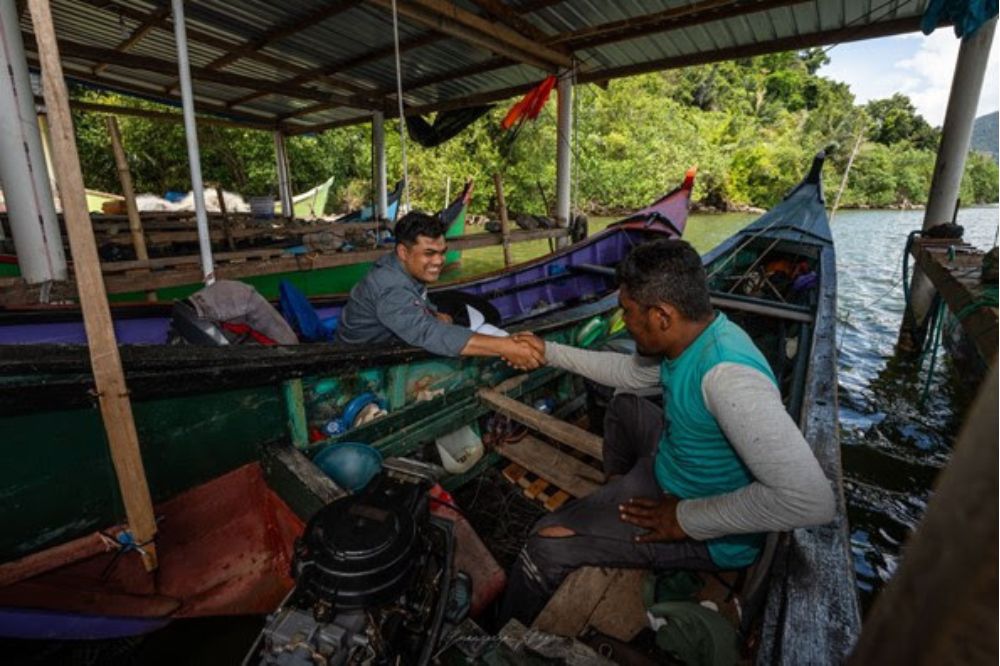
However, the fishing grounds of many small-scale fisheries overlap with critical habitat for rare and endangered sharks such as hammerheads, wedgefish, threshers and mobula rays. This means many of these species are vulnerable to capture in unselective nets and lines that small-scale fishermen use to make a living.
Many sharks and rays also have economic or subsistence value for their meat, fins, skin and liver oil. This means that when they are caught, they are retained and eaten or sold, making important social and economic contributions to coastal livelihoods. In these situations, enacting strict top-down protections is unviable and can have negative impacts on the rural poor .
The new project, which leverages insights and momentum from cutting-edge research and community programs developed under a UK Darwin Initiative grant, will work with fishermen, researchers and policy-makers to advance science-based management solutions that can halt declines in shark populations while supporting coastal livelihoods.
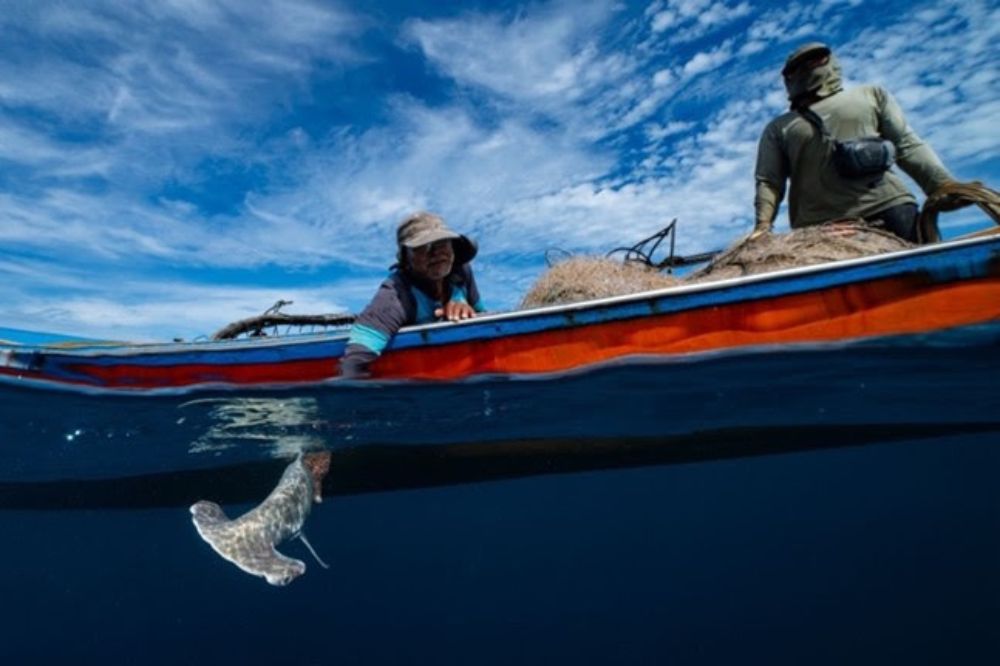
Working across several provinces, the researcher-practitioner team aims to support local partners to develop fair and effective spatial protections and fisheries management measures, which are closely integrated with national-level CITES implementation efforts and based on the best available evidence.
They will also use cutting-edge methods to rigorously evaluate what kinds of management interventions work best, for whom, and why.
Dr Hollie Booth, project lead in Bangor University’s School of Environmental and Natural Sciences, said: “By combining rigorous science, community partnerships and policy engagement, we can find practical solutions that protect threatened species while supporting the people who depend on the ocean.”
Professor Luky Adrianto, project partner at IPB University, added: “This collaboration demonstrates how evidence-based inclusive conservation and equitable partnerships can deliver real change for biodiversity and communities, while also facilitating two-way training and knowledge exchange between Indonesian and British researchers .”
Support our Nation today
For the price of a cup of coffee a month you can help us create an independent, not-for-profit, national news service for the people of Wales, by the people of Wales.


