


Is controversial Aqua Park a biosecurity hazard?
Martin Shipton
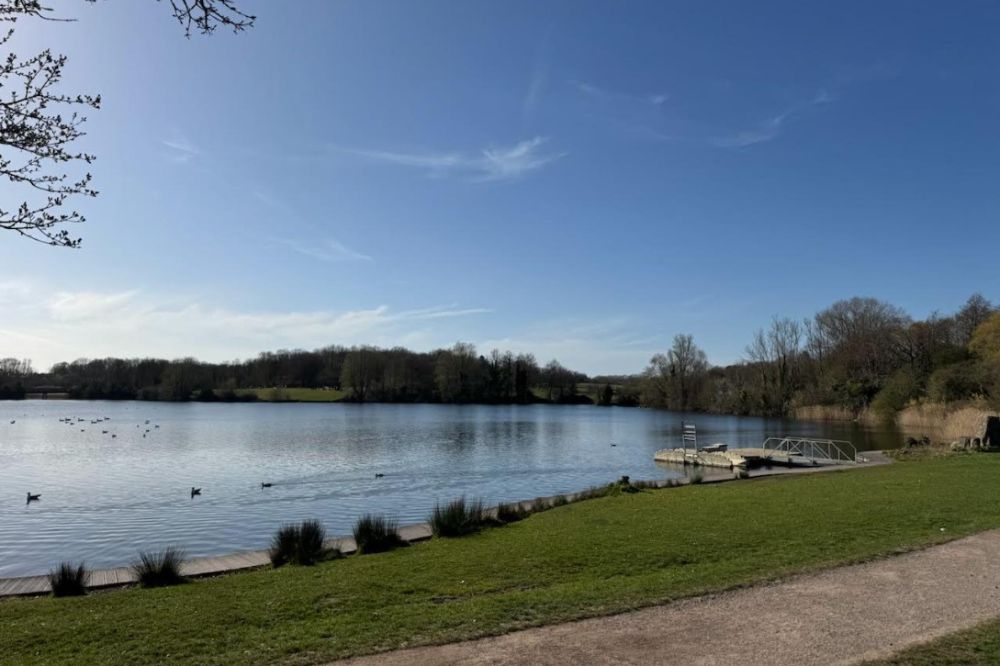
Campaigners who oppose turning a tranquil lake into a seasonal “Aqua Park” have called for answers to a series of questions in advance of a final decision on whether the attraction should operate annually.
More than 8,000 people have opposed the use of the eastern section of Cosmeston Lakes near Penarth, Vale of Glamorgan, as a water-based playground with giant inflatable slides, towers and obstacles.
The attraction operated on a pilot basis over the summer of 2025, leaving opinion divided.
Members of the Vale Action Group, set up to oppose the commercially run Aqua Park, claim that in addition to their general objection that it wrecks the area’s tranquillity, have expressed concern about what they term “superficial ecology, water quality issues, biosecurity breaches and most recently the new and highly alarming discovery of killer shrimp eDNA in the lakes’ waters”.
Saar Lenaerts-Williams of the Vale Action Group, said: “Prioritising the wildlife and protesting against the inappropriate choice of location for inflatables, crowds, noise and splashing was the common cause under which our group first came together in April. We launched a petition as ‘Save Cosmeston’ which quickly got the support of more than 8000 people, while our core campaigning group including families and individuals who love Cosmeston, wildlife organisations, environmental students, fundraisers and lawyers also grew to strengthen our resolve.
“We were all united in a hope that we could halt the pilot and create a pause for more consultation and ecological work but, in the end, the council was not listening and we failed to do so.
“Unable to trust the council’s public position, we realised we would have to be the ones to monitor the development over the summer, as best we could and take note of every aspect of the pilot so that somebody could hold them – and indeed Natural Resources Wales (NRW) who granted the original assent – accountable for all their promises, obligations and actions.
“We succeeded in compiling a 230-page evidence bundle which we have now submitted to the Council as part of their evaluation process and at their invitation. In it we believe we have clearly shown that all our concerns about the standard of the ecology, biosecurity breaches, damage to starry stonewort [a protected translucent green alga that grows to a length of more than 1.5 metres], water quality and anomalies in the council’s approach to planning.
“We have also summarised a significant community voice, which is unanimous that locating the Aqua Park at Cosmeston Lakes is not compatible with an established and precious nature reserve and wildlife haven.”
Questions
Ms Lenaerts-Williams added: “Many of the questions that we asked of NRW, the council and Aqua Parks are still not answered – and we really feel they must be before any future decisions are made.”
She listed a series of questions to the three organisations.
To NRW:
When and why did you ask Cosmeston to carry out an eDNA testing for killer shrimp?
* Is Aqua Park currently under investigation for biosecurity breaches?
^ During the pilot, the protected alga starry stonewort was discovered
underneath the Aqua Park, embedded in its anchoring system. As your assent was granted on the condition that starry stonewort was not present in the lake, does this new information call into question any future assent for an Aqua Park there?
* The Vale of Glamorgan Council used the NRW SSSI (Site of Special Scientific Interest) assent to justify their EIA (Environmental Impact Assessment) screening decision and to reassure the public that the proper ecological checks were carried out, including for water voles and nesting birds. Did you sign off on the general ecology for the Aqua Park project and are you, therefore, ultimately responsible for any environmental damage?
To Vale of Glamorgan Council:
* Have you performed further eDNA or physical sampling for killer shrimp or
other invasive species?
* On June 12, one day after NRW told Aqua Park and the council that extra
checks would be required on all equipment, a working boat was launched
immediately into the centre of the lake, apparently to protect its engine from theft. Was this boat checked? Where did it come from? Social media shows an identical working boat on the water next to Aqua Park Rutland where killer shrimp is present prior to that date. Did this bypass the eight-month dry storage condition in the SSSI assent and can you be sure it was not the vector of transmission?
To Aqua Park:
* Was the working boat that was launched onto the east Lake of Cosmeston on June 12 present on Rutland water (or any other water body) prior to that?
* Why was this boat launched into the water on that date, after NRW asked for all equipment to be checked?
* Has the boat been dry stored for eight months, according to the SSSI assent conditions?
Ms Lenaerts-Williams said: “NRW did not take enforcement action when, under the terms of their assent, zebra mussels were discovered on the first pontoons that Aqua Park brought in. Where was NRW when those pontoons arrived and why was it left to a member of the public to notice and photograph such a serious breach of bio-security?
“Is it again a breach of bio-security that has led to the recently discovered infiltration of killer shrimp in the lakes, and what about the starry stonewort that was photographed in the eastern Lake tangled around the anchorage of the inflatables, despite NRW’s assent for the project assuring everyone that this SSSI alga was not present? Has NRW taken action on that? Or will they?”
Targeted surveys
A spokesperson for NRW said: “Earlier this year, as part of the SSSI assent process, we advised Vale of Glamorgan council to test for killer shrimp at Cosmeston Lakes. This was due to their known presence in Cardiff Bay and the absence of targeted surveys at Cosmeston.
“There is no current investigation into biosecurity breaches. The positive eDNA results suggest killer shrimp were likely present before the Aqua Park was installed, but it’s not possible to determine exactly when it was introduced. We’ve since advised the council to carry out physical sampling.
“Our original assent was based on the understanding that starry stonewort was not present in the eastern lake where the Aqua Park was installed. However, the two lakes are connected, and starry stonewort has always had the potential to spread.
“We cannot pre-judge any future assent applications, but we’ve seen no evidence that the Aqua Park has caused harm to the starry stonewort. Healthy beds of stonewort continue to grow densely around the moorings, seemingly unaffected by the recreational activity on the surface of the lake.
“NRW’s role is to assess potential harm to the notified SSSI feature, starry stonewort, under the Wildlife and Countryside Act. Broader ecological checks are the responsibility of the landowner, not NRW.”
A spokesperson for Vale of Glamorgan council said: “We are proud to manage two country parks within our administrative boundary, Porthkerry and Cosmeston. These parks are extremely important to the council and its work to support nature and biodiversity. While being invaluable for the promotion of nature and wildlife, it is important to remember they are also well-established places of leisure for residents and visitors alike.
“It is against this long-standing background that the trial of the Aqua Park at Cosmeston Lakes was approved. This trial came to an end in September, and the council and independent ecologists are currently undertaking a full assessment of all aspects of the operation.
“A report detailing the outcome of this review – including an independent assessment of ecological impacts – will be presented to the council’s cabinet and relevant scrutiny committees late this year or in early 2026, and will include a recommendation regarding any future leisure activities in the park. This pilot has provided the council with good quality and recent information to allow a full assessment of any impact to be undertaken.
“Throughout the trial period, the council’s Countryside Services team maintained regular contact with NRW and Shared Regulatory Services and continued to liaise with them as part of the post-trial assessment process.
“Vale of Glamorgan council has worked in close partnership with NRW for many years following the designation of the SSSI, and this has included monitoring and managing the risk of invasive species at this site through regular testing. Unfortunately, zebra mussels were confirmed in the lake over a decade ago, likely introduced through cross-contamination from nearby waterbodies and other natural causes such as wildfowl. During August, further testing showed the possible presence of DNA from an invasive crustacean that poses ecological threats in freshwater environments. This species has spread throughout lakes and rivers in western Europe and was first found in Wales in 2010.
“Testing will continue to confirm if the species are present or if a false positive has occurred. To date, no physical examples of this crustacean has been found in the lakes at Cosmeston, despite extensive sampling and the only indication of its possible presence is through initial DNA testing of the water. Physical sampling of the lake will continue over the winter to try and establish if the species are indeed present, and further DNA sampling is being undertaken.
“However, given the proximity of Cosmeston to other aquatic environments, the risk of further introductions remains high. Working with NRW, the council continues to enforce strict biosecurity protocols for all lake users. These measures were rigorously applied during the recent Aqua Park trial, demonstrating the commitment to preventing further spread.
“The council believes it is very unlikely that the Aqua Park brought any invasive non-native species to the lake, given the time of testing and the strict biohazard measures in place, and it is much more likely that they were brought to the site by wildfowl or unauthorised uses of the lake such as fishing.
“The assent from NRW to use the lake for the Aqua Park was not granted because stary stonewort was not present, but rather because they viewed the activity as unlikely to affect its presence in the lake – which is a key reason why the SSSI was designated at Cosmeston. This view has been proven right as the species have been found to be thriving underneath the Aqua Park when it was present.
“The council remains fully committed to ensuring that the Aqua Park pilot undergoes a full assessment both from an ecological point of view, and in respect to the wider operation of the country park, and this assessment work is currently underway.”
Disinfected
We have been told that a boat owned by Aqua Park which entered the lake in June was properly cleaned and disinfected before entry to the lake. This was verified by a park ranger. We have also been told there is no requirement for properly cleaned equipment to be stored for eight months prior to use.
Aqua Park was invited to respond, but did not do so.
Support our Nation today
For the price of a cup of coffee a month you can help us create an independent, not-for-profit, national news service for the people of Wales, by the people of Wales.



Kids having fun is also causing global warming, weak post-Brexit economic growth and is probably a threat to world peace. I’m surprised these points weren’t mentioned.